HomeMCPSkillsWorkbenchOpenChem
HomeWorkbenchNotificationsMe
llms.txt · skill.md · MCP GuidePrivacy Policy · Terms of Service · Supportv1.8.5
  1. Home
  2. /Reaction

Triethylamine → (E)-4-[2-((R)-1-Acetoxy-ethyl)-quinolin-7-yl]-2-[1-(tert-butyl-dimethyl-silanyloxy)-1-methyl-ethyl]-2-methyl-but-3-enoic acid

HRID 2285389
Print

Reaction equation

[C:1]([Si:5]([CH3:18])([CH3:17])[O:6][C:7]([C:10]([CH3:16])([CH:14]=[CH2:15])[C:11]([OH:13])=[O:12])([CH3:9])[CH3:8])([CH3:4])([CH3:3])[CH3:2].Br[C:20]1[CH:29]=[C:28]2[C:23]([CH:24]=[CH:25][C:26]([C@H:30]([O:32][C:33](=[O:35])[CH3:34])[CH3:31])=[N:27]2)=[CH:22][CH:21]=1.C1(C)C=CC=CC=1P(C1C=CC=CC=1C)C1C=CC=CC=1C.C(N(CC)CC)C>C(#N)C.C([O-])(=O)C.[Pd+2].C([O-])(=O)C>[C:33]([O:32][C@@H:30]([C:26]1[CH:25]=[CH:24][C:23]2[C:28](=[CH:29][C:20](/[CH:15]=[CH:14]/[C:10]([C:7]([O:6][Si:5]([C:1]([CH3:4])([CH3:3])[CH3:2])([CH3:18])[CH3:17])([CH3:8])[CH3:9])([CH3:16])[C:11]([OH:13])=[O:12])=[CH:21][CH:22]=2)[N:27]=1)[CH3:31])(=[O:35])[CH3:34]
ParticipantsConditionsProcedureWorkupSources & evidenceReaction notes

Participants

7

Reactant 4

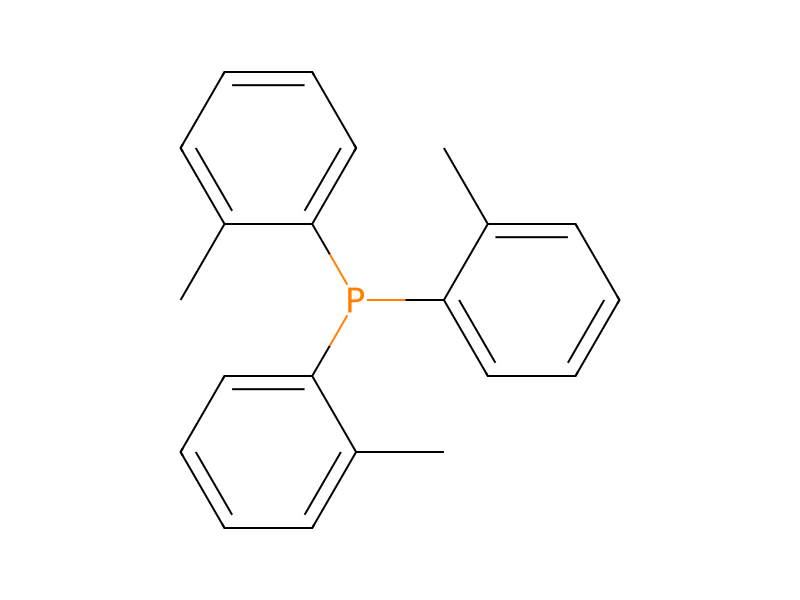
HCID 8471TriethylamineHCID 80271Tri-o-tolylphosphineHCID 86709645acetic acid (R)-1-(7-bromo-quinolin-2-yl)-ethyl esterHCID 867096802-[1-(tert-Butyl-dimethyl-silanyloxy)-1-methyl-ethyl]-2-methyl-but-3-enoic acid

Product 1

HCID 86709681(E)-4-[2-((R)-1-Acetoxy-ethyl)-quinolin-7-yl]-2-[1-(tert-butyl-dimethyl-silanyloxy)-1-methyl-ethyl]-2-methyl-but-3-enoic acid
Yield 65%

Reagents, catalysts & solvents 2

HCID 167845palladium(II) acetateCatalystHCID 6342AcetonitrileSolvent

Conditions

Temperature
100 °C

Procedure

A solution of 2-[1-(tert-butyl-dimethyl-silanyloxy)-1-methyl-ethyl]-2-methyl-but-3-enoic acid (258 mg, 0.95 mmol), acetic acid (R)-1-(7-bromo-quinolin-2-yl)-ethyl ester (279 mg, 0.95 mmol), palladium(II) acetate (43 mg, 0.19 mmol), tris-(o-tolyl)phosphine (87 mg, 0.29 mmol) in anhydrous acetonitrile (3 mL) was treated with triethylamine (265 μL, 1.90 mmol). After stirring at 100° C. under microwave for 20 min, the reaction was cooled to room temperature and the volatiles were removed in vacuo. The residue was partitioned between dichloromethane and a saturated potassium hydrogen sulfate solution. The organics were combined and the volatiles were removed in vacuo. The residue was purified by silica gel chromatography using a 25 g Biotage cartridge eluted with a continuous gradient of iso-hexanes/ethyl acetate 1:0 to 0:1 to afford the title compound (300 mg, 65%) as a colourless oil. 1H NMR (300 MHz, CDCl3) δ 0.20 (s, 3H), 0.22 (s, 3H), 0.94 (s, 9H), 1.44 (s, 3H), 1.45 (s, 3H), 1.50 (s, 3H), 1.68 (d, J=6.7 Hz, 3H), 2.17 (s, 3H), 6.06 (q, J=6.7 Hz, 1H), 6.76 (m, 2H), 7.43 (d, J=8.5 Hz, 1H), 7.62 (d, J=8.5 Hz, 1H), 7.74 (d, J=8.7 Hz, 1H), 8.03 (s, 1H), 8.11 (d, J=8.5 Hz, 1H). LCMS (m/z) 486.3 [M+H], Tr=3.64 min.

Workup

  1. temperaturethe reaction was cooled to room temperature
  2. customthe volatiles were removed in vacuo
  3. customThe residue was partitioned between dichloromethane
  4. customthe volatiles were removed in vacuo
  5. customThe residue was purified by silica gel chromatography
  6. washeluted with a continuous gradient of iso-hexanes/ethyl acetate 1:0 to 0:1

Sources & evidence

ORD record
ord-6a34996246f540a79ef8f71d59ceafe0
Source dataset
uspto-grants-2015_09
DOI
10.6084/m9.figshare.5104873.v1
Patent number
US09145441B2

Reaction notes

On this pageParticipantsConditionsProcedureWorkupSources & evidenceReaction notes