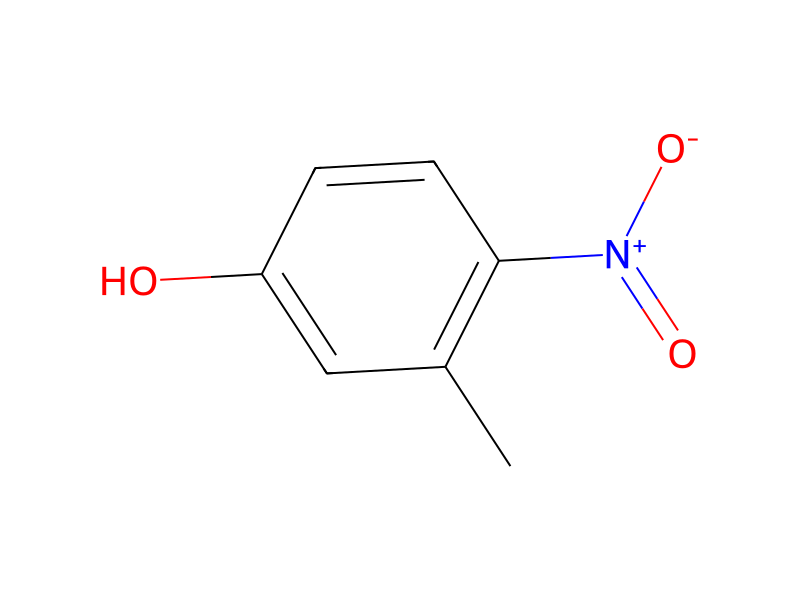
To a solution of 4-nitro-m-cresol (100.0 g) in methylene chloride (1000 ml) was added a 1N aqueous solution of sodium hydroxide (1000 ml). To the resulting two-layer solution were added in turn benzyl bromide (170 ml) and tetra-n-butylammonium bromide (2.17 g) while stirring at room temperature. After stirring at room temperature overnight, the reaction solution was placed into a separating funnel to separate the organic layer from the aqueous layer. The aqueous layer was extracted with methylene chloride. The combined organic layer was washed with saturated saline, dried over magnesium sulfate and the solvent was distilled off to give a yellow oily substance. The solidified yellow oily substance was ground in hexane, filtered and dried. The resulting yellow powder was recrystallized from an ethyl acetate/hexane mixed solvent system to give the title compound (116.7 g).