HomeMCPWorkbenchSkills
HomeWorkbenchNotificationsMe
llms.txt · MCP GuidePrivacy Policy · Terms of Service · Supportv1.8.3
  1. Home
  2. /Reaction

Dimethylformamide → tert-Butyl 2-cyano-5-(2,4,4-trimethyl-1,4-dihydro-2H-3,1-benzoxazin-6-yl)-1H-pyrrole-1-carboxylate

HRID 2300100
Print

Reaction equation

HRID 2300100 reaction equation
Br[C:2]1[CH:3]=[CH:4][C:5]2[NH:10][CH:9]([CH3:11])[O:8][C:7]([CH3:13])([CH3:12])[C:6]=2[CH:14]=1.[C:15]([O:19][C:20]([N:22]1[CH:26]=[CH:25][CH:24]=[C:23]1B(O)O)=[O:21])([CH3:18])([CH3:17])[CH3:16].[CH3:30][N:31](C=O)C.S([O-])([O-])(=O)=O.[NH4+].[NH4+]>C1COCC1.C(OCC)(=O)C>[C:15]([O:19][C:20]([N:22]1[C:26]([C:2]2[CH:3]=[CH:4][C:5]3[NH:10][CH:9]([CH3:11])[O:8][C:7]([CH3:13])([CH3:12])[C:6]=3[CH:14]=2)=[CH:25][CH:24]=[CH:23]1)=[O:21])([CH3:18])([CH3:16])[CH3:17].[C:30]([C:23]1[N:22]([C:20]([O:19][C:15]([CH3:18])([CH3:17])[CH3:16])=[O:21])[C:26]([C:2]2[CH:3]=[CH:4][C:5]3[NH:10][CH:9]([CH3:11])[O:8][C:7]([CH3:13])([CH3:12])[C:6]=3[CH:14]=2)=[CH:25][CH:24]=1)#[N:31]
ParticipantsConditionsProcedureWorkupSources & evidenceReaction notes

Participants

8

Reactant 4

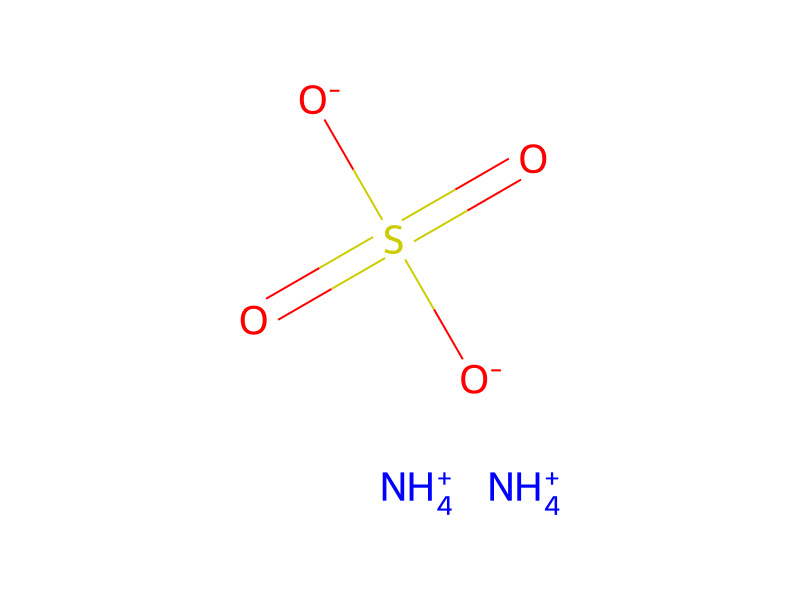
HCID 6228DimethylformamideHCID 27343211-(tert-Butoxycarbonyl)-2-pyrroleboronic AcidHCID 6097028Ammonium SulfateHCID 234355746-Bromo-2,4,4-trimethyl-2,4-dihydro-1H-benzo[D][1,3]oxazine

Product 2

HCID 23435570tert-Butyl 2-cyano-5-(2,4,4-trimethyl-1,4-dihydro-2H-3,1-benzoxazin-6-yl)-1H-pyrrole-1-carboxylateYield 1.78%
HCID 54467598tert-Butyl-5-(2,4,4-trimethyl-1,4-dihydro-2H-3,1-benzoxazin-6-yl)-1H-pyrrole-1-carboxylate

Reagents, catalysts & solvents 2

HCID 8028TetrahydrofuranSolventHCID 8857Ethyl AcetateSolvent

Conditions

Temperature
-78 °C

Procedure

tert-Butyl-5-(2,4,4-trimethyl-1,4-dihydro-2H-3,1-benzoxazin-6-yl)-1 H-pyrrole-1-carboxylate was prepared according to the coupling procedure for Example 17 from 6-bromo-2,4,4-trimethyl-1,4-dihydro-2H-3,1-benzoxazine and 1-t-butoxycarbonylpyrrol-2-yl boronic acid. To a solution of tert-butyl-5-(2,4,4-trimethyl-1,4-dihydro-2H-3,1-benzoxazim-6-yl)-1H-pyrrole-l-carboxylate (1 g, 2.9 mmol) in anhydrous THF (20 mL) was added at −78° C. under nitrogen chlorosulfonyl isocyanate (0.35 mL, 4.0 mmol). The mixture was kept stirring at −78° C. under nitrogen for 2 hours, treated with anhydrous DMF (5 mL), and allowed to warm to room temperature. Aqueous ammonium sulfate solution (50 mL) and ethyl acetate (100 mL) was added and organic layer was separated, dried (MgSO4), and evaporated. The residue was purified by a silica gel column chromatography(hexane:ethyl acetate/4:1) to afford the title compound as a white solid (0.019 g, 1.78%): 1H-NMR (DMSO-d6) δ 7.48 (d, 1H, J=2.0 Hz), 7.36 (dd, 1H, J=8.3, 2.0 Hz), 7.32 (d, 1H, J=3.6 Hz), 7.14 (d, 1H, J=8.3 Hz), 6.46 (d, 1H, J=4.0 Hz), 5.35 (q, 1H, J=5.2 Hz), 1.58 (d, 3H, J=5.6 Hz), 1.56 (s, 3H), 1.51 (s, 3H), 1.38 (s, 9H); MS (ESI) m/z 366 [M−-H]−.

Workup

  1. temperatureto warm to room temperature
  2. customorganic layer was separated
  3. dry with materialdried (MgSO4)
  4. customevaporated
  5. customThe residue was purified by a silica gel column chromatography(hexane:ethyl acetate/4:1)

Sources & evidence

ORD record
ord-3ad166300e624c50abd99ce4af0dd339
Source dataset
uspto-grants-2002_12
DOI
10.6084/m9.figshare.5104873.v1
Patent number
US06498154B1

Reaction notes

On this pageParticipantsConditionsProcedureWorkupSources & evidenceReaction notes