HomeMCPWorkbenchSkills
HomeWorkbenchNotificationsMe
llms.txt · MCP GuidePrivacy Policy · Terms of Service · Supportv1.8.3
  1. Home
  2. /Reaction

Sodium hydride → 5-Bromo-2,4-bis-(2,4-difluoro-phenoxy)-pyrimidine

HRID 230152
Print

Reaction equation

HRID 230152 reaction equation
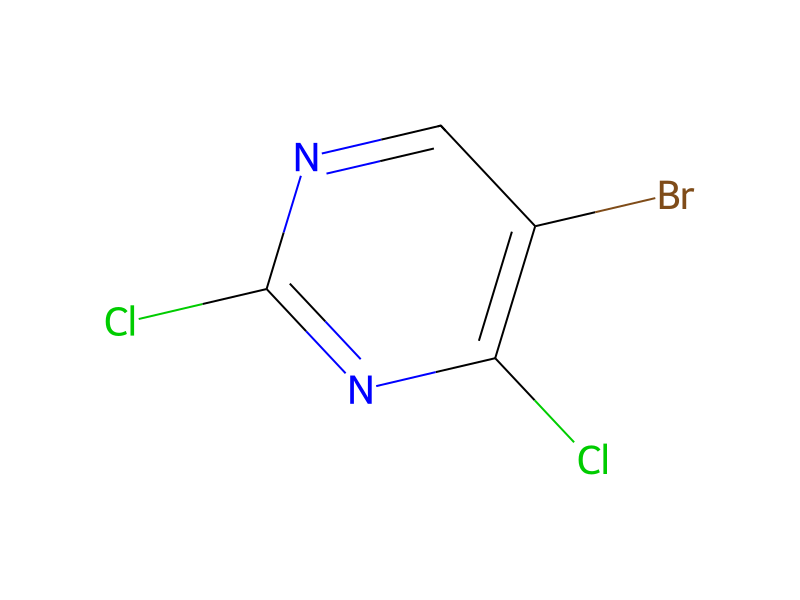
[F:1][C:2]1[CH:7]=[C:6]([F:8])[CH:5]=[CH:4][C:3]=1[OH:9].[H-].[Na+].[Br:12][C:13]1[C:14](Cl)=[N:15][C:16](Cl)=[N:17][CH:18]=1>C1COCC1>[Br:12][C:13]1[C:14]([O:9][C:3]2[CH:4]=[CH:5][C:6]([F:8])=[CH:7][C:2]=2[F:1])=[N:15][C:16]([O:9][C:3]2[CH:4]=[CH:5][C:6]([F:8])=[CH:7][C:2]=2[F:1])=[N:17][CH:18]=1
ParticipantsConditionsProcedureWorkupSources & evidenceReaction notes

Participants

5

Reactant 3

HCID 24758Sodium hydrideHCID 1230512,4-DifluorophenolHCID 2899735-Bromo-2,4-dichloropyrimidine

Product 1

HCID 598344085-Bromo-2,4-bis-(2,4-difluoro-phenoxy)-pyrimidineYield 27.7%

Reagents, catalysts & solvents 1

HCID 8028TetrahydrofuranSolvent

Conditions

Temperature
0 °C

Procedure

2,4-Difluorophenol (22 mL, 241.34 mmol) was dissolved in 140 mL of dry THF and cooled to 0° C. Sodium hydride (9.43 g, 235.85 mmol, 60% suspension in oil) was added in portions, and the reaction mixture was stirred for 30 minutes at 0° C. 5-Bromo-2,4-dichloro-pyrimidine (25.0 g, 109.7 mmol) was added in portions over 10 minutes, and the reaction mixture was allowed to warm to room temperature and was stirred overnight at room temperature. The reaction was quenched by addition of 30 mL saturated aqueous ammonium chloride and 100 mL of water. The aqueous mixture was extracted three times with 100 mL EtOAc, and the combined organic layers were dried (MgSO4), filtered, and the filtrate was evaporated under reduced pressure. The residue was purified by FLASH chromatography (2% to 6% EtOAc/Hexanes. The resulting solid was recrystallized from diethyl ether/hexanes to afford 12.6 g of 5-bromo-2,4-bis-(2,4-difluoro-phenoxy)-pyrimidine as a white solid. Mass Spec. M+H=416.


Workup

  1. temperatureto warm to room temperature
  2. stirringwas stirred overnight at room temperature
  3. customThe reaction was quenched by addition of 30 mL saturated aqueous ammonium chloride and 100 mL of water
  4. extractionThe aqueous mixture was extracted three times with 100 mL EtOAc
  5. dry with materialthe combined organic layers were dried (MgSO4)
  6. filtrationfiltered
  7. customthe filtrate was evaporated under reduced pressure
  8. customThe residue was purified by FLASH chromatography (2% to 6% EtOAc/Hexanes
  9. customThe resulting solid was recrystallized from diethyl ether/hexanes

Sources & evidence

ORD record
ord-39eabcd7516646508cb3ea63d89e5623
Source dataset
uspto-grants-2009_07
DOI
10.6084/m9.figshare.5104873.v1
Patent number
US07566708B2

Reaction notes

On this pageParticipantsConditionsProcedureWorkupSources & evidenceReaction notes