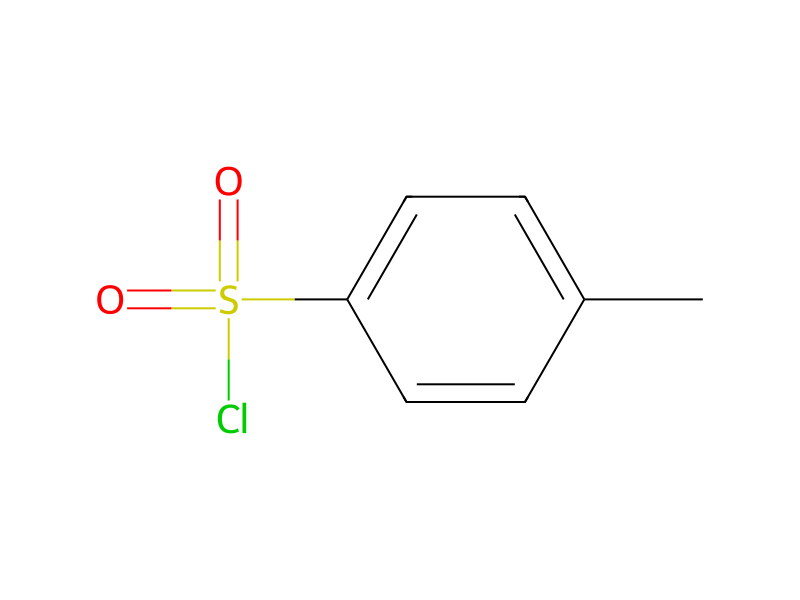
4-Toluenesulfonyl chloride → HCID 57447064, compound
HRID 2366676
Reaction equation

[CH3:1][C:2]1[N:3]([CH2:15][CH2:16][C:17]([NH:19][CH2:20][CH2:21][CH3:22])=[O:18])[C:4]2[C:13]3[CH:12]=[CH:11][CH:10]=[CH:9][C:8]=3[N:7]=[CH:6][C:5]=2[N:14]=1.C1C=C(Cl)C=C(C(OO)=O)C=1.C1(C)C=CC(S(Cl)(=O)=O)=CC=1.[OH-].[NH4+:46]>>[NH2:46][C:6]1[C:5]2[N:14]=[C:2]([CH3:1])[N:3]([CH2:15][CH2:16][C:17]([NH:19][CH2:20][CH2:21][CH3:22])=[O:18])[C:4]=2[C:13]2[CH:12]=[CH:11][CH:10]=[CH:9][C:8]=2[N:7]=1Participants
5




Procedure
3-(2-Methyl-1H-imidazo[4,5-c]quinolin-1-yl)-N-propylpropanamide (610 g, 20.2 mmol) was treated with mCPBA (8.15 g, 35.4 mmol) followed by ammonium hydroxide (40 mL) and p-toluenesulfonyl chloride (7.52 g, 39.5 mmol) according to a modification of the method described in Part D of Example 8. The reaction was not washed with 10% aqueous sodium hydroxide prior to the addition of ammonium hydroxide. The crude product was twice triturated with ethyl acetate and isolated by filtration. The solid was then purified by column chromatography on silica gel (eluting with 90:10 dichloromethane:methanol). The product was then triturated sequentially with 10% aqueous sodium hydroxide and acetone (2×). The solid was then purified again by column chromatography on silica gel (eluting with dichloromethane:methanol in a gradient from 95:5 to 90:10). The resulting solid was triturated with 10% aqueous sodium hydroxide, isolated by filtration, washed with water, and dried overnight to provide 0.477 g of 3-(4-amino-2-methyl-1H-imidazo[4,5-c]quinolin-1-yl)-N-propylpropanamide as an off-white powder, mp 188-189° C.