HomeMCPWorkbenchSkills
HomeWorkbenchNotificationsMe
llms.txt · MCP GuidePrivacy Policy · Terms of Service · Supportv1.8.3
  1. Home
  2. /Reaction

4-Methylmorpholine → tert-butyl N-(1-cyclopentyl-3-hydroxypropan-2-yl)carbamate

HRID 2369537
Print

Reaction equation

HRID 2369537 reaction equation
[C:1]([O:5][C:6]([NH:8][CH:9]([CH2:13][CH:14]1[CH2:18][CH2:17][CH2:16][CH2:15]1)[C:10](O)=[O:11])=[O:7])([CH3:4])([CH3:3])[CH3:2].CN1CCOCC1.ClC(OCC(C)C)=O.[BH4-].[Na+]>C1COCC1.O>[CH:14]1([CH2:13][CH:9]([NH:8][C:6](=[O:7])[O:5][C:1]([CH3:3])([CH3:2])[CH3:4])[CH2:10][OH:11])[CH2:15][CH2:16][CH2:17][CH2:18]1
ParticipantsConditionsProcedureWorkupSources & evidenceReaction notes

Participants

7

Reactant 4

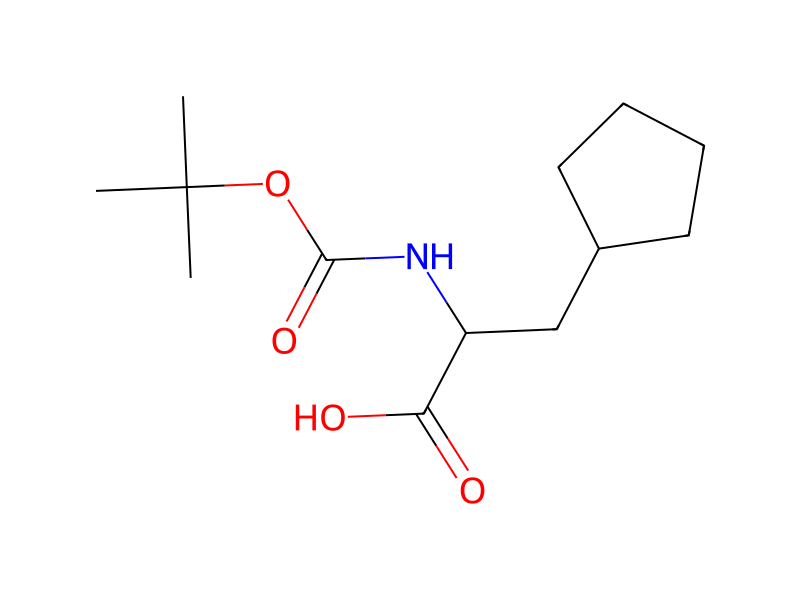
HCID 79724-MethylmorpholineHCID 62365Isobutyl chloroformateHCID 34350992-(((Tert-butoxy)carbonyl)amino)-3-cyclopentylpropanoic acidHCID 4311764Sodium borohydride

Product 1

HCID 68714168tert-butyl N-(1-cyclopentyl-3-hydroxypropan-2-yl)carbamateYield 72.2%

Reagents, catalysts & solvents 2

HCID 962WaterSolvent
HCID 8028TetrahydrofuranSolvent

Conditions

Temperature
-10 °C

Procedure

To a solution of 2-((tert-butoxycarbonyl)amino)-3-cyclopentylpropanoic acid (730 mg, 2.84 mmol) in THF (7.5 mL) cooled to −10° C. was added N-methylmorpholine (0.312 mL, 2.84 mmol) followed by isobutyl chloroformate (0.373 mL, 2.84 mmol). The reaction mixture was then stirred for 5 min. The solid obtained was removed by filtration and washed with THF (5 mL). The filtrate was cooled to −10° C. and treated with NaBH4 (161 mg, 4.26 mmol) in water (5 mL) dropwise. The reaction mixture was stirred at −10° C. for 10 min and allowed to warm to room temperature and stirred for another 30 min. The reaction mixture was then quenched with cold water (5 mL). The aqueous layer extracted with ethyl acetate (3×20 mL). The combined organic layers were washed with brine (20 mL), dried over sodium sulfate and concentrated under reduced pressure to afford a residue which was purified by column chromatography (pet ether: ethyl acetate) to afford tert-butyl 1-cyclopentyl-3-hydroxypropan-2-ylcarbamate (500 mg, 2.05 mmol, 72% yield). 1H NMR (400 MHz, DMSO-d6) δ 6.38 (m, 1 H), 4.51 (m, 1 H), 3.85-3.65 (m, 1 H), 3.42 (m, 1 H), 3.25 (m, 1 H), 3.8 (m, 1 H), 2.75 (m, 1 H), 1.85-1.65 (m, 4H), 1.6-1.25 (m, 12 H), 1.15 (m, 2 H).


Workup

  1. customThe solid obtained
  2. customwas removed by filtration
  3. washwashed with THF (5 mL)
  4. stirringThe reaction mixture was stirred at −10° C. for 10 min
  5. temperatureto warm to room temperature
  6. stirringstirred for another 30 min
  7. customThe reaction mixture was then quenched with cold water (5 mL)
  8. extractionThe aqueous layer extracted with ethyl acetate (3×20 mL)
  9. washThe combined organic layers were washed with brine (20 mL)
  10. dry with materialdried over sodium sulfate
  11. concentrationconcentrated under reduced pressure
  12. customto afford a residue which
  13. customwas purified by column chromatography (pet ether: ethyl acetate)

Sources & evidence

ORD record
ord-768ef5df7ac14fe380e8a9314c8bfbd6
Source dataset
uspto-grants-2014_04
DOI
10.6084/m9.figshare.5104873.v1
Patent number
US08703953B2

Reaction notes

On this pageParticipantsConditionsProcedureWorkupSources & evidenceReaction notes