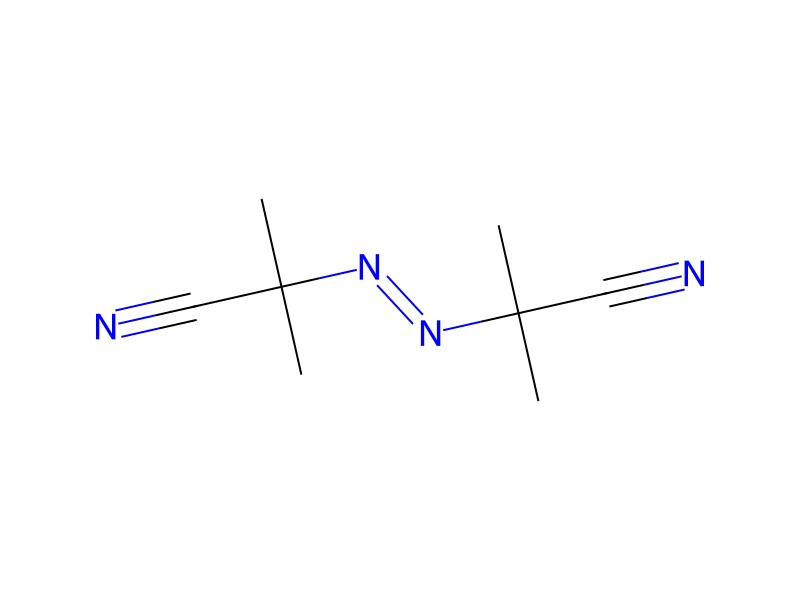
1.65 g (3.38 mmol) of 7-chloro-4,5-dihydro-3-(pyrid-4-yl)-3H-benzo[e]indazol-1-yl N,N-diisopropylcarbamate, prepared according to the method described in Example 5, 1.105 g (6.21 mmol) of N-bromosuccinimide and 0.127 g (0.78 mmol) of 2,2′-azobis(2-methylpropionitrile) are added to a 100 ml reactor. The mixture, dissolved in 40 ml of carbon tetrachloride, is stirred at reflux for 24 h and is then concentrated under reduced pressure. The resulting product is taken up in 300 ml of dichloromethane and 2 ml of a concentrated aqueous ammonia solution. The organic phase is separated and washed with 200 ml of water and then with 200 ml of a saturated aqueous sodium chloride solution. The organic phase is subsequently dried over magnesium sulphate and then concentrated under reduced pressure. The resulting product is purified by chromatography on an alumina column (eluents: mixture of dichloromethane and of methanol) and then on a silica column (eluents: mixture of dichloromethane and of ethyl acetate). The product thus isolated is converted to the hydrochloride by dissolution in a 0.1N solution of hydrochloric acid in isopropanol. The solution is concentrated to dryness under reduced pressure. After triturating from ethyl ether, filtering off and drying under reduced pressure, 1.2 g (2.6 mmol) of the final product are obtained.