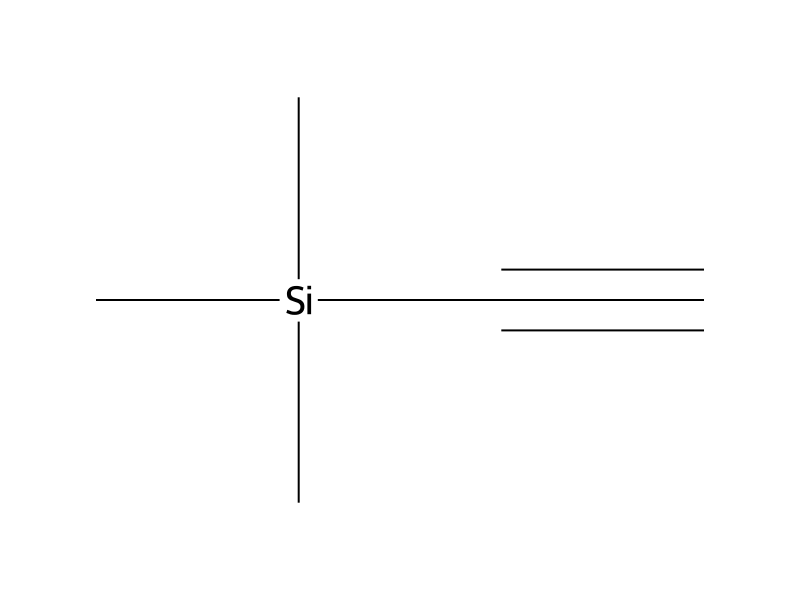
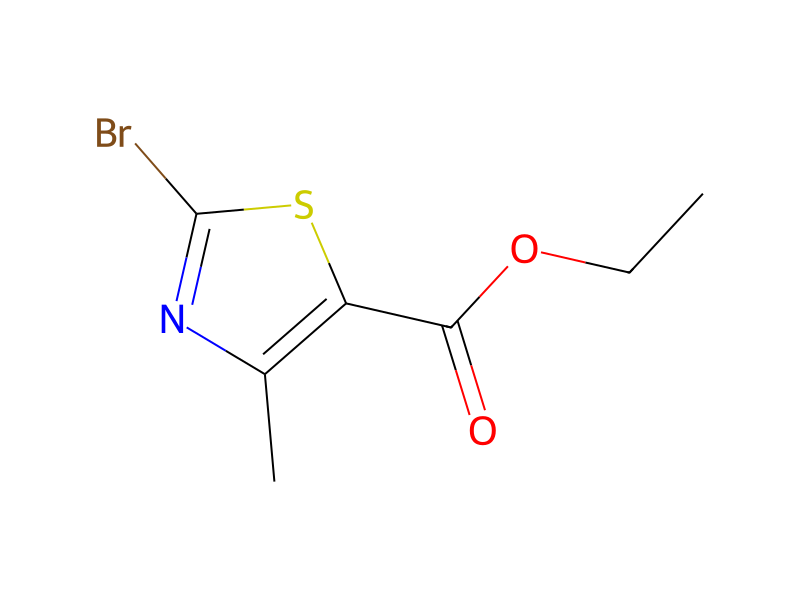
To a degassed solution of ethyl 2-bromo-4-methylthiazole-5-carboxylate (0.50 g, 2.00 mmol) in toluene (10 mL) was added N,N-diisopropylethylamine (0.5 mL, 3.0 mmol), copper(I) iodide (0.01 g, 0.06 mmol), trimethylsilylacetylene (0.05 mL, 3.70 mmol) and bis(triphenylphosphine)palladium(II) dichloride (0.05 g, 0.06 mmol). The reaction mixture was heated at 40° C. under nitrogen for 5 hours, cooled to ambient temperature and concentrated in vacuo. The residue was dissolved in methanol (10 mL) and 10% lithium hydroxide solution (0.5 mL). The reaction mixture was stirred at ambient temperature for 10 minutes and extracted with dichloromethane. The organic layer was washed with water, brine, dried over anhydrous sodium sulfate and filtered. The filtrate was concentrated in vacuo, and the residue was purified by column chromatography to afford the title compound as a white solid (0.31 g, 77%): MS (ES+) m/z 196.2 (M+1).