Reaction equation

[F:1][C:2]([F:8])([F:7])[C:3]([CH3:6])([OH:5])[CH3:4].C([Li])CCC.Cl[C:15]([O:17][C:18]1[CH:23]=[CH:22][C:21]([N+:24]([O-:26])=[O:25])=[CH:20][CH:19]=1)=[O:16]>C1COCC1.CCCCCC.C(OCC)(=O)C>[C:15](=[O:16])([O:5][C:3]([CH3:6])([CH3:4])[C:2]([F:8])([F:7])[F:1])[O:17][C:18]1[CH:19]=[CH:20][C:21]([N+:24]([O-:26])=[O:25])=[CH:22][CH:23]=1Participants
7
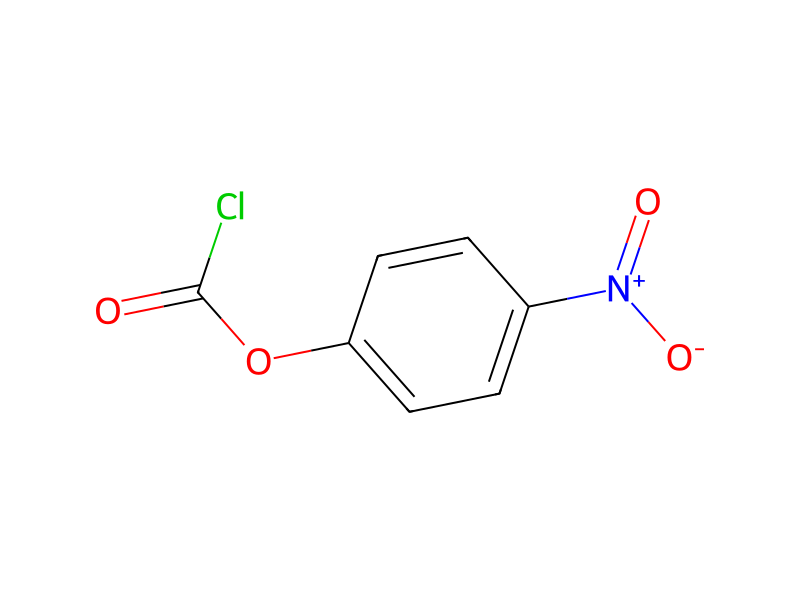
Reactant 3


Product 1

Reagents, catalysts & solvents 3



Procedure
To a solution of 1,1,1-trifluoro-2-methylpropan-2-ol (1.0 g) in THF (30 mL) was added a 2M solution of n-butyl lithium in n-hexane (3.9 mL) and then 4-nitrophenyl chloroformate (2.4 g) at −75° C. The mixture was warmed to room temperature and diluted with ethyl acetate, washed with water, dried over sodium sulfate, filtered and concentrated in vacuo. The residue was purified by silica gel chromatography (0-50% EtOAc/Hexane) to give 4-nitrophenyl 1,1,1-trifluoro-2-methylpropan-2-yl carbonate as a pale yellow foam.
Workup
- customat −75° C
- washwashed with water
- dry with materialdried over sodium sulfate
- filtrationfiltered
- concentrationconcentrated in vacuo
- customThe residue was purified by silica gel chromatography (0-50% EtOAc/Hexane)
Sources & evidence
- ORD record
- ord-3bf51f7a5c41482e8f8af026c33c8c4c
- Source dataset
- uspto-grants-2012_09
- Patent number
- US08263632B2
Linked notes
Loading…