HomeMCPWorkbenchSkills
HomeWorkbenchNotificationsMe
llms.txt · MCP GuidePrivacy Policy · Terms of Service · Supportv1.8.0
  1. Home
  2. /Reaction

Hydrochloric Acid → HCID 68524499, compound

HRID 2386192
Notes
Print preview

Reaction equation

HRID 2386192 reaction equation
[Br-].[C:2]([CH2:5][CH2:6][CH2:7][CH2:8][CH2:9][P+](C1C=CC=CC=1)(C1C=CC=CC=1)C1C=CC=CC=1)([OH:4])=[O:3].[Li+].C[Si]([N-][Si](C)(C)C)(C)C.[CH3:39][O:40][C:41]1[CH:42]=[C:43]([CH:46]=[CH:47][CH:48]=1)[CH:44]=O.Cl>O1CCCC1>[CH3:39][O:40][C:41]1[CH:42]=[C:43]([CH:44]=[CH:9][CH2:8][CH2:7][CH2:6][CH2:5][C:2]([OH:4])=[O:3])[CH:46]=[CH:47][CH:48]=1
ParticipantsProcedureWorkupSources & evidenceReaction notes

Participants

6

Reactant 4

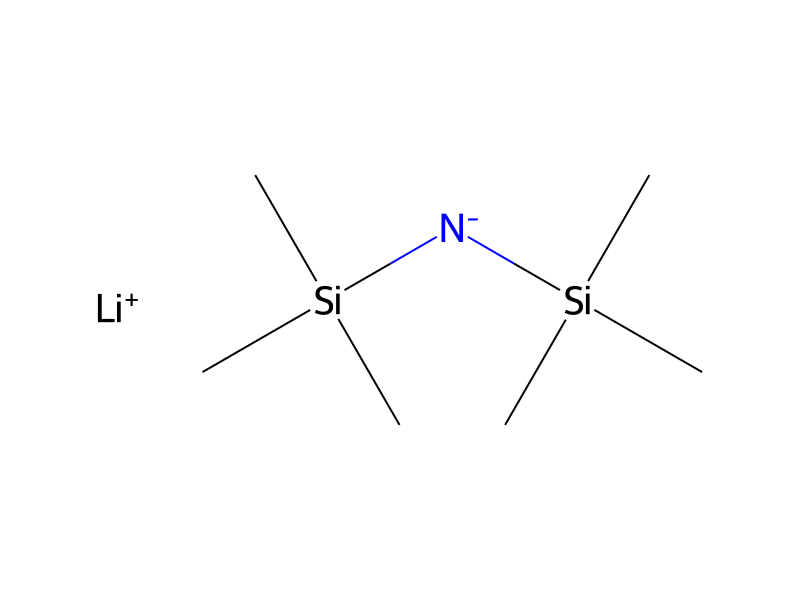
HCID 313Hydrochloric AcidHCID 115693-MethoxybenzaldehydeHCID 2733832Lithium hexamethyldisilazaneHCID 2779280(5-Carboxypentyl)triphenylphosphanium bromide

Product 1

HCID 68524499HCID 68524499, compoundYield 99%

Reagents, catalysts & solvents 1

HCID 8028
Tetrahydrofuran
Solvent

Procedure

A solution was formed by adding (5-carboxypentyl)triphenylphosphonium bromide (1.67 g, 3.67 mmol), under an atmosphere of argon, to a 1 M solution of LiHMDS (in tetrahydrofuran) (7.34 mL, 7.34 mmol). The resultant dark red solution was allowed to stir at ambient temperature for 30 minutes. Commercially available 3-methoxybenzaldehyde (0.100 g, 0.734 mmol) was dissolved in 5 mL anhydrous tetrahydrofuran and subsequently added to the reaction solution. Stirring continued for 6 hours until 6 N hydrochloric acid was carefully added to quench the reaction solution to a pH 2. Ethyl acetate was added and the organic layer was separated. The aqueous phase was washed thrice with ethyl acetate. The combined organic layers were washed once with brine and dried over sodium sulfate. The solvent was removed in vacuo and the olefin acid product was purified as a off-white oily solid in 99% yield (0.170 g) as a 85E:15Z mixture of isomers using flash column chromatography (silica) (25% ethyl acetate:hexanes mobile phase): 1H NMR (500 MHz, CDCl3) δ 7.29-7.36 (m, 1H), 7.03 (d, J=7.5 Hz, 1H), 6.95-6.98 (m, 1H), 6.85-6.91 (m, 1H), 6.49 (d, J=11.5 Hz, 0.15H), 6.45 (d, J=15.5 Hz, 0.85H), 6.27-6.32 (m, 0.85H), 5.71-5.76 (m, 0.15H), 3.90 (s, 3H), 2.44-2.50 (m, 2.4H), 2.31-2.35 (m, 1.6H), 1.77-1.82 (m, 2H), 1.60-1.66 (m, 2H); 13C NMR (125 MHz, CDCl3) δ 180.65, 160.21, 139.62, 139.42, 132.95, 130.98, 130.62, 129.88, 129.64, 129.55, 121.72, 119.09, 114.77, 113.01, 112.50, 111.74, 55.61, 34.37, 33.00, 29.70, 29.11, 28.69, 24.73, 24.64.


Workup

  1. customA solution was formed
  2. additionsubsequently added to the reaction solution
  3. stirringStirring
  4. additionwas carefully added
  5. customto quench the reaction solution to a pH 2
  6. additionEthyl acetate was added
  7. customthe organic layer was separated
  8. washThe aqueous phase was washed thrice with ethyl acetate
  9. washThe combined organic layers were washed once with brine
  10. dry with materialdried over sodium sulfate
  11. customThe solvent was removed in vacuo
  12. customthe olefin acid product was purified as a off-white oily solid in 99% yield (0.170 g) as a 85E
  13. addition15Z mixture of isomers

Sources & evidence

ORD record
ord-5f76007f4fdd439aa961181f241e3fc4
Source dataset
uspto-grants-2012_09
DOI
10.6084/m9.figshare.5104873.v1
Patent number
US08268817B2

Reaction notes

Loading…

On this pageParticipantsProcedureWorkupSources & evidenceReaction notes