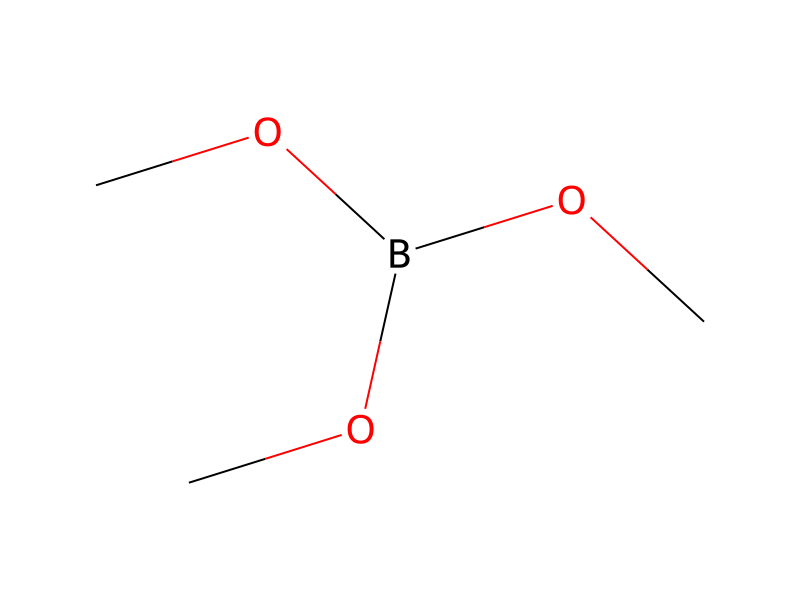
In a 100 mL three-neck flask was put 1.4 g (3.6 mmol) of 9-(3-bromophenyl)-9-phenyl-9H-fluorene. The air in the flask was replaced with nitrogen. Then, 36.0 mL of tetrahydrofuran was added to the mixture, and the mixture was stirred at 80° C. for 30 minutes. After the stirring, 2.4 mL (4.0 mmol) of a 1.65 mol/L hexane solution of n-butyllithium was dripped with a syringe, followed by stirring at −80° C. for 2 hours. Then, 0.6 mL (4.8 mmol) of trimethyl borate was added, and the mixture was stirred overnight while the temperature thereof was gradually increased from −80° C. to room temperature. After the stirring, an aqueous solution of hydrochloric acid (1 mol/L) was added to this mixture, and it was then stirred at room temperature for 30 minutes. Then, ethyl acetate was added to separate the organic layer and the aqueous layer of this mixture, and the aqueous layer was extracted with ethyl acetate three times. This ethyl acetate layer and the organic layer were combined, washed with saturated brine, and dried with magnesium sulfate. The obtained mixture was gravity filtered so that magnesium sulfate was removed, and the obtained filtrate was concentrated to give a white solid. Recrystallization of the obtained white solid from a mixed solvent of ethyl acetate and hexane gave 1.2 g of a white solid in 90% yield, which was the substance to be produced. The synthesis scheme of this Step 1 is shown in (E18-1) given below.