HomeMCPWorkbenchSkills
HomeWorkbenchNotificationsMe
llms.txt · MCP GuidePrivacy Policy · Terms of Service · Supportv1.8.0
  1. Home
  2. /Reaction

Sodium hydride → 1-(7-Chloro-1H-pyrrolo[2,3-c]pyridin-3-yl)-2,2,2-trifluoro-1-[1-(4-fluorophenyl)-1H-indazol-5-yl]ethanol

HRID 244392
Notes
Print preview

Reaction equation

HRID 244392 reaction equation
Br[C:2]1[CH:3]=[C:4]2[C:8](=[CH:9][CH:10]=1)[N:7]([C:11]1[CH:16]=[CH:15][C:14]([F:17])=[CH:13][CH:12]=1)[N:6]=[CH:5]2.[Li]CCCC.C(=O)=O.CC(C)=O.[Na].[Cl:31][C:32]1[N:33]=[CH:34][CH:35]=[C:36]2[C:40]([C:41](=[O:46])[C:42]([F:45])([F:44])[F:43])=[CH:39][NH:38][C:37]=12.[H-].[Na+]>C1COCC1>[Cl:31][C:32]1[N:33]=[CH:34][CH:35]=[C:36]2[C:40]([C:41]([C:2]3[CH:3]=[C:4]4[C:8](=[CH:9][CH:10]=3)[N:7]([C:11]3[CH:16]=[CH:15][C:14]([F:17])=[CH:13][CH:12]=3)[N:6]=[CH:5]4)([OH:46])[C:42]([F:43])([F:44])[F:45])=[CH:39][NH:38][C:37]=12
ParticipantsProcedureWorkupSources & evidenceReaction notes

Participants

8

Reactant 6

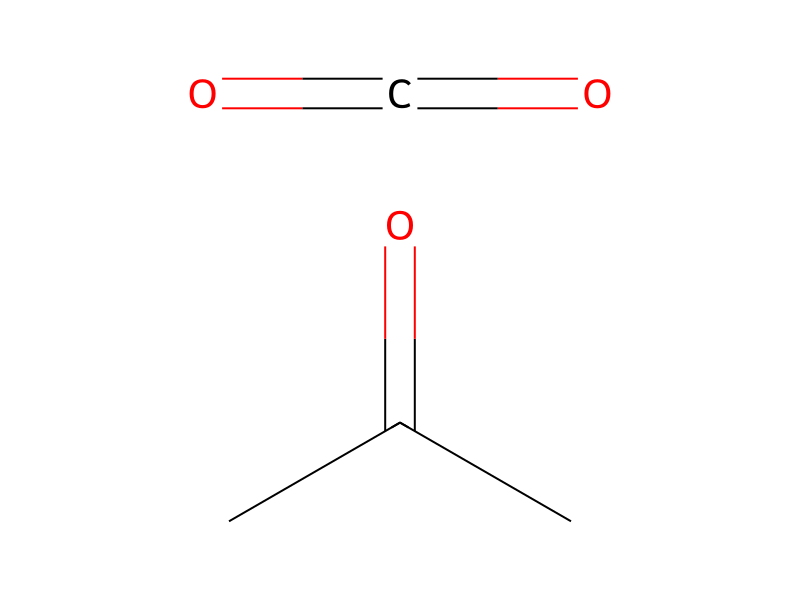
HCID 24758Sodium hydrideHCID 5360545SodiumHCID 18522661Acetone cardiceHCID 468307945-bromo-1-(4-fluorophenyl)-1H-indazoleHCID 594372561-(7-chloro-1H-pyrrolo[2,3-c]pyridin-3-yl)-2,2,2-trifluoroethanone2×HCID 178418339Butyllithium

Product 1

HCID 24959089
1-(7-Chloro-1H-pyrrolo[2,3-c]pyridin-3-yl)-2,2,2-trifluoro-1-[1-(4-fluorophenyl)-1H-indazol-5-yl]ethanol
Yield 49%

Reagents, catalysts & solvents 1

HCID 8028TetrahydrofuranSolvent2×

Procedure

To a chilled (−78° C.) solution of 490 mg (1.68 mmol) of 5-bromo-1-(4-fluorophenyl)-1H-indazole in 5 mL of anhydrous THF was added 0.69 mL (1.73 mmol) of a 2.5 M solution of n-BuLi in hexanes. The mixture stirred for 5 minutes, and was then added to a chilled (dry ice-acetone) solution of the sodium salt of 1-(7-chloro-1H-pyrrolo[2,3-c]pyridin-3-yl)-2,2,2-trifluoroethanone prepared by adding at room temperature 83 mg (2.08 mmol) of 60% sodium hydride in mineral oil to 374 mg (1.50 mmol) of 1-(7-chloro-1H-pyrrolo[2,3-c]pyridin-3-yl)-2,2,2-trifluoroethanone (prepared as described in J. Org. Chem. 2002, 76, 6226) in 5 mL of THF. The mixture stirred for 30 minutes with the cold bath removed and was then diluted with 30 mL of saturated aqueous ammonium chloride and extracted with three 25 mL portions of ethyl acetate. The combined organic layers were washed with three 25 mL portions of brine, dried over magnesium sulfate, filtered, and concentrated in vacuo. The crude residue was chromatographed on silica gel using dichloromethane to load the sample and then eluting with dichloromethane-hexanes (50-100% gradient) and then ethyl acetate-dichloromethane (0-25%) to afford partially purified product. A second column eluting with ether-hexanes (5-50% gradient) followed by solidifying the material from the column from ether-hexanes gave 344 mg (49%) of the title compound. MS m/z 461.25 (MH+).


Workup

  1. additionwas then added to
  2. customprepared
  3. stirringThe mixture stirred for 30 minutes with the cold bath
  4. customremoved
  5. additionwas then diluted with 30 mL of saturated aqueous ammonium chloride
  6. extractionextracted with three 25 mL portions of ethyl acetate
  7. washThe combined organic layers were washed with three 25 mL portions of brine
  8. dry with materialdried over magnesium sulfate
  9. filtrationfiltered
  10. concentrationconcentrated in vacuo
  11. customThe crude residue was chromatographed on silica gel
  12. washeluting with dichloromethane-hexanes (50-100% gradient)
  13. customethyl acetate-dichloromethane (0-25%) to afford partially purified product
  14. washA second column eluting with ether-hexanes (5-50% gradient)

Sources & evidence

ORD record
ord-dff48b6fd7d24841ae3d85a23b4bbb75
Source dataset
uspto-grants-2014_02
DOI
10.6084/m9.figshare.5104873.v1
Patent number
US08658637B2

Reaction notes

Loading…

On this pageParticipantsProcedureWorkupSources & evidenceReaction notes