Reaction equation

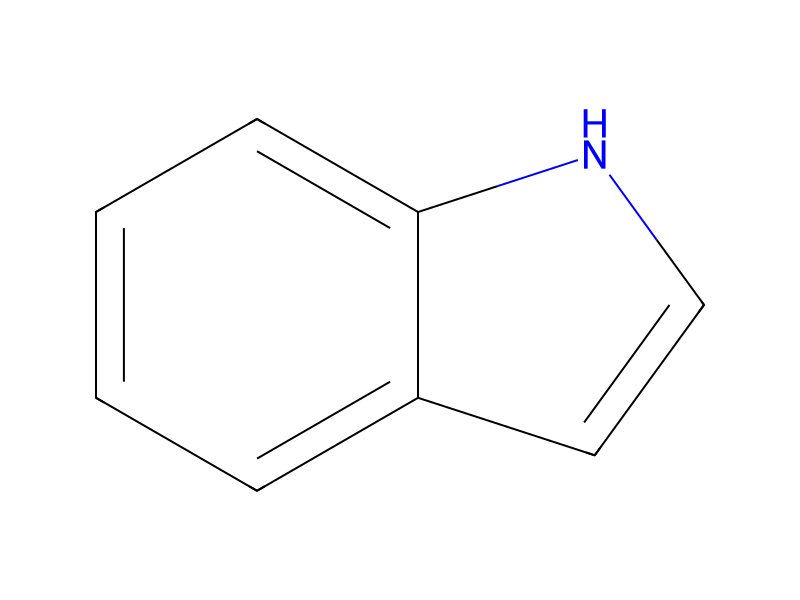
[NH:1]1[C:9]2[C:4](=[CH:5][CH:6]=[CH:7][CH:8]=2)[CH:3]=[CH:2]1.[H-].[Na+].Cl[CH2:13][CH:14]1[CH2:18][O:17][C:16]([CH3:20])([CH3:19])[O:15]1>C1COCC1.[I-].C([N+](CCCC)(CCCC)CCCC)CCC>[CH3:19][C:16]1([CH3:20])[O:15][CH:14]([CH2:13][N:1]2[C:9]3[C:4](=[CH:5][CH:6]=[CH:7][CH:8]=3)[CH:3]=[CH:2]2)[CH2:18][O:17]1Participants





Procedure
To a stirred room temperature solution of indole (5.9 g, 50 mmol) in THF (100 mL) was added sodium hydride (2.4 g of 60% in mineral oil, 60 mmol) in one portion. After 30 minutes, 4-chloromethyl-2,2-dimethyl-1,3-dioxolane (10.6 mL, 75 mmol) was added followed by tetra-n-butylammonium iodide (1.9 g, 5 mmol) and the mixture was warmed at reflux. After 24 hours, LCMS showed about 50% conversion [MS m/z 232 (MH+)]. Additional 4-chloromethyl-2,2-dimethyl-1,3-dioxolane (11.4 mL) was added and the refluxing continued. After 18 hours, the mixture was cooled, diluted with THF (300 mL), filtered, and concentrated in vacuo to afford a brown oil. The residue was purified by column chromatography over silica gel eluting with 0-100% methylene chloride in hexanes and the product-rich fractions were collected to afford 3.3 g of 1-(2,2-dimethyl-1,3-dioxolan-4-ylmethyl)-1H-indole as a brownish oil.
Workup
- temperaturethe mixture was warmed
- temperatureat reflux
- waitAfter 24 hours
- waitAfter 18 hours
- temperaturethe mixture was cooled
- filtrationfiltered
- concentrationconcentrated in vacuo
- customto afford a brown oil
- customThe residue was purified by column chromatography over silica gel eluting with 0-100% methylene chloride in hexanes
- customthe product-rich fractions were collected
Sources & evidence
- ORD record
- ord-c94e943c02ee4d41a5c763313e158079
- Source dataset
- uspto-grants-2014_02
- Patent number
- US08658637B2
Linked notes
Loading…