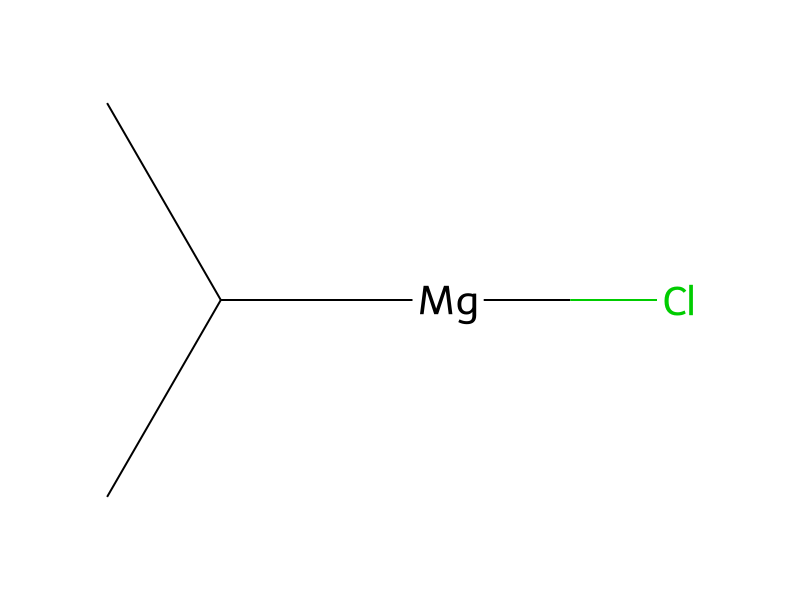
[Cl:1][C:2]1[CH:10]=[C:9]2[C:5]([C:6](I)=[N:7][NH:8]2)=[C:4]([F:12])[CH:3]=1.[H-].[Na+].C([Mg]Cl)(C)C.[CH2:20]([Sn:24](Cl)([CH2:29][CH2:30][CH2:31][CH3:32])[CH2:25][CH2:26][CH2:27][CH3:28])[CH2:21][CH2:22][CH3:23].[Cl-].[NH4+]>C1COCC1.C(OCC)(=O)C>[Cl:1][C:2]1[CH:10]=[C:9]2[C:5]([C:6]([Sn:24]([CH2:25][CH2:26][CH2:27][CH3:28])([CH2:29][CH2:30][CH2:31][CH3:32])[CH2:20][CH2:21][CH2:22][CH3:23])=[N:7][NH:8]2)=[C:4]([F:12])[CH:3]=16-Chloro-4-fluoro-3-iodo-1H-indazole (10.1 g, 34.1 mmol) was dissolved in THF (170 ml). The reaction flask was stirred in a water bath and sodium hydride (60% dispersion, 1.64 g, 40.9 mmol) was added. The mixture was stirred for 15 min then cooled in an ice/salt bath to −15° C. Isopropylmagnesium chloride (2.0 M in THF, 20.6 ml, 41.2 mmol) was added dropwise. After 40 min, tributyltin chloride (11.6 ml, 42.6 mmol) was slowly added and the reaction was allowed to warm to room temperature. After an additional 2 h stirring, ammonium chloride solution and ethyl acetate were added. The layers were separated and the aqueous layer was extracted once more with ethyl acetate. The combined organic layers were washed with sodium chloride solution and dried over sodium sulfate. Evaporation of the solvent provided 6-chloro-4-fluoro-3-tributylstannanyl-1H-indazole as an oil which was used directly in the next step.