HomeMCPWorkbenchSkills
HomeWorkbenchNotificationsMe
llms.txt · MCP GuidePrivacy Policy · Terms of Service · Supportv1.8.0
  1. Home
  2. /Reaction

Hydrochloric Acid → 2-[6-chloro-1-(2-dimethylamino-ethyl)-4-fluoro-1H-indazol-3-yl]-5H-pyrrolo[2,3-b]pyrazine-7-carboxylic acid isopropylamide hydrochloride

HRID 246114
Notes
Print preview

Reaction equation

HRID 246114 reaction equation
[CH:1]([NH:4][C:5]([C:7]1[C:15]2[C:10](=[N:11][CH:12]=[C:13]([C:16]3[C:24]4[C:19](=[CH:20][C:21]([Cl:26])=[CH:22][C:23]=4[F:25])[N:18]([CH2:27][CH2:28][N:29]([CH3:31])[CH3:30])[N:17]=3)[N:14]=2)[N:9](COCC[Si](C)(C)C)[CH:8]=1)=[O:6])([CH3:3])[CH3:2].FC(F)(F)C(O)=O.C(N)CN.Cl>ClCCl.CO.ClCCl.O1CCOCC1.C(OCC)(=O)C.O>[ClH:26].[CH:1]([NH:4][C:5]([C:7]1[C:15]2[C:10](=[N:11][CH:12]=[C:13]([C:16]3[C:24]4[C:19](=[CH:20][C:21]([Cl:26])=[CH:22][C:23]=4[F:25])[N:18]([CH2:27][CH2:28][N:29]([CH3:31])[CH3:30])[N:17]=3)[N:14]=2)[NH:9][CH:8]=1)=[O:6])([CH3:3])[CH3:2]
ParticipantsProcedureWorkupSources & evidenceReaction notes

Participants

10

Reactant 4

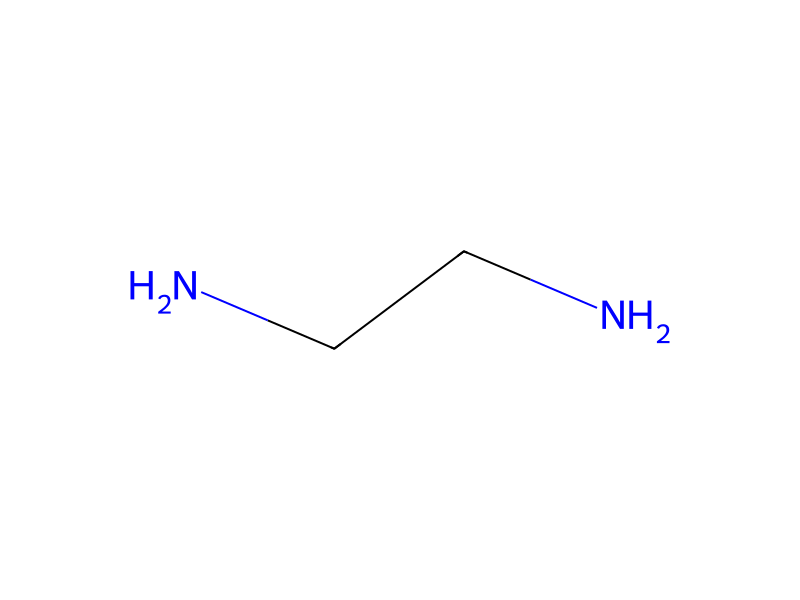
HCID 313Hydrochloric AcidHCID 3301EthylenediamineHCID 6422Trifluoroacetic acidHCID 712802182-[6-Chloro-1-(2-dimethylamino-ethyl)-4-fluoro-1H-indazol-3-yl]-5-(2-trimethylsilanylethoxymethyl)-5H-pyrrolo[2,3-b]pyrazine-7-carboxylic acid isopropylamide

Product 1

HCID 71279944
2-[6-chloro-1-(2-dimethylamino-ethyl)-4-fluoro-1H-indazol-3-yl]-5H-pyrrolo[2,3-b]pyrazine-7-carboxylic acid isopropylamide hydrochloride
Yield 124.9%

Reagents, catalysts & solvents 5

HCID 962WaterSolventHCID 6344DichloromethaneSolventHCID 8857Ethyl AcetateSolventHCID 312751,4-DioxaneSolventHCID 21226129Dichloromethane methanolSolvent

Procedure

2-[6-Chloro-1-(2-dimethylamino-ethyl)-4-fluoro-1H-indazol-3-yl]-5-(2-trimethylsilanylethoxymethyl)-5H-pyrrolo[2,3-b]pyrazine-7-carboxylic acid isopropylamide (35 mg, 0.06 mmol) was dissolved in dichloromethane (1.6 ml) and cooled in ice bath. Trifluoroacetic acid (0.8 ml) was slowly added and the reaction was stirred at room temperature for 2 h. The reaction was evaporated and the residue was dissolved in dichloromethane (1 ml). Ethylenediamine (0.25 ml, 3.7 mmol) was added and the mixture was stirred for 18 h. Water and then ethyl acetate were added to the mixture. The layers were separated and the aqueous layer was extracted three times with ethyl acetate. The combined organic layers were washed with sodium chloride solution, dried over sodium sulfate and evaporated. The residue was purified by silica gel chromatography (methanol/dichloromethane). The product thus isolated was dissolved in methanol/dichloromethane and treated with 4 eq of 4 M HCl in 1,4-dioxane. Evaporation of the solvent provided a solid which was dried under high vacuum to afford 18 mg (62%) of 2-[6-chloro-1-(2-dimethylamino-ethyl)-4-fluoro-1H-indazol-3-yl]-5H-pyrrolo[2,3-b]pyrazine-7-carboxylic acid isopropylamide hydrochloride. MS: (M+H)+=444; mp=281-283° C. 1H NMR (300 MHz, DMSO-d6) δ: 10.17-10.33 (m, 1H), 9.08 (s, 1H), 8.44 (d, J=3.0 Hz, 1H), 8.26 (d, J=7.9 Hz, 1H), 8.03-8.08 (m, 1H), 7.34 (d, J=10.6 Hz, 1H), 4.94-5.05 (m, 2H), 4.14-4.30 (m, 1H), 3.66-3.77 (m, 2H), 2.89 (d, J=4.5 Hz, 6H), 1.24 (d, J=6.8 Hz, 6H).


Workup

  1. temperaturecooled in ice bath
  2. customThe reaction was evaporated
  3. dissolutionthe residue was dissolved in dichloromethane (1 ml)
  4. stirringthe mixture was stirred for 18 h
  5. customThe layers were separated
  6. extractionthe aqueous layer was extracted three times with ethyl acetate
  7. washThe combined organic layers were washed with sodium chloride solution
  8. dry with materialdried over sodium sulfate
  9. customevaporated
  10. customThe residue was purified by silica gel chromatography (methanol/dichloromethane)
  11. customThe product thus isolated
  12. customEvaporation of the solvent
  13. customprovided a solid which
  14. customwas dried under high vacuum

Sources & evidence

ORD record
ord-fce86f94375a4e059029f20f961f277b
Source dataset
uspto-grants-2014_02
DOI
10.6084/m9.figshare.5104873.v1
Patent number
US08658646B2

Reaction notes

Loading…

On this pageParticipantsProcedureWorkupSources & evidenceReaction notes