HomeMCPWorkbenchSkills
HomeWorkbenchNotificationsMe
llms.txt · MCP GuidePrivacy Policy · Terms of Service · Supportv1.8.0
  1. Home
  2. /Reaction

Sodium Iodide → 4-[4-(1,4,7-Trioxaoct-1-yl)phenyl]-N-benzyloxycarbonylbutylamine

HRID 25137
Notes
Print preview

Reaction equation

HRID 25137 reaction equation
C([NH:11][CH2:12][CH2:13][CH2:14][CH2:15][C:16]1[CH:21]=[CH:20][C:19]([OH:22])=[CH:18][CH:17]=1)(OCC1C=CC=CC=1)=O.Br[CH2:24][CH2:25][O:26][CH2:27][CH2:28][O:29][CH3:30].[C:31](=[O:34])([O-])[O-:32].[K+].[K+].[I-].[Na+]>CC(C)=O.CN(C=O)C>[O:22]([C:19]1[CH:18]=[CH:17][C:16]([CH:15]([C:31]([O:32][CH2:15][C:16]2[CH:21]=[CH:20][CH:19]=[CH:18][CH:17]=2)=[O:34])[CH2:14][CH2:13][CH2:12][NH2:11])=[CH:21][CH:20]=1)[CH2:24][CH2:25][O:26][CH2:27][CH2:28][O:29][CH3:30]
ParticipantsProcedureWorkupSources & evidenceReaction notes

Participants

7

Reactant 4

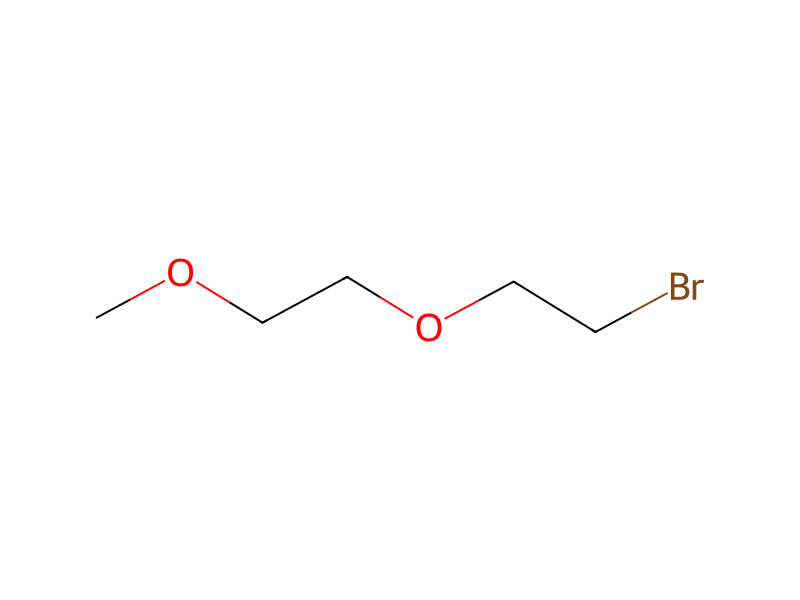
HCID 5238Sodium Iodide2×HCID 11430Potassium Carbonate3×HCID 1235321-Bromo-3,6-dioxaheptane3×HCID 11637991N-Cbz4-(4-hydroxyphenyl)butylamine

Product 1

HCID 673669224-[4-(1,4,7-Trioxaoct-1-yl)phenyl]-N-benzyloxycarbonylbutylamineYield 166%

Reagents, catalysts & solvents 2

HCID 180AcetoneSolventHCID 6228DimethylformamideSolvent

Procedure

4-(4-Hydroxyphenyl)-N-benzyloxycarbonylbutylamine (29) (1.0 g, 3.3 mmol), 1-bromo-2-(2-methoxyethoxy)ethane (0.67 g, 3.7 mmol), and potassium carbonate (0.60 g, 4.3 mmol) were combined in acetone (20 mL), and stirred at reflux overnight. The reaction was allowed to cool, and then filtered and evaporated. The residue was re-subjected in methyl ethyl ketone (10 mL), 1-bromo-2-(2-methoxyethoxy)ethane (0.91 g, 5.0 mmol), potassium carbonate (0.74 g, 5.3 mmol), and sodium iodide (0.5 g, 3.3 mmol) with stirring at reflux for 2.5 h. The reaction was allowed to cool, and was filtered and evaporated. The residue was re-subjected in DMF (10 mL), with 1-bromo-2-(2-methoxyethoxy)ethane (1.8 g, 9.8 mmol), potassium carbonate (1.60 g, 11.6 mmol), and sodium iodide (0.4 g, 2.7 mmol), overnight with stirring at 70° C. The reaction was evaporated to remove the solvent and then was dissolved in ethyl acetate (70 mL). The organic extract was washed with water (3×20 mL), dried over potassium carbonate and filtered. Evaporation afforded 1.1 g of an oil which was purified by column chromatography (silica gel, 2:1 hexanes/ethyl acetate) to afford 800 mg (70%) of pure product 106. 1H NMR (300 MHz, CDCl3) δ 1.42-1.68 (m, 4H), 2.55 (t, J=7.5 Hz, 2H), 3.20 (q, J=6.2 Hz, 2H), 3.39 (s, 3H), 3.55-3.60 (m, 2H), 3.69-3.74 (m, 2H), 3.82-3.87 (m, 2H), 4.11 (t, 5.3 Hz, 2H), 4.71 (br s, 1H), 5.09 (s, 2H), 6.82 (d, J=8.5 Hz, 2H), 7.05 (d, J=8.5 Hz, 2H), 7.34 (s, 5H). CI MS m/z=402 [C23H31NO5+H]+.


Workup

  1. temperatureat reflux overnight
  2. temperatureto cool
  3. filtrationfiltered
  4. customevaporated
  5. temperatureat reflux for 2.5 h
  6. temperatureto cool
  7. filtrationwas filtered
  8. customevaporated
  9. stirringwith stirring at 70° C
  10. customThe reaction was evaporated
  11. customto remove the solvent
  12. dissolutionwas dissolved in ethyl acetate (70 mL)
  13. extractionThe organic extract
  14. washwas washed with water (3×20 mL)
  15. dry with materialdried over potassium carbonate
  16. filtrationfiltered
  17. customEvaporation

Sources & evidence

ORD record
ord-44524e05f3b2409f946232f9f9da094f
Source dataset
uspto-grants-2005_02
DOI
10.6084/m9.figshare.5104873.v1
Patent number
US06858615B2

Reaction notes

Loading…

On this pageParticipantsProcedureWorkupSources & evidenceReaction notes