Reaction equation

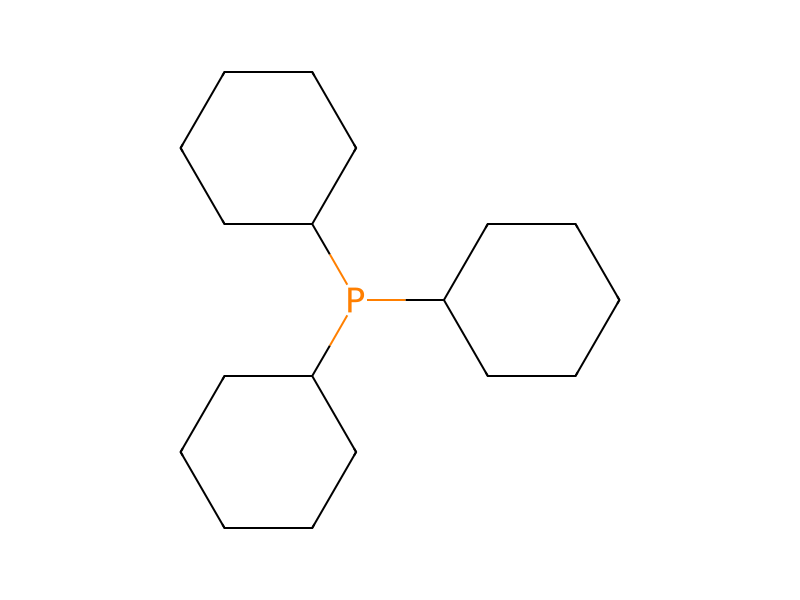
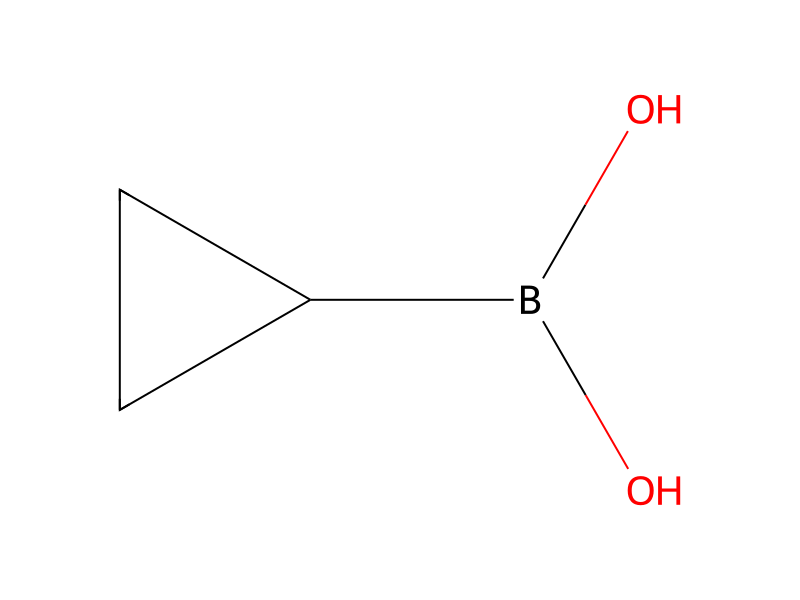
Br[C:2]1[CH:7]=[CH:6][CH:5]=[CH:4][C:3]=1[CH2:8][C:9]#[N:10].[CH:11]1(B(O)O)[CH2:13][CH2:12]1.P([O-])([O-])([O-])=O.[K+].[K+].[K+].C1(P(C2CCCCC2)C2CCCCC2)CCCCC1>C1(C)C=CC=CC=1.C([O-])(=O)C.[Pd+2].C([O-])(=O)C.O>[CH:11]1([C:2]2[CH:7]=[CH:6][CH:5]=[CH:4][C:3]=2[CH2:8][C:9]#[N:10])[CH2:13][CH2:12]1Participants
8
Reactant 4


Product 1

Reagents, catalysts & solvents 3



Conditions
- Temperature
- 100 °C
Procedure
To a solution of 0.784 g (4 mmol) 2-bromophenyl-acetonitrile in 16 ml toluene were added 0.8 ml water, 0.412 g (4.8 mmol) cyclopropylboronic acid, 2.97 g (14 mmol) tribasic potassium phosphate, 0.1 12 g (0.4 mmol) tricyclohexylphosphine and 0.045 g (0.2 mmol) palladium(II) acetate. The reaction mixture was stirred at 100° C. for 2 days. The solvent was evaporated and the residue taken up in water and ethyl acetate. The organic layer was washed with brine, dried over MgSO4, filtered and evaporated. The residue was purified using column chromatography (SiO2, heptane/ethyl acetate 98:2) to yield 0.40 g of (2-cyclopropyl-phenyl)-acetonitrile as a light-yellow oil that was used directly for the next step.
Workup
- customThe solvent was evaporated
- washThe organic layer was washed with brine
- dry with materialdried over MgSO4
- filtrationfiltered
- customevaporated
- customThe residue was purified
Sources & evidence
- ORD record
- ord-4d171b5178dd4365b39a40fdf193045c
- Source dataset
- uspto-grants-2011_01
- Patent number
- US07875645B2
Linked notes
Loading…