HomeMCPWorkbenchSkills
HomeWorkbenchNotificationsMe
llms.txt · MCP GuidePrivacy Policy · Terms of Service · Supportv1.8.0
  1. Home
  2. /Reaction

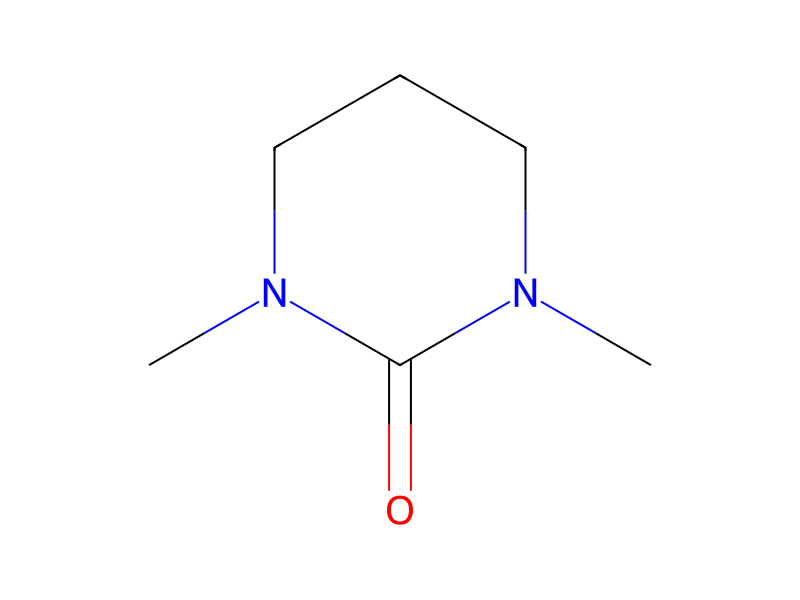
2(1H)-Pyrimidinone, tetrahydro-1,3-dimethyl- → HCID 523039, compound

HRID 256617
Notes
Print preview

Reaction equation

HRID 256617 reaction equation
C([N-][CH:5]([CH3:7])[CH3:6])(C)C.[Li+].CN1CCCN(C)[C:11]1=[O:17].[CH:18]1(N=C/C=C/C)[CH2:23][CH2:22][CH2:21][CH2:20]C1.Br[CH2:30]CC=C(C)C>O1CCCC1>[CH3:30][C:5]([CH3:6])=[CH:7][CH2:18][CH2:23][C:22](=[CH:21][CH3:20])[CH:11]=[O:17]
ParticipantsProcedureWorkupSources & evidenceReaction notes

Participants

6

Reactant 4

HCID 816462(1H)-Pyrimidinone, tetrahydro-1,3-dimethyl-HCID 1375215-Bromo-2-methyl-2-penteneHCID 2724682Lithium diisopropylamideHCID 11126452HCID 11126452, compound

Product 1

HCID 523039HCID 523039, compound

Reagents, catalysts & solvents 1

HCID 8028
Tetrahydrofuran
Solvent
3×

Procedure

To a stirred solution of lithium diisopropyl amide (14.0 mmol) in 10 ml tetrahydrofuran (THF) at -10° under argon was added 1,3-dimethyl-3,4,5,6-tetrahydro-2(1H)-pyrimidinone (DMPU) (1.7 ml, 14.0 mmol), followed after 45 minutes by the dropwise addition of crotonaldehyde cyclohexylimine (1.9 g, 12.7 mmol) in 2 ml THF. After 10 minutes at 0° the solution was cooled to -78° and stirred an additional 30 minutes, upon which time was added 1-bromo-4-methyl-3-pentene (2.49 g., 15.3 mmol) in 1 ml THF. After 4.5 hours at -70° to -65°, the reaction mixture was quenched with saturated ammonium chloride solution, warmed to room temperature, and extracted two times with ethyl ether. The organic portions were combined, washed four times with water, once with saturated sodium chloride, dried over magnesium sulfate and filtered. This ethyl ether solution was subsequently stirred for two hours at room temperature with 25 ml buffered acetic acid solution (pH 4.5). The organic portion was then washed twice with water, once with saturated sodium bicarbonate solution, once with sodium chloride solution, dried over magnesium sulfate, filtered and distilled at atmospheric pressure until about 25 ml of solution remained in the still pot. The residue was purified by flash chromatography (silica, 5 to 10% ethyl ether/hexane), the desired fractions were concentrated by distillation, and the residue was distilled (Kujelrohr, 25 mm 85° to 90°) to give the purified aldehyde as a pale yellow, volatile liquid.

Workup

  1. temperatureAfter 10 minutes at 0° the solution was cooled to -78°
  2. waitAfter 4.5 hours at -70° to -65°
  3. customthe reaction mixture was quenched with saturated ammonium chloride solution
  4. extractionextracted two times with ethyl ether
  5. washwashed four times with water
  6. dry with materialonce with saturated sodium chloride, dried over magnesium sulfate
  7. filtrationfiltered
  8. stirringThis ethyl ether solution was subsequently stirred for two hours at room temperature with 25 ml
  9. washThe organic portion was then washed twice with water, once with saturated sodium bicarbonate solution, once with sodium chloride solution
  10. dry with materialdried over magnesium sulfate
  11. filtrationfiltered
  12. distillationdistilled at atmospheric pressure until about 25 ml of solution
  13. customThe residue was purified by flash chromatography (silica, 5 to 10% ethyl ether/hexane)
  14. concentrationthe desired fractions were concentrated by distillation
  15. distillationthe residue was distilled (Kujelrohr, 25 mm 85° to 90°)

Sources & evidence

ORD record
ord-0b589830923344e8aeb7f9538ac1ec8a
Source dataset
uspto-grants-1993_11
DOI
10.6084/m9.figshare.5104873.v1
Patent number
US05258400

Reaction notes

Loading…

On this pageParticipantsProcedureWorkupSources & evidenceReaction notes
