HomeMCPWorkbenchSkills
HomeWorkbenchNotificationsMe
llms.txt · MCP GuidePrivacy Policy · Terms of Service · Supportv1.8.3
  1. Home
  2. /Reaction

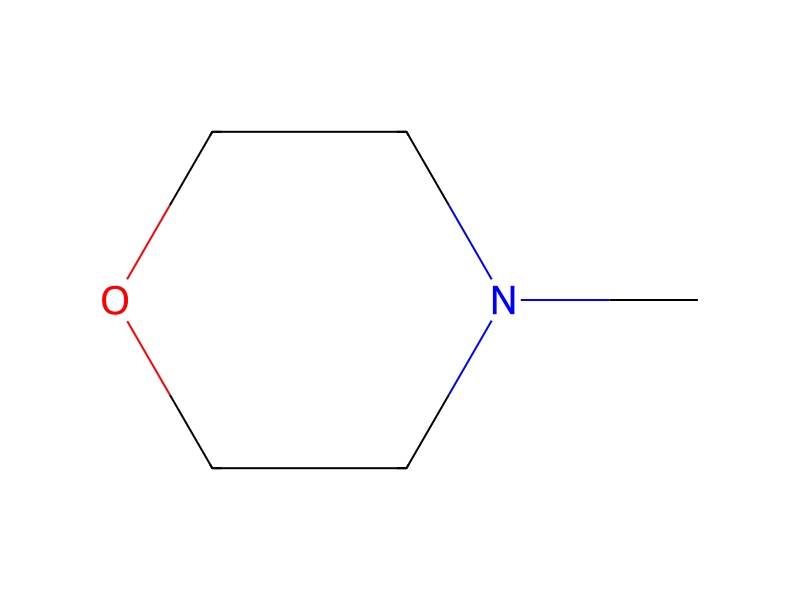
4-Methylmorpholine → N-[N-Phthalimido-3-(3-thienyl)-L-alanyl]-6-hydroxy-L-norleucine, methyl ester

HRID 260219
Print

Reaction equation

HRID 260219 reaction equation
CN1CCOCC1.Cl.[OH:9][CH2:10][CH2:11][CH2:12][CH2:13][C@@H:14]([C:16]([O:18][CH3:19])=[O:17])[NH2:15].[C:20]1(=[O:41])[N:24]([NH:25][C@H:26]([C:33](O)=[O:34])[CH2:27][C:28]2[CH:32]=[CH:31][S:30][CH:29]=2)[C:23](=[O:36])[C:22]2=[CH:37][CH:38]=[CH:39][CH:40]=[C:21]12.OC1C2N=NNC=2C=CC=1.C(N=C=NCCCN(C)C)C>C(Cl)Cl.CN(C)C=O>[C:23]1(=[O:36])[N:24]([NH:25][C@H:26]([C:33]([NH:15][C@H:14]([C:16]([O:18][CH3:19])=[O:17])[CH2:13][CH2:12][CH2:11][CH2:10][OH:9])=[O:34])[CH2:27][C:28]2[CH:32]=[CH:31][S:30][CH:29]=2)[C:20](=[O:41])[C:21]2=[CH:40][CH:39]=[CH:38][CH:37]=[C:22]12
ParticipantsConditionsProcedureWorkupSources & evidenceReaction notes

Participants

8

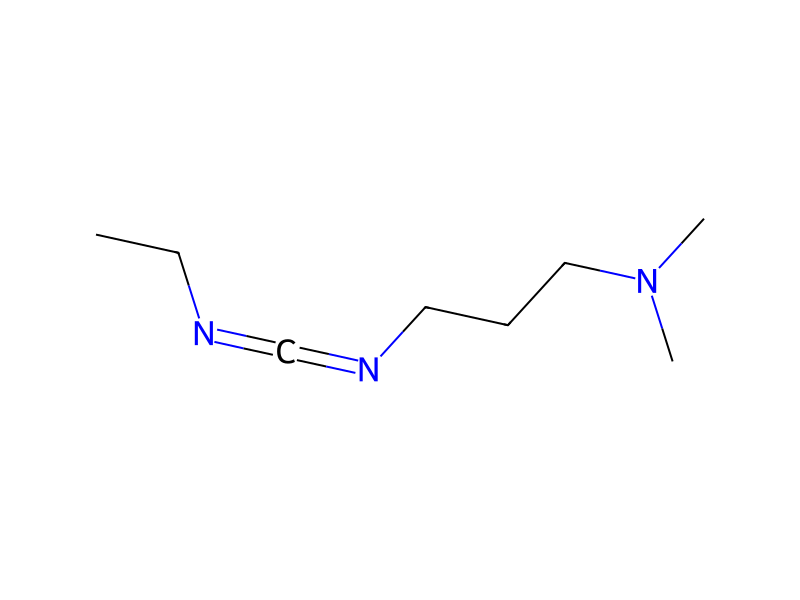
Reactant 5

HCID 79724-MethylmorpholineHCID 159081-Ethyl-3-(3'-dimethylaminopropyl)carbodiimideHCID 11680005methyl (2S)-2-amino-6-hydroxyhexanoate hydrochlorideHCID 70049552N-Phthalimido-3-(3-thienyl)-L-alanineHCID 178418300HCID 178418300, compound

Product 1

HCID 131719432
N-[N-Phthalimido-3-(3-thienyl)-L-alanyl]-6-hydroxy-L-norleucine, methyl ester

Reagents, catalysts & solvents 2

HCID 6228DimethylformamideSolventHCID 6344DichloromethaneSolvent

Conditions

Temperature
0 °C

Procedure

N-Methylmorpholine (1.89 ml., 18.12 mmol.) was added to a solution of 6-hydroxy-L-norleucine, methyl ester, hydrochloride (10.66 mmol.) in methylene chloride (41 ml.)/dimethylformamide (11 ml.) at room temperature under argon. The resulting mixture was cooled to 0° C. and N-phthalimido-3-(3-thienyl)-L-alanine (3.21 g., 10.66 mmol.), hydroxy-benzotriazole (1.48 g., 10.98 mmol.), and 1-ethyl-3-(3-dimethylaminopropyl)carbodiimide (2.25 g., 11.73 mmol.) were added sequentially. After stirring at 0° C. for 30 minutes, the mixture was warmed to room temperature and stirred for 2 hours. The volatiles were evaporated and the residue was partitioned between ethyl acetate and water. The organic layer was washed successively with 0.5N hydrochloric acid, water, saturated sodium bicarbonate, and brine, and the organic layer was dried (sodium sulfate), filtered, and concentrated. The residue was flash chromatographed (Merck silica gel) eluting with 4:1 ethyl acetate/hexane to give 3.8 g. of title compound as a white foam. TLC (ethyl acetate) Rf =0.56.

Workup

  1. temperaturethe mixture was warmed to room temperature
  2. stirringstirred for 2 hours
  3. customThe volatiles were evaporated
  4. customthe residue was partitioned between ethyl acetate and water
  5. washThe organic layer was washed successively with 0.5N hydrochloric acid, water, saturated sodium bicarbonate, and brine
  6. dry with materialthe organic layer was dried (sodium sulfate)
  7. filtrationfiltered
  8. concentrationconcentrated
  9. customchromatographed (Merck silica gel)
  10. washeluting with 4:1 ethyl acetate/hexane
  11. customto give 3.8 g

Sources & evidence

ORD record
ord-19e16890f34c49d38cde840436322ebd
Source dataset
uspto-grants-1996_06
DOI
10.6084/m9.figshare.5104873.v1
Patent number
US05525723

Reaction notes

On this pageParticipantsConditionsProcedureWorkupSources & evidenceReaction notes

