HomeMCPWorkbenchSkills
HomeWorkbenchNotificationsMe
llms.txt · MCP GuidePrivacy Policy · Terms of Service · Supportv1.8.0
  1. Home
  2. /Reaction

Hydrochloric Acid → 3-Heptanoylindole

HRID 260819
Notes
Print preview

Reaction equation

HRID 260819 reaction equation
[C:1](Cl)(=[O:8])[CH2:2][CH2:3][CH2:4][CH2:5][CH2:6][CH3:7].[Cl-].[Al+3].[Cl-].[Cl-].[NH:14]1[C:22]2[C:17](=[CH:18][CH:19]=[CH:20][CH:21]=2)[CH:16]=[CH:15]1.Cl>ClCCl.C(OCC)(=O)C>[C:1]([C:16]1[C:17]2[C:22](=[CH:21][CH:20]=[CH:19][CH:18]=2)[NH:14][CH:15]=1)(=[O:8])[CH2:2][CH2:3][CH2:4][CH2:5][CH2:6][CH3:7]
ParticipantsProcedureWorkupSources & evidenceReaction notes

Participants

7

Reactant 4

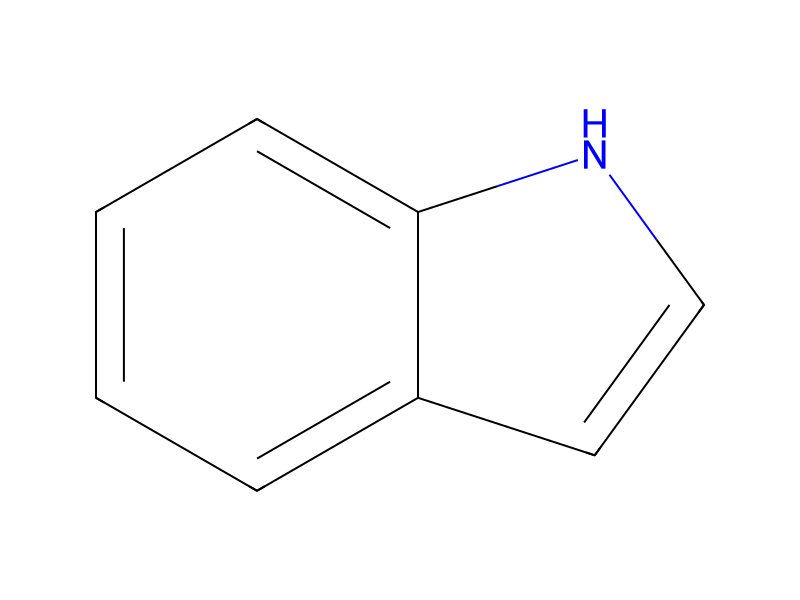
HCID 313Hydrochloric AcidHCID 798IndoleHCID 17313Heptanoyl chlorideHCID 6451240Aluminum(III) Chloride

Product 1

HCID 224004583-Heptanoylindole

Reagents, catalysts & solvents 2

HCID 6344DichloromethaneSolvent2×
HCID 8857
Ethyl Acetate
Solvent

Procedure

Heptanoyl chloride was added to a suspension of aluminum chloride in dichloromethane. The mixture was stirred at room temperature for 30 minutes. To the mixture was added a solution of indole in dichloromethane. The mixture was stirred at room temperature for 1 hour and poured into a mixture of hydrochloric acid and ethyl acetate. The organic layer was washed with water, dried over magnesium sulfate and evaporated. The residue was crystallized from diisopropyl ether to give 3-heptanoylindole as a white powder.

Workup

  1. stirringThe mixture was stirred at room temperature for 1 hour
  2. washThe organic layer was washed with water
  3. dry with materialdried over magnesium sulfate
  4. customevaporated
  5. customThe residue was crystallized from diisopropyl ether

Sources & evidence

ORD record
ord-a7cc296b0be747ccb701fb10fe59a7cf
Source dataset
uspto-grants-1996_06
DOI
10.6084/m9.figshare.5104873.v1
Patent number
US05530019

Reaction notes

Loading…

On this pageParticipantsProcedureWorkupSources & evidenceReaction notes