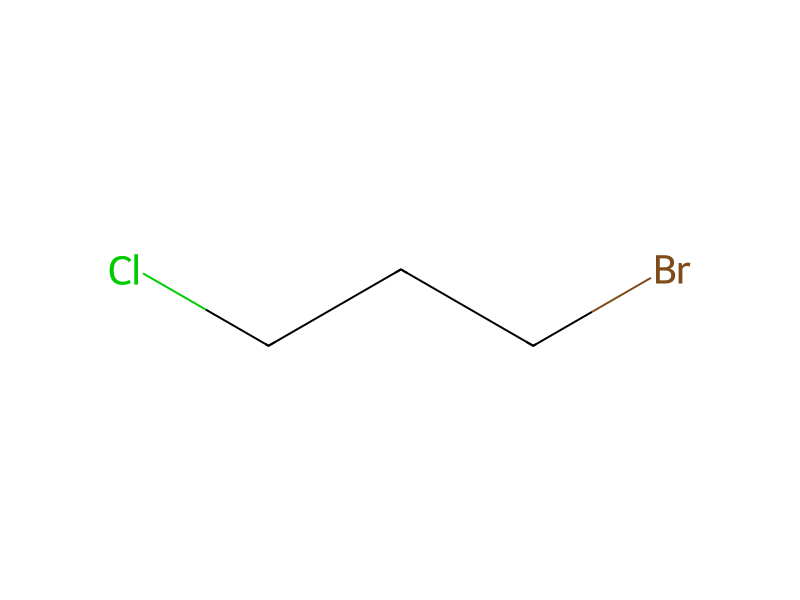
1-Bromo-3-chloropropane → Ethyl 4-(3-chloropropoxy)benzoate
HRID 268703
Reaction equation

[OH:1][C:2]1[CH:12]=[CH:11][C:5]([C:6]([O:8][CH2:9][CH3:10])=[O:7])=[CH:4][CH:3]=1.Br[CH2:14][CH2:15][CH2:16][Cl:17].C(=O)([O-])[O-].[K+].[K+]>CC(C)=O>[Cl:17][CH2:16][CH2:15][CH2:14][O:1][C:2]1[CH:3]=[CH:4][C:5]([C:6]([O:8][CH2:9][CH3:10])=[O:7])=[CH:11][CH:12]=1Participants
5
Reactant 3


Product 1

Reagents, catalysts & solvents 1

Procedure
Ethyl 4-hydroxybenzoate (60.0 g), 1-bromo-3-chloropropane (71.37 ml) and potassium carbonate (149.61 g) were heated under reflux in acetone (1445 ml) overnight. The reaction mixture was then allowed to cool to rt, filtered and evaporated. The residue was chromatographed [silica gel; step gradient 0-5% ethyl acetate/hexane]. Fractions containing pure product were combined and evaporated to give the subtitled compound as a clear oil (70.0 g). MS electrospray (+ion) 243 (MH+). 1H NMR δ (CDCl3): 8.00 (2H, d, J=8.8 Hz), 6.92 (2H, d, J=8.8 Hz), 4.36 (2H, q, J=7.1 Hz), 4.18 (2H, t, J=5.8 Hz), 3.74 (2H, t, J=6.2), 2.25 (2H, m), 1.37 (3H, t, J=7.1 Hz).