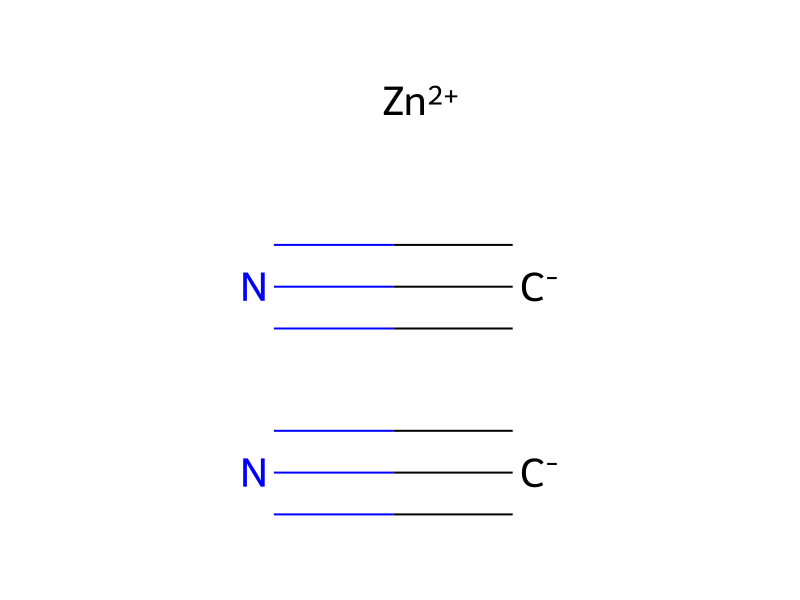
Cl[C:2]1[CH:7]=[C:6]([NH2:8])[CH:5]=[CH:4][N:3]=1.[CH3:9][N:10](C=O)C>[C-]#N.[C-]#N.[Zn+2].C1C=CC([P]([Pd]([P](C2C=CC=CC=2)(C2C=CC=CC=2)C2C=CC=CC=2)([P](C2C=CC=CC=2)(C2C=CC=CC=2)C2C=CC=CC=2)[P](C2C=CC=CC=2)(C2C=CC=CC=2)C2C=CC=CC=2)(C2C=CC=CC=2)C2C=CC=CC=2)=CC=1>[NH2:8][C:6]1[CH:5]=[CH:4][N:3]=[C:2]([C:9]#[N:10])[CH:7]=1A mixture of 2-chloro-pyridin-4-ylamine (0.642 g, 5 mmol), Zn(CN)2 (0.323 g, 2.75 mmol) and Pd(PPh3)4 (0.288 g, 0.025 mmol) in 5 mL of DMF was heated at 145° C. for 20 hours. After the reaction mixture cooled to room temperature, it was partitioned between ethyl acetate and H2O. The aqueous layer was extracted with additional ethyl acetate. The combined organic layers were washed with brine, dried (MgSO4), filtered, and concentrated under vacuum. The residue was purified by flash column chromatography on silica gel with 9:1 hexanes/ethyl acetate to provide 0.29 g (20%) of the desired product. MS (DCI) m/e 120 (M+H)+; 1H NMR (300 MHz, DMSO-d6) δ 8.08 (d, J=5.76 Hz, 1H), 6.94 (d, J=2.34 Hz, 1H), 6.68 (dd, J=5.76, 2.37 Hz, 1H), 6.59 (s, 2H).
Loading…