HomeMCPWorkbenchSkills
HomeWorkbenchNotificationsMe
llms.txt · MCP GuidePrivacy Policy · Terms of Service · Supportv1.8.2
  1. Home
  2. /Reaction

Bromide ion → 4'-(6-Hydroxyhexyloxy)-4-cyanobiphenyl

HRID 274152
Print

Reaction equation

HRID 274152 reaction equation
[H-].[K+].C(O)(C)(C)C.[OH:8][C:9]1[CH:14]=[CH:13][C:12]([C:15]2[CH:20]=[CH:19][C:18]([C:21]#[N:22])=[CH:17][CH:16]=2)=[CH:11][CH:10]=1.O1CCCCC1.Br[CH2:30][CH2:31][CH2:32][CH2:33][CH2:34][CH2:35][OH:36].[Br-].Cl>CCCCCC.CN(C=O)C.O>[OH:36][CH2:35][CH2:34][CH2:33][CH2:32][CH2:31][CH2:30][O:8][C:9]1[CH:10]=[CH:11][C:12]([C:15]2[CH:20]=[CH:19][C:18]([C:21]#[N:22])=[CH:17][CH:16]=2)=[CH:13][CH:14]=1
ParticipantsProcedureWorkupSources & evidenceReaction notes

Participants

11

Reactant 7

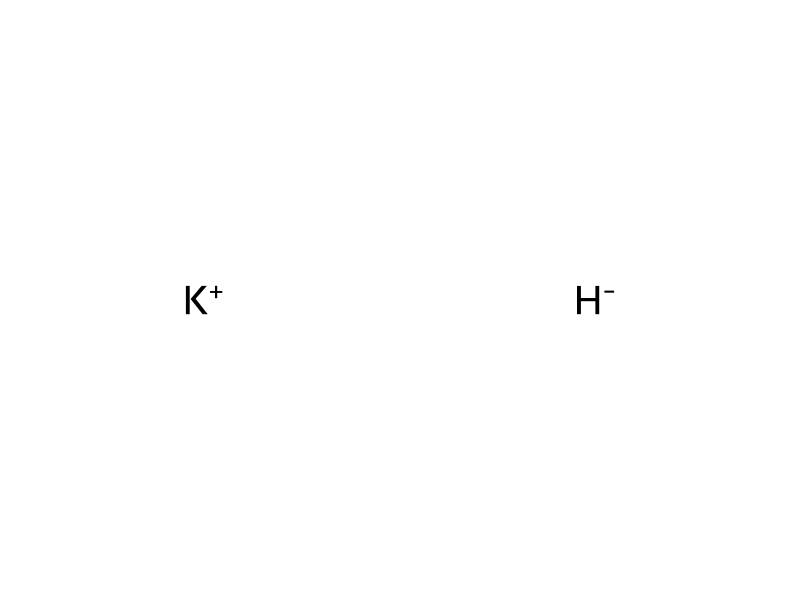
HCID 259Bromide ionHCID 313Hydrochloric AcidHCID 6386tert-ButanolHCID 8894TetrahydropyranHCID 779706-Bromo-1-hexanolHCID 82127Potassium hydrideHCID 1406104'-Hydroxy-4-biphenylcarbonitrile

Product

1
HCID 111739504'-(6-Hydroxyhexyloxy)-4-cyanobiphenyl

Reagents, catalysts & solvents 3

HCID 962WaterSolventHCID 6228DimethylformamideSolventHCID 8058HexaneSolvent

Procedure

At room temperature, potassium hydride (2.5 g, 35 wt % oil dispersion, 0.88 g KH, 22 mmol) was washed twice with hexane and suspended in DMF (30 mL), followed by addition of t-butyl alcohol (2.1 mL, 1.63 g, 22 mmol). 4'-Hydroxy-4-cyanobiphenyl (3.9 g, 20 mmol) was added as a solid all at once to give a deep yellow solution. The mixture was stirred 5 min at room temperature and the tetrahydropyran of 6-bromohexanol (5.8 g, 22 mmol) was added all at once with a mild exotherm. After 2 h, more bromide (1.0 g) was added and the reaction mixture was stirred for 1 h. The mixture was diluted with water, acidified with 5 N hydrochloric acid and extracted with ether-dichloromethane (4:1). An insoluble white solid had to be removed by filtration through glass fiber to obtain good separation of phases. The extracts were washed with water, dried (MgSO4) and concentrated to a solid (7.7 g). The solid was stirred with tetrahydrofuran-2.5 N hydrochloric acid (4:1, 50 mL) overnight at room temperature and then heated to reflux for 2.0 h. The ethanol was removed and the aqueous phase was extracted with ether-dichloromethane (4:1). The extracts were washed with water, dried (MgSO4) and concentrated to a solid that was recrystallized from ethanol-ether to give 4'-(6-hydroxyhexyloxy)-4-cyanobiphenyl: (3.25 g, 55%): mp 87-89° C., nematic phase 89-106° C.; 1H NMR (CDCl3) 7.63(s, 4H), 7.46 and 6.90(2d, 4H), 3.97(t, 2H), 3.62(t, 2H), 1.9-1.3(m, 8H); IR (KBr) 3300, 2225, 1601, 1580, 1525 cm-1.

Workup

  1. customto give a deep yellow solution
  2. waitAfter 2 h
  3. stirringthe reaction mixture was stirred for 1 h
  4. extractionextracted with ether-dichloromethane (4:1)
  5. customto be removed by filtration through glass fiber
  6. customto obtain good
  7. customseparation of phases
  8. washThe extracts were washed with water
  9. dry with materialdried (MgSO4)
  10. concentrationconcentrated to a solid (7.7 g)
  11. stirringThe solid was stirred with tetrahydrofuran-2.5 N hydrochloric acid (4:1, 50 mL) overnight at room temperature
  12. temperatureheated
  13. temperatureto reflux for 2.0 h
  14. customThe ethanol was removed
  15. extractionthe aqueous phase was extracted with ether-dichloromethane (4:1)
  16. washThe extracts were washed with water
  17. dry with materialdried (MgSO4)
  18. concentrationconcentrated to a solid
  19. customthat was recrystallized from ethanol-ether

Sources & evidence

ORD record
ord-f184b5e0a5d74b9aac23baa7d11db42d
Source dataset
uspto-grants-1995_02
DOI
10.6084/m9.figshare.5104873.v1
Patent number
US05389285

Reaction notes

On this pageParticipantsProcedureWorkupSources & evidenceReaction notes