HomeMCPWorkbenchSkills
HomeWorkbenchNotificationsMe
llms.txt · MCP GuidePrivacy Policy · Terms of Service · Supportv1.8.3
  1. Home
  2. /Reaction

Ammonia → 3-Acetyl-1-(2-chlorobenzyl)-2-propylindole-6-carboxamide

HRID 278102
Print

Reaction equation

HRID 278102 reaction equation
[C:1]([C:4]1[C:12]2[C:7](=[CH:8][C:9]([C:13](O)=[O:14])=[CH:10][CH:11]=2)[N:6]([CH2:16][C:17]2[CH:22]=[CH:21][CH:20]=[CH:19][C:18]=2[Cl:23])[C:5]=1[CH2:24][CH2:25][CH3:26])(=[O:3])[CH3:2].O[N:28]1C2C=CC=CC=2N=N1.Cl.CN(C)CCCN=C=NCC.N>CN(C)C=O.C(OCC)(=O)C.CO>[C:1]([C:4]1[C:12]2[C:7](=[CH:8][C:9]([C:13]([NH2:28])=[O:14])=[CH:10][CH:11]=2)[N:6]([CH2:16][C:17]2[CH:22]=[CH:21][CH:20]=[CH:19][C:18]=2[Cl:23])[C:5]=1[CH2:24][CH2:25][CH3:26])(=[O:3])[CH3:2]
ParticipantsConditionsProcedureWorkupSources & evidenceReaction notes

Participants

8

Reactant 4

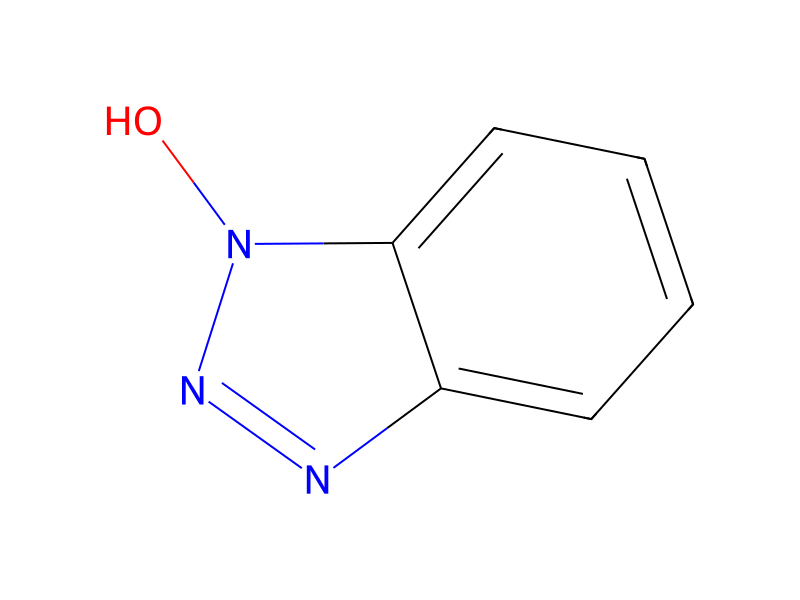
HCID 222AmmoniaHCID 757711-HydroxybenzotriazoleHCID 27239391,3-Propanediamine, N'-(ethylcarbonimidoyl)-N,N-dimethyl-, monohydrochlorideHCID 98206883-Acetyl-1-(2-chlorobenzyl)-2-propylindole-6-carboxylic acid

Product 1

HCID 101559213-Acetyl-1-(2-chlorobenzyl)-2-propylindole-6-carboxamideYield 90.8%

Reagents, catalysts & solvents 3

HCID 887MethanolSolventHCID 6228DimethylformamideSolventHCID 8857Ethyl AcetateSolvent

Conditions

Temperature
20 °C

Procedure

To a solution of 3-acetyl-1-(2-chlorobenzyl)-2-propylindole-6-carboxylic acid (74 mg) in dimethylformamide (2 ml) were added 1-hydroxybenzotriazole (38 mg), 1-(3-dimethylaminopropyl)-3-ethylcarbodiimide hydrochloride (98 mg) and 3N methanol solution of ammonia (0.5 ml). After stirred at 20° C. for 14 hours, the resulting mixture was diluted with ethyl acetate. The organic phase was washed successively with 1N hydrochloric acid, water, aqueous sodium bicarbonate and brine, dried over sodium sulfate and evaporated in vacuo. The residue was triturated with isopropyl ether to give 3-acetyl-1-(2-chlorobenzyl)-2-propylindole-6-carboxamide (67 mg) as colorless crystals.

Workup

  1. washThe organic phase was washed successively with 1N hydrochloric acid, water, aqueous sodium bicarbonate and brine
  2. dry with materialdried over sodium sulfate
  3. customevaporated in vacuo
  4. customThe residue was triturated with isopropyl ether

Sources & evidence

ORD record
ord-c0b02f458486496f8649160bb458f443
Source dataset
uspto-grants-2002_03
DOI
10.6084/m9.figshare.5104873.v1
Patent number
US06358992B1

Reaction notes

On this pageParticipantsConditionsProcedureWorkupSources & evidenceReaction notes