Reaction equation
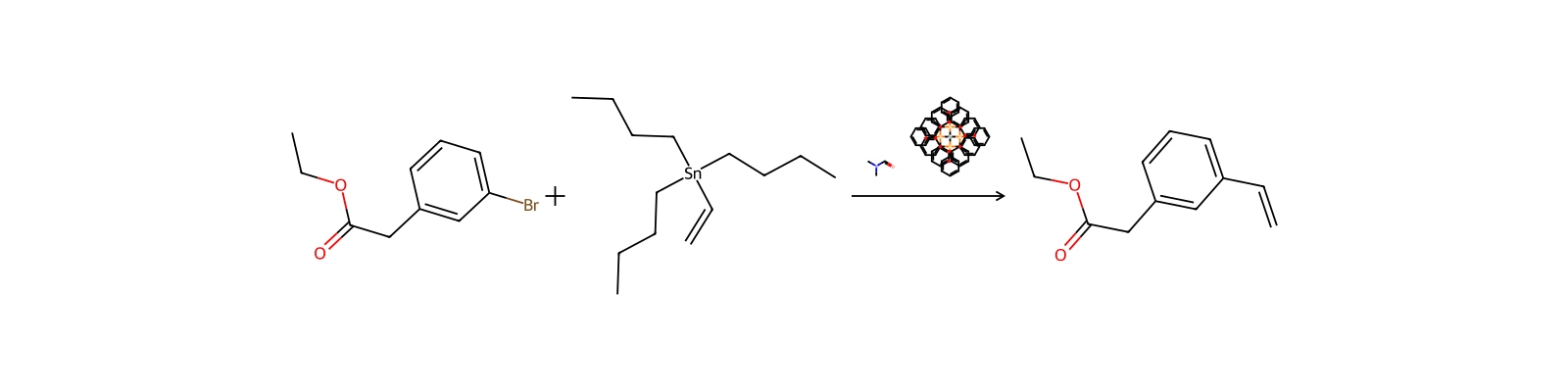
Br[C:2]1[CH:3]=[C:4]([CH2:8][C:9]([O:11][CH2:12][CH3:13])=[O:10])[CH:5]=[CH:6][CH:7]=1.[CH:14]([Sn](CCCC)(CCCC)CCCC)=[CH2:15]>CN(C=O)C.C1C=CC([P]([Pd]([P](C2C=CC=CC=2)(C2C=CC=CC=2)C2C=CC=CC=2)([P](C2C=CC=CC=2)(C2C=CC=CC=2)C2C=CC=CC=2)[P](C2C=CC=CC=2)(C2C=CC=CC=2)C2C=CC=CC=2)(C2C=CC=CC=2)C2C=CC=CC=2)=CC=1>[CH:14]([C:2]1[CH:3]=[C:4]([CH2:8][C:9]([O:11][CH2:12][CH3:13])=[O:10])[CH:5]=[CH:6][CH:7]=1)=[CH2:15]Participants
5
Reactant 2

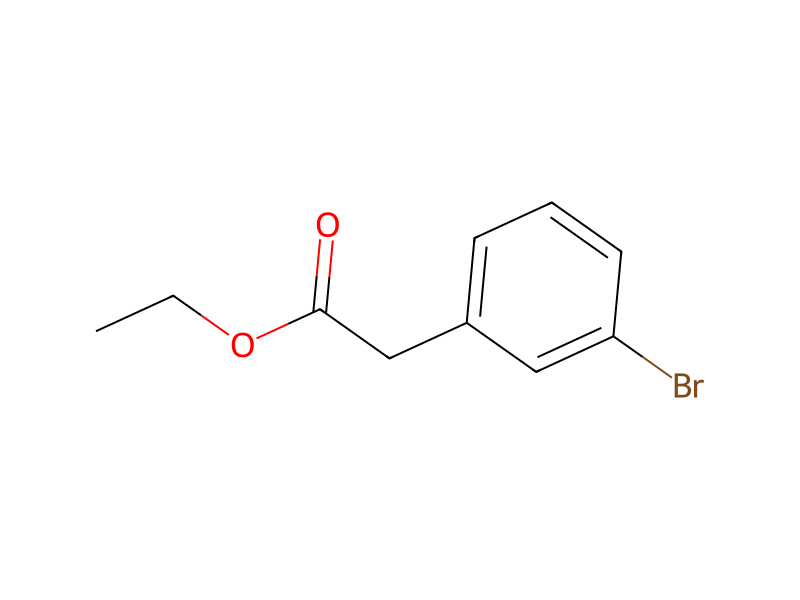
Product 1

Reagents, catalysts & solvents 2


Conditions
- Temperature
- 90 °C
Procedure
A mixture of 1.0 mmol of ethyl 3-bromophenylacetate, 1.5 mmol of vinyltributyltin, and 0.1 mmol of Pd(PPh3)4 in 4 mL DMF was stirred and heated at 90° C. for 1-16 h. Chromatography provided ethyl 3-vinylphenylacetate.
Sources & evidence
- ORD record
- ord-22f4a8336221412198601584d84cd4b1
- Source dataset
- uspto-grants-1998_03
- Patent number
- US05731432
Linked notes
Loading…