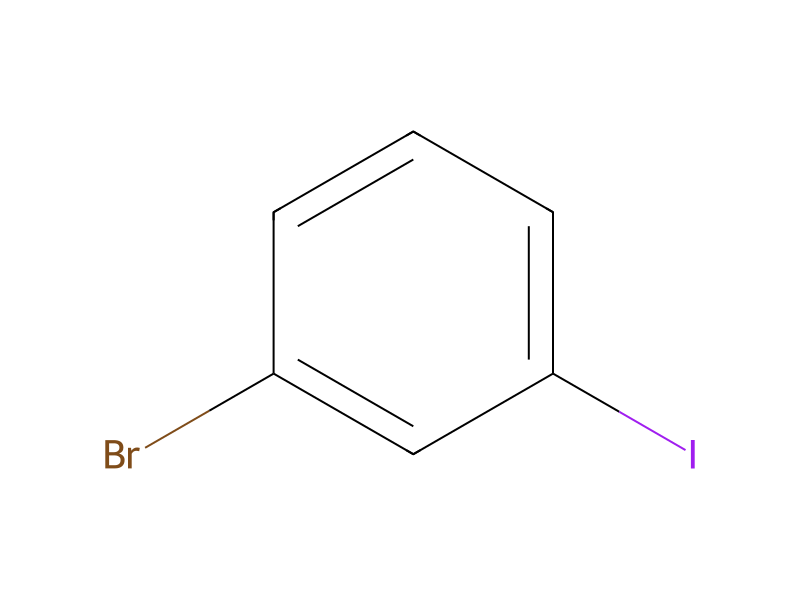
A solution of 10.0 gm (35.3 mmol) of 3-iodo-bromobenzene in DMF was treated with 2.95 mL (88 mmol) of 4-butyne-1-ol, 0.2 gm (1.06 mmol) of copper (I) iodide, 1.23 gm of dichlorobis(triphenylphosphine)-palladium(II), and 49 mL (0.35 mol) of triethylamine, stirred at room temperature for 18 h, poured into water and extracted with EtOAc. The combined extracts were washed sequentially with water and brine, dried over Na2SO4 and concentrated at reduced pressure. Chromatography of the resultant concentrate on silica gel with a gradient of 5% to 30% EtOAc-hexanes afforded 4-(3-bromophenyl)but-3-yn-1-ol as an orange oil, 7.3 gm (92% yield); 1H NMR (400 MHz, CDCl3) δ: 1.79 (s, 1H), 2.67 (t, 2H, J=6.3 Hz), 3.80 (t, 2H, J=6.3 Hz), 7.14 (t, 1H, J=7.9 Hz), 7.30 (d, 1H, J=7.9 Hz), 7.41 (m, 1H), 7.54 (t, 1H, J=1.6 Hz).