Reaction equation

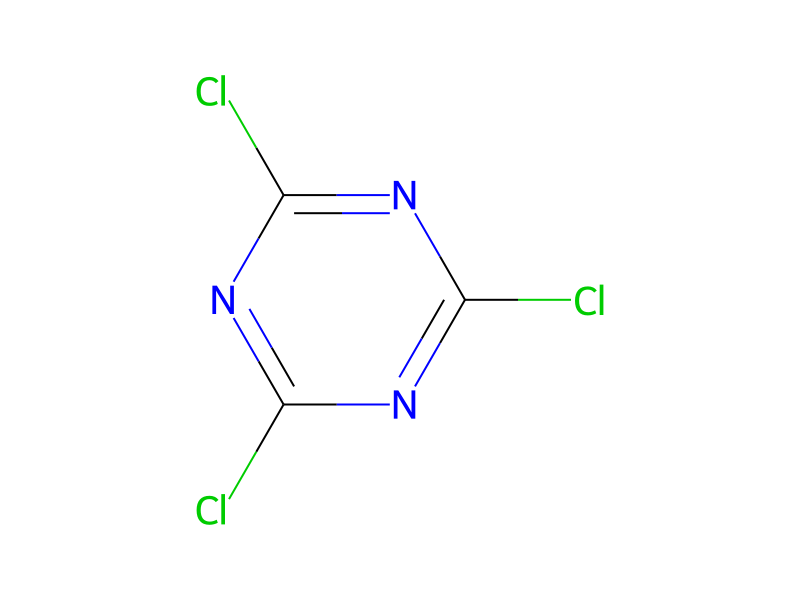
[N:1]1[C:8](Cl)=[N:7][C:5](Cl)=[N:4][C:2]=1Cl.[C:10]1([Mg]Br)[CH:15]=[CH:14][CH:13]=[CH:12][CH:11]=1.C[Si](C)(C)[C:20]#[C:21][C:22]1[CH:27]=[CH:26][C:25](Br)=[CH:24][CH:23]=1.[Mg]>O1CCCC1>[C:10]1([C:2]2[N:4]=[C:5]([C:25]3[CH:26]=[CH:27][C:22]([C:21]#[CH:20])=[CH:23][CH:24]=3)[N:7]=[C:8]([C:25]3[CH:26]=[CH:27][C:22]([C:21]#[CH:20])=[CH:23][CH:24]=3)[N:1]=2)[CH:15]=[CH:14][CH:13]=[CH:12][CH:11]=1Participants





Conditions
- Temperature
- 60 °C
Procedure
One mole of cyanuric chloride was treated with one mole of phenylmagnesium bromide as described in Step I of Example I. The product of this reaction (2.3 g, 0.01 mole) in 25 ml of tetrahydrofuran (THF) was added slowly to a refluxing solution of the Grignard reagent prepared from 1-(trimethylsilyl)-2-(4-bromophenyl)acetylene (0.03 moles) and magnesium (0.75 g). The solution was stirred overnight, filtered, and the solvent removed. To the residue which remained was added a solution of KOH (10.0 g) in water (5 ml), anhydrous ethanol (100 ml) and dioxane (100 ml). The resulting mixture was heated for 2.5 hours at 60° C., filtered, and the solvent removed. Chromatographic separation of the resulting residue yielded a yellow solid, 6-phenyl-2,4-bis(4-ethynylphenyl)-s-triazine, which melted at approximately 215° C. with rapid polymerization.
Workup
- filtrationfiltered
- customthe solvent removed
- additionTo the residue which remained was added a solution of KOH (10.0 g) in water (5 ml), anhydrous ethanol (100 ml) and dioxane (100 ml)
- filtrationfiltered
- customthe solvent removed
- customChromatographic separation of the resulting residue
Sources & evidence
- ORD record
- ord-4bf43c85562b43df8b7424e0a6d50c11
- Source dataset
- uspto-grants-1984_04
- Patent number
- US04442278
Linked notes
Loading…