Reaction equation
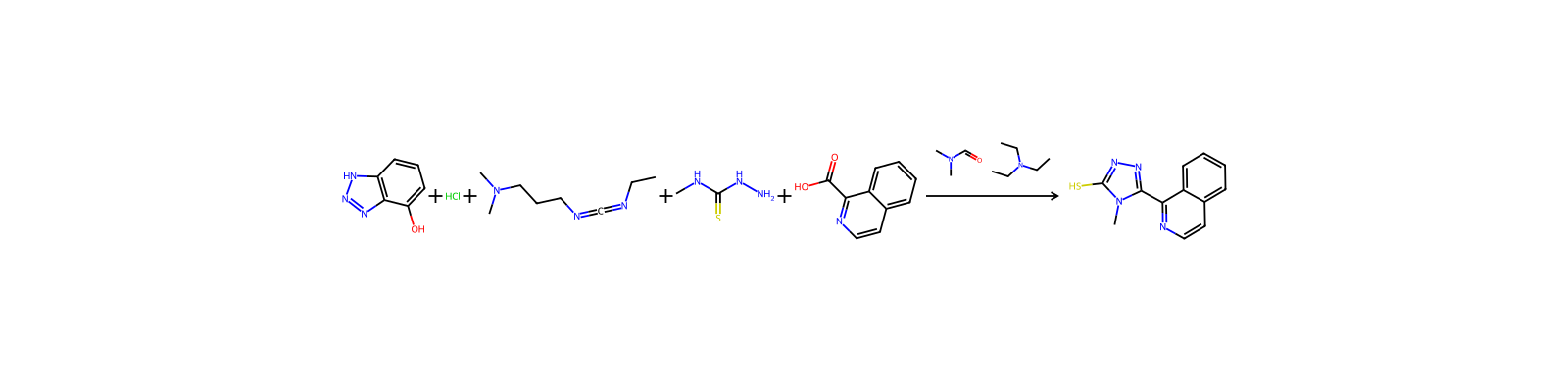
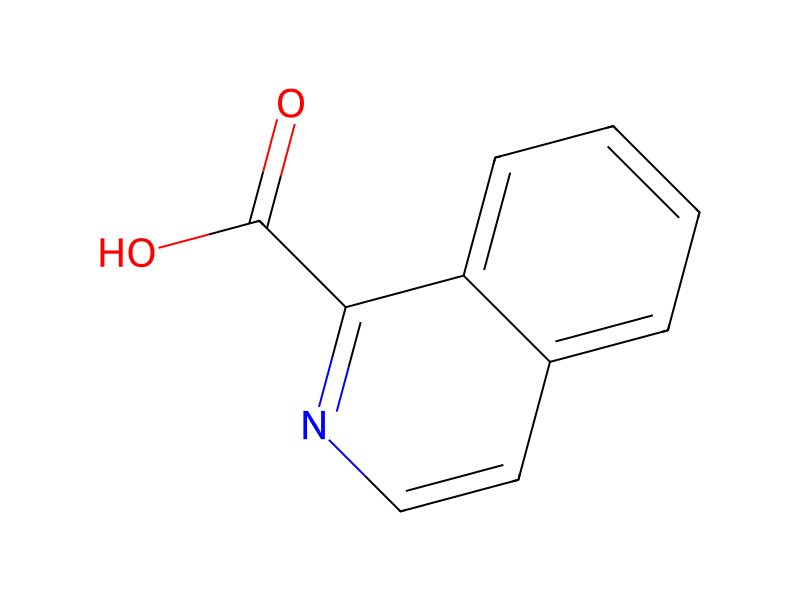
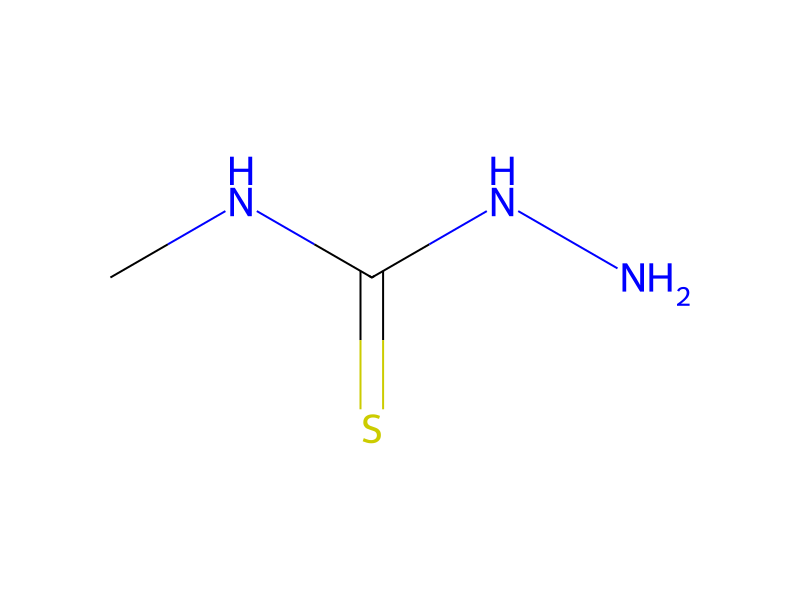
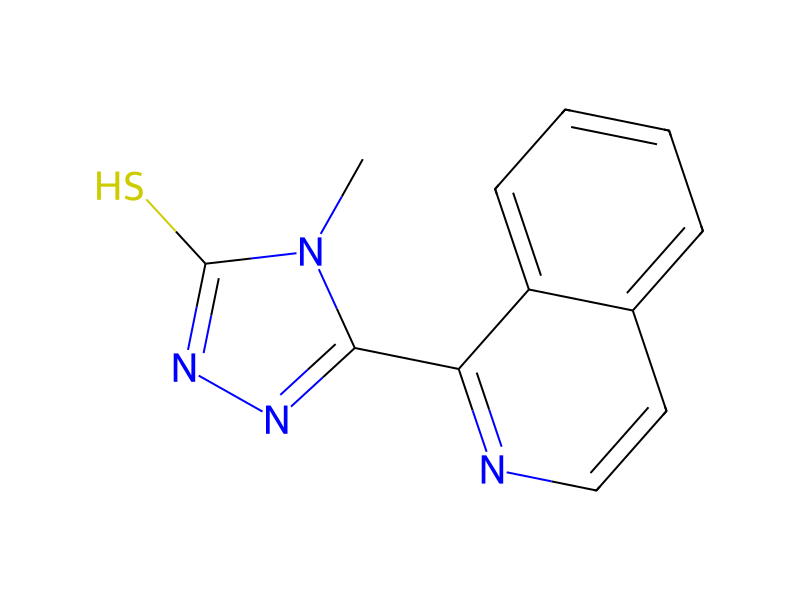
OC1C2N=NNC=2C=CC=1.Cl.CN(C)CCCN=C=NCC.[CH3:23][NH:24][C:25](=[S:28])[NH:26][NH2:27].[C:29]1([C:39](O)=O)[C:38]2[C:33](=[CH:34][CH:35]=[CH:36][CH:37]=2)[CH:32]=[CH:31][N:30]=1>CN(C)C=O.C(N(CC)CC)C>[C:29]1([C:39]2[N:24]([CH3:23])[C:25]([SH:28])=[N:26][N:27]=2)[C:38]2[C:33](=[CH:34][CH:35]=[CH:36][CH:37]=2)[CH:32]=[CH:31][N:30]=1Participants
Reactant 4


Product 1
Reagents, catalysts & solvents 2


Procedure
Hydroxybenzotriazole (0.078 g), 1-(3-dimethylaminopropyl)-3-ethylcarbodiimide hydrochloride (0.11 g) and triethylamine were added successively to a cooled solution (0° C.) of 4-methyl-3-thiosemicarbazide (0.061 g) and 1-isoquinoline carboxylic acid (0.10 g) in dimethylformamide (3 ml). Following addition the cooling bath was removed and the mixture was stirred at room temperature over night and then the reaction mixture was evaporated to dryness. To the residue was added sodium hydroxide solution (0.5 M, 5 ml) and the mixture was stirred at 80° C. for 3 h. The mixture was cooled to room temperature and the pH adjusted to pH 6 using hydrochloric acid solution (2M) and the resulting precipitate was filtered and dried in vacuo to give the title compound (0.11 g, 78%) as an off-white solid.
Workup
- additionaddition the cooling bath
- customwas removed
- customthe reaction mixture was evaporated to dryness
- additionTo the residue was added sodium hydroxide solution (0.5 M, 5 ml)
- stirringthe mixture was stirred at 80° C. for 3 h
- temperatureThe mixture was cooled to room temperature
- filtrationthe resulting precipitate was filtered
- customdried in vacuo
Sources & evidence
- ORD record
- ord-bf1242f4a62f4ab2a9d086f066f1c384
- Source dataset
- uspto-grants-2008_09
- Patent number
- US07429579B2
Linked notes
Loading…