Reaction equation

[C:1]([C:4]1[CH:13]=[CH:12][C:7]([CH2:8][N:9]=[N+:10]=[N-:11])=[CH:6][CH:5]=1)(=[NH:3])[NH2:2].C(N(CC)CC)C.Cl[C:22]([O:24][CH2:25][C:26]1[CH:31]=[CH:30][CH:29]=[CH:28][CH:27]=1)=[O:23].Cl>C(Cl)Cl.O>[CH2:25]([O:24][C:22]([NH:3][C:1]([C:4]1[CH:5]=[CH:6][C:7]([CH2:8][N:9]=[N+:10]=[N-:11])=[CH:12][CH:13]=1)=[NH:2])=[O:23])[C:26]1[CH:31]=[CH:30][CH:29]=[CH:28][CH:27]=1Participants
7


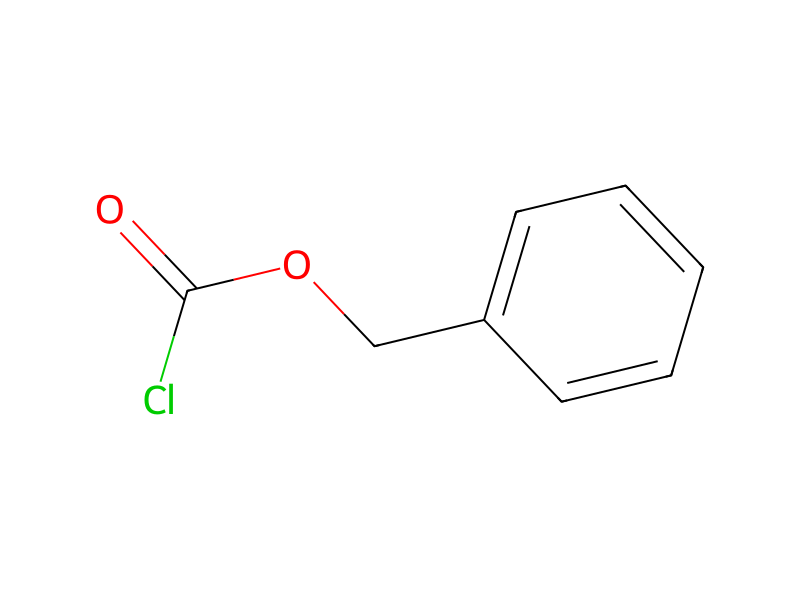

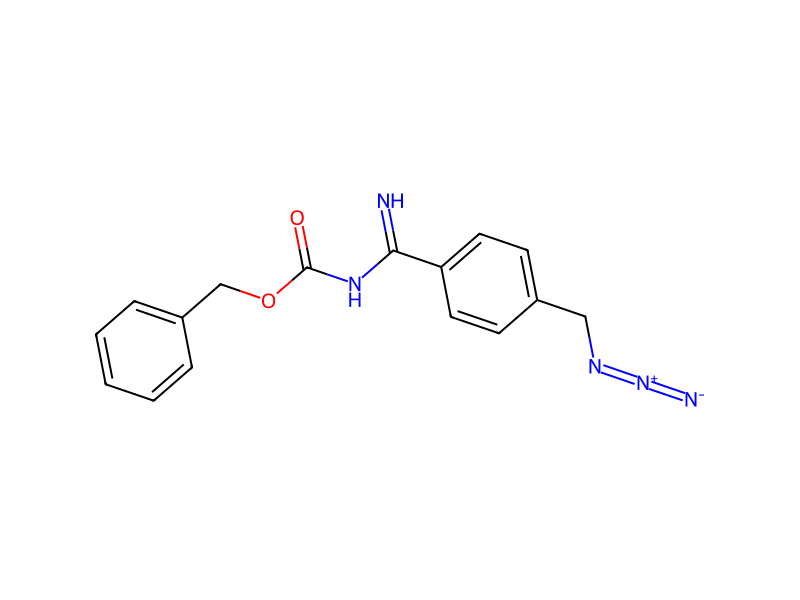


Procedure
The crystals from (ii) above were dissolved in 500 ml methylene chloride and the resulting solution was dried (K2CO3), filtered and 27 ml (194 mmol) triethyl amine was added. 25 ml Benzyl chloroformate was slowly added to the stirred solution while the reaction mixture was cooled in an ice bath. After 30 minutes an additional 2 ml benzyl chloroformate was added and stirring was continued for another 30 minutes. Subsequently, water was added and the aqueous phase was adjusted to pH 7 with 2M HCl. The organic phase was dried (MgSO4) and the solvent was removed in vacuo. 4-(benzyloxycarbonylamidino) benzyl azide was finally isolated as colorless crystals from ether/methylene chloride/hexane.
Workup
- dry with materialthe resulting solution was dried (K2CO3)
- filtrationfiltered
- temperaturewas cooled in an ice bath
- dry with materialThe organic phase was dried (MgSO4)
- customthe solvent was removed in vacuo
Sources & evidence
- ORD record
- ord-6028a7b66c9e4b0a8bd9ebd60373e5f3
- Source dataset
- uspto-grants-1999_01
- Patent number
- US05856307
Linked notes
Loading…