HomeMCPWorkbenchSkills
HomeWorkbenchNotificationsMe
llms.txt · MCP GuidePrivacy Policy · Terms of Service · Supportv1.8.3
  1. Home
  2. /Reaction

Formic Acid → HCID 18641578, compound

HRID 346384
Print

Reaction equation

HRID 346384 reaction equation
C(OC([N:7]1[CH2:11][C@@H:10]([S:12][C:13]2[C@H:19]([CH3:20])[C@H:18]3[N:15]([C:16](=[O:24])[C@@H:17]3[C@H:21]([OH:23])[CH3:22])[C:14]=2[C:25]([O:27]CC=C)=[O:26])[CH2:9][C@H:8]1[CH2:31][O:32][CH2:33][C:34]([NH:36][C:37]([NH2:39])=[O:38])=[O:35])=O)C=C.C1(P(C2C=CC=CC=2)C2C=CC=CC=2)C=CC=CC=1.N1CCOCC1.C(O)=O>O1CCCC1.O.C1C=CC(P(C2C=CC=CC=2)C2C=CC=CC=2)=CC=1.C1C=CC(P(C2C=CC=CC=2)C2C=CC=CC=2)=CC=1.C1C=CC(P(C2C=CC=CC=2)C2C=CC=CC=2)=CC=1.C1C=CC(P(C2C=CC=CC=2)C2C=CC=CC=2)=CC=1.[Pd].C(OCC)(=O)C>[OH:23][C@@H:21]([C@H:17]1[C:16](=[O:24])[N:15]2[C@@H:18]1[C@@H:19]([CH3:20])[C:13]([S:12][C@@H:10]1[CH2:11][NH:7][C@H:8]([CH2:31][O:32][CH2:33][C:34]([NH:36][C:37]([NH2:39])=[O:38])=[O:35])[CH2:9]1)=[C:14]2[C:25]([OH:27])=[O:26])[CH3:22]
ParticipantsProcedureWorkupSources & evidenceReaction notes

Participants

9

Reactant 4

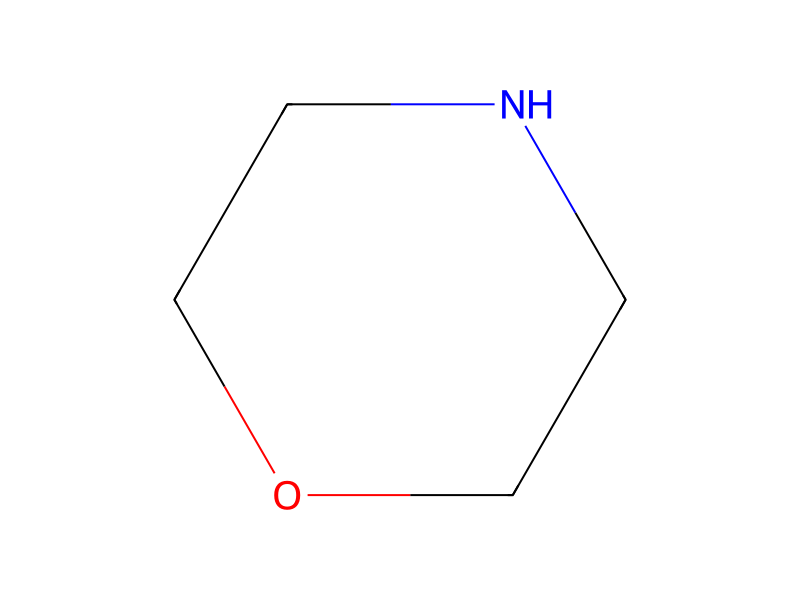
HCID 284Formic AcidHCID 8083MorpholineHCID 11776TriphenylphosphineHCID 57053095allyl (4R,5S,6S)-3-[(2S,4S)-1-allyloxycarbonyl-2-{(ureidocarbonylmethyl)oxymethyl}pyrrolidin-4-yl]thio-6-[(1R)-1-hydroxyethyl]-4-methyl-7-oxo-1-azabicyclo[3.2.0]hept-2-ene-2-carboxylate

Product 1

HCID 18641578HCID 18641578, compound
Yield 50.1%

Reagents, catalysts & solvents 4

HCID 11979704Tetrakis(triphenylphosphine)palladiumCatalystHCID 962WaterSolvent2×HCID 8028TetrahydrofuranSolventHCID 8857Ethyl AcetateSolvent

Procedure

To a solution of allyl (4R,5S,6S)-3-[(2S,4S)-1-allyloxycarbonyl-2-{(ureidocarbonylmethyl)oxymethyl}pyrrolidin-4-yl]thio-6-[(1R)-1-hydroxyethyl]-4-methyl-7-oxo-1-azabicyclo[3.2.0]hept-2-ene-2-carboxylate (0.23 g) in a mixture of tetrahydrofuran (11.5 ml) and water (2.3 ml) were added triphenylphosphine (23 mg), morpholine (0.12 ml), formic acid (0.05 ml), and tetrakis(triphenylphosphine)palladium(O) (26 mg) successively with stirring under ice-cooling. The mixture was stirred at the same temperature for 1 hour and at ambient temperature for 2 hours, and poured into a mixture of ethyl acetate (50 ml) and water (50 ml). The aqueous layef was separated and washed 2 times with ethyl acetate (50 ml). This aqueous layer was concentrated in vacuo to remove the organic solvent. The residue was chromatographed on nonionic adsorption resin, "Diaion HP-20" (made by Mitsubishi Chemical Industries) (10 ml), eluting in turn with water, and a mixture of acetone and water (5:95 V/V). The fractions containing the desired compound were collected and lyophilized to give (4R,5S,6S)-6-[(1R)-1-hydroxyethyl]-4-methyl-7-oxo 3-[(2S,4S)-2-{(ureidocarbonylmethyl)oxymethyl}pyrrolidin-4-yl]thio-1-azabicyclo[3.2.0]hept-2-ene-2-carboxylic acid (0.09 g).

Workup

  1. temperaturecooling
  2. stirringThe mixture was stirred at the same temperature for 1 hour and at ambient temperature for 2 hours
  3. customThe aqueous layef was separated
  4. washwashed 2 times with ethyl acetate (50 ml)
  5. concentrationThis aqueous layer was concentrated in vacuo
  6. customto remove the organic solvent
  7. customThe residue was chromatographed on nonionic adsorption resin, "Diaion HP-20" (made by Mitsubishi Chemical Industries) (10 ml)
  8. washeluting in turn with water
  9. additiona mixture of acetone and water (5:95 V/V)
  10. additionThe fractions containing the desired compound
  11. customwere collected

Sources & evidence

ORD record
ord-2ae4305e6d7e430dbb3ce1819641dcd1
Source dataset
uspto-grants-1991_10
DOI
10.6084/m9.figshare.5104873.v1
Patent number
US05061804

Reaction notes

On this pageParticipantsProcedureWorkupSources & evidenceReaction notes