HomeMCPWorkbenchSkills
HomeWorkbenchNotificationsMe
llms.txt · MCP GuidePrivacy Policy · Terms of Service · Supportv1.8.3
  1. Home
  2. /Reaction

Triethylamine → 2,2,3,3,4,4,4-heptafluoro-N-[4-(cyano)phenyl]butanamide

HRID 35020
Print

Reaction equation

HRID 35020 reaction equation
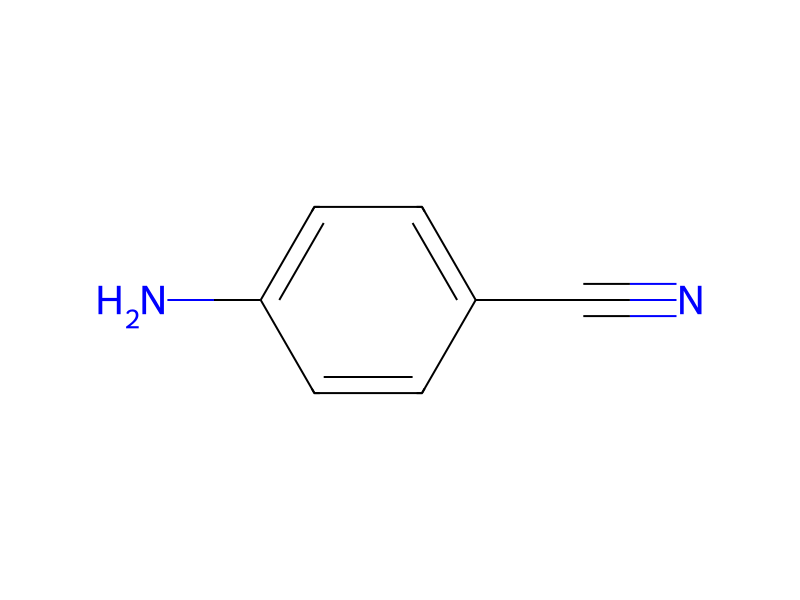
[NH2:1][C:2]1[CH:9]=[CH:8][C:5]([C:6]#[N:7])=[CH:4][CH:3]=1.C(N(CC)CC)C.[F:17][C:18]([F:29])([C:22]([F:28])([F:27])[C:23]([F:26])([F:25])[F:24])[C:19](Cl)=[O:20]>ClCCl.Cl>[F:17][C:18]([F:29])([C:22]([F:27])([F:28])[C:23]([F:24])([F:25])[F:26])[C:19]([NH:1][C:2]1[CH:9]=[CH:8][C:5]([C:6]#[N:7])=[CH:4][CH:3]=1)=[O:20]
ParticipantsProcedureWorkupSources & evidenceReaction notes

Participants

6

Reactant 3

HCID 8471TriethylamineHCID 133964-AminobenzonitrileHCID 67810Heptafluorobutyryl Chloride

Product 1

HCID 142538062,2,3,3,4,4,4-heptafluoro-N-[4-(cyano)phenyl]butanamideYield 36.9%

Reagents, catalysts & solvents 2

HCID 313Hydrochloric AcidSolvent
HCID 6344
Dichloromethane
Solvent
2×

Procedure

A mixture of 4-aminobenzonitrile (1.58 g), triethylamine (1.36 g), and dichloromethane (20 mL) was cooled in ice under a nitrogen atmosphere. To this mixture was added perfluorobutyryl chloride (3.11 g) in dichloromethane (10 mL) and the resulting mixture was allowed to warm to room temperature and was then stirred for three hours. The reaction mixture was diluted with HCl solution (1N, 50 mL) and the layers were partitioned in a separatory funnel. The organic phase was washed with a saturated brine solution, dried over MgSO4, filtered and concentrated with a rotary evaporator. The residue was dissolved in dichloromethane. Upon dilution with hexane the product precipitated to give 1.55 g of 2,2,3,3,4,4,4-heptafluoro-N-[4-(cyano)phenyl]butanamide, m.p. 116°-118° C.

Workup

  1. temperaturewas cooled in ice under a nitrogen atmosphere
  2. customthe layers were partitioned in a separatory funnel
  3. washThe organic phase was washed with a saturated brine solution
  4. dry with materialdried over MgSO4
  5. filtrationfiltered
  6. concentrationconcentrated with a rotary evaporator
  7. dissolutionThe residue was dissolved in dichloromethane
  8. customUpon dilution with hexane the product precipitated

Sources & evidence

ORD record
ord-fd7a1f957094494980469d14f25061e8
Source dataset
uspto-grants-1988_08
DOI
10.6084/m9.figshare.5104873.v1
Patent number
US04764623

Reaction notes

On this pageParticipantsProcedureWorkupSources & evidenceReaction notes