HomeMCPWorkbenchSkills
HomeWorkbenchNotificationsMe
llms.txt · MCP GuidePrivacy Policy · Terms of Service · Supportv1.8.3
  1. Home
  2. /Reaction

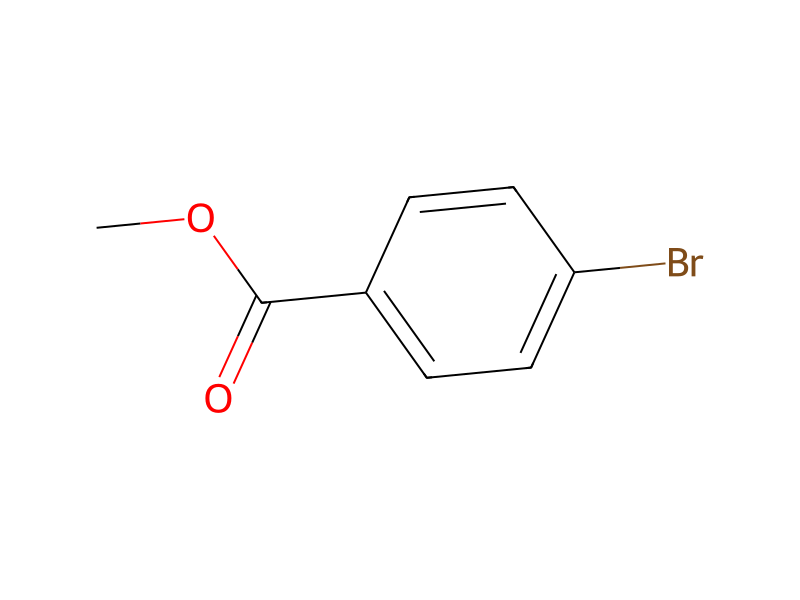
Methyl 4-bromobenzoate → Methyl 4-pyridin-3-ylbenzoate

HRID 352721
Print

Reaction equation

HRID 352721 reaction equation
Br[C:2]1[CH:11]=[CH:10][C:5]([C:6]([O:8][CH3:9])=[O:7])=[CH:4][CH:3]=1.C(B(CC)[C:15]1[CH:16]=[N:17][CH:18]=[CH:19][CH:20]=1)C.[OH-].[K+].[Cl-].[NH4+]>O1CCCC1.[Br-].C([N+](CCCC)(CCCC)CCCC)CCC.C1C=CC([P]([Pd]([P](C2C=CC=CC=2)(C2C=CC=CC=2)C2C=CC=CC=2)([P](C2C=CC=CC=2)(C2C=CC=CC=2)C2C=CC=CC=2)[P](C2C=CC=CC=2)(C2C=CC=CC=2)C2C=CC=CC=2)(C2C=CC=CC=2)C2C=CC=CC=2)=CC=1.C(OCC)(=O)C.O>[N:17]1[CH:18]=[CH:19][CH:20]=[C:15]([C:2]2[CH:11]=[CH:10][C:5]([C:6]([O:8][CH3:9])=[O:7])=[CH:4][CH:3]=2)[CH:16]=1
ParticipantsProcedureWorkupSources & evidenceReaction notes

Participants

10

Reactant 4

HCID 12081Methyl 4-bromobenzoateHCID 14797Potassium HydroxideHCID 25517Ammonium ChlorideHCID 6428513-(Diethylboryl)pyridine

Product 1

HCID 4133187Methyl 4-pyridin-3-ylbenzoateYield 52.8%

Reagents, catalysts & solvents 5

HCID 74236
Tetrabutylammonium Bromide
Catalyst
HCID 178418397HCID 178418397, compoundCatalyst
HCID 962WaterSolvent
HCID 8028TetrahydrofuranSolvent
HCID 8857Ethyl AcetateSolvent

Procedure

In tetrahydrofuran (100 ml), methyl 4-bromobenzoate (5.04 g) and diethyl-3-pyridylborane (Chem. Pharm. Bull., 33, 4755, 1985) (2.30 g) were dissolved, followed by the addition of tetrabutylammonium bromide (2.51 g), potassium hydroxide (2.63 g), tetrakis(triphenylphosphine)palladium (O) (1.8 g) and water (1 ml) under an argon atmosphere. The resulting mixture was heated under reflux for 2 hours. After ice cooling, an aqueous ammonium chloride solution and ethyl acetate were added to the reaction mixture. The organic layer so separated was dried over anhydrous magnesium sulfate. The residue obtained by distilling off the solvent was purified by chromatography on a silica gel column (hexane: ethyl acetate=1:1). The solvent was then distilled off. To the residue, methanol and IN aqueous hydrochloric acid in ethanol were added. The solvent was distilled off again. Tetrahydrofuran was added to the residue and the solid so precipitated was collected by filtration. After drying, the title compound (1.76 g, 45%) was obtained as a colorless solid.

Workup

  1. temperatureThe resulting mixture was heated
  2. temperatureunder reflux for 2 hours
  3. customThe organic layer so separated
  4. dry with materialwas dried over anhydrous magnesium sulfate
  5. customThe residue obtained
  6. distillationby distilling off the solvent
  7. customwas purified by chromatography on a silica gel column (hexane: ethyl acetate=1:1)
  8. distillationThe solvent was then distilled off
  9. additionTo the residue, methanol and IN aqueous hydrochloric acid in ethanol were added
  10. distillationThe solvent was distilled off again
  11. additionTetrahydrofuran was added to the residue
  12. customthe solid so precipitated
  13. filtrationwas collected by filtration
  14. customAfter drying

Sources & evidence

ORD record
ord-25f2dd75016941328bf92f8e2b8329ca
Source dataset
uspto-grants-2004_06
DOI
10.6084/m9.figshare.5104873.v1
Patent number
US06747023B1

Reaction notes

On this pageParticipantsProcedureWorkupSources & evidenceReaction notes