HomeMCPSkillsWorkbenchOpenChem
HomeWorkbenchNotificationsMe
llms.txt · skill.md · MCP GuidePrivacy Policy · Terms of Service · Supportv1.8.4
  1. Home
  2. /Reaction

Methylparaben → methyl (S)-4-(2-amino-1-propoxy)benzoate

HRID 354487
Print

Reaction equation

C(OC([NH:8][C@@H:9]([CH3:12])[CH2:10][OH:11])=O)(C)(C)C.O[C:14]1[CH:23]=[CH:22][C:17]([C:18]([O:20][CH3:21])=[O:19])=[CH:16][CH:15]=1.C1C=CC(P(C2C=CC=CC=2)C2C=CC=CC=2)=CC=1.N(C(OC(C)C)=O)=NC(OC(C)C)=O>C1COCC1>[NH2:8][C@@H:9]([CH3:12])[CH2:10][O:11][C:14]1[CH:23]=[CH:22][C:17]([C:18]([O:20][CH3:21])=[O:19])=[CH:16][CH:15]=1
ParticipantsProcedureWorkupSources & evidenceReaction notes

Participants

6

Reactant 4

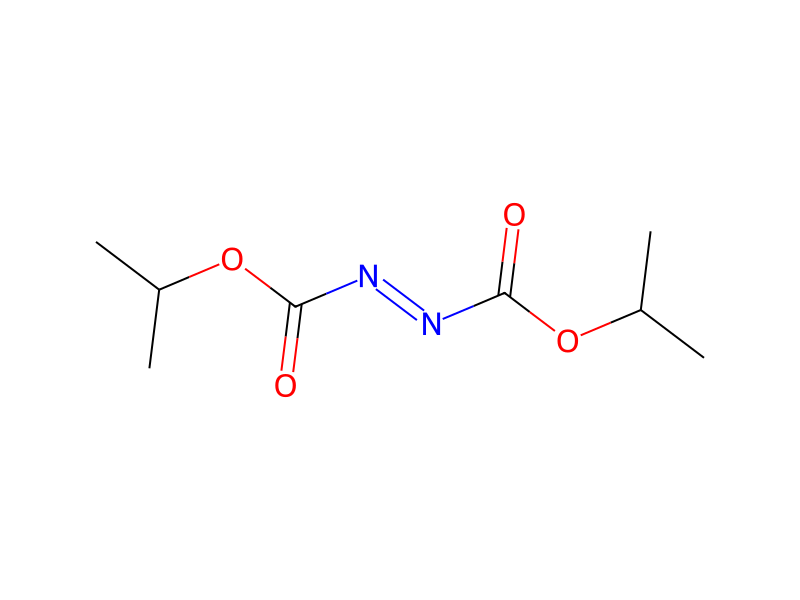
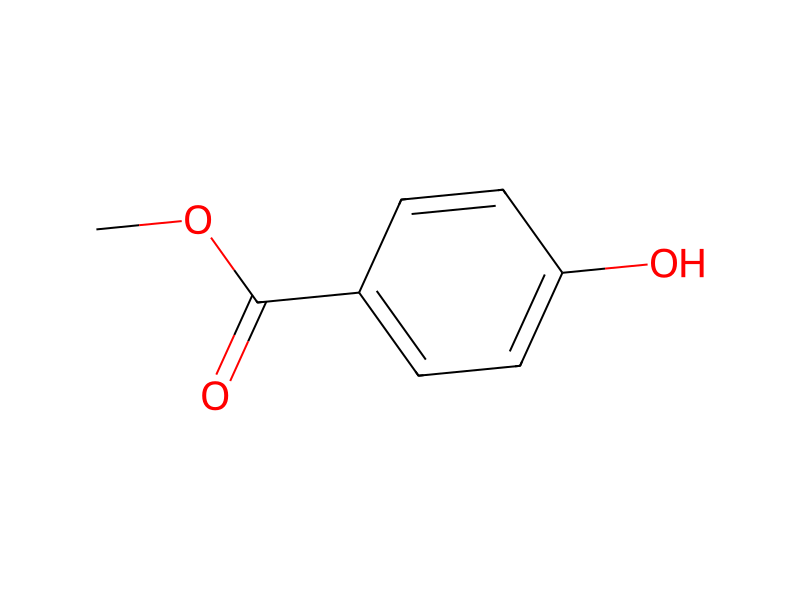
HCID 7456MethylparabenHCID 11776TriphenylphosphineHCID 75555Diisopropyl diazene-1,2-dicarboxylateHCID 70231031,1-Dimethylethyl N-((1S)-2-hydroxy-1-methylethyl)carbamate

Product 1

HCID 86587805methyl (S)-4-(2-amino-1-propoxy)benzoateYield 39.4%

Reagents, catalysts & solvents 1

HCID 8028TetrahydrofuranSolvent

Procedure

To a cooled (0° C.) solution of (S)-2-(N-tert-butoxycarbonylamino)-1-propanol (1.02 g, 5.82 mmol), methyl 4-hydroxybenzoate (0.89 g, 5.85 mmol), and Ph3P (1.98 g, 7.55 mmol) in THF (20 mL) was added diisopropyl azodicarboxylate (DIAD) (1.49 mL, 7.57 mmol), and the resulting mixture was heated under reflux overnight. The solution was evaporated and the residue was dissolved in CH2Cl2 (20 mL) and TFA (10 mL). The mixture was stirred at room temp for 1.5 hr. The solution was concentrated in vacuo and the residue was treated with sat. NaHCO3. The mixture was extracted with CHCl3, washed with brine, dried over Na2SO4 and evaporated. The residue was purified by column chromatography on silica-gel with CHC3:MeOH (50:1, v/v) to give 480 mg (2 steps 39%) methyl (S)-4-(2-amino-1-propoxy)benzoate as a pale yellow oil. 1H-NMR (CDCl3) δ1.19 (d, 3 H, J=6.4 Hz), 3.35-3.39 (m, 1 H), 3.72-3.76 (m, 1 H), 3.89 (s, 3 H), 3.90-3.94 (m, 1 H), 6.92 (d, 2 H, J=8.8 Hz), 7.99 (d, 2 H, J=8.8 Hz).

Workup

  1. temperaturethe resulting mixture was heated
  2. temperatureunder reflux overnight
  3. customThe solution was evaporated
  4. dissolutionthe residue was dissolved in CH2Cl2 (20 mL)
  5. concentrationThe solution was concentrated in vacuo
  6. additionthe residue was treated with sat. NaHCO3
  7. extractionThe mixture was extracted with CHCl3
  8. washwashed with brine
  9. dry with materialdried over Na2SO4
  10. customevaporated
  11. customThe residue was purified by column chromatography on silica-gel with CHC3

Sources & evidence

ORD record
ord-f2d8d065f0c14ef2a84cea817ade5459
Source dataset
uspto-grants-2004_06
DOI
10.6084/m9.figshare.5104873.v1
Patent number
US06756378B2

Reaction notes

On this pageParticipantsProcedureWorkupSources & evidenceReaction notes