3-Hydroxybenzaldehyde → 1-(3-Hydroxybenzyl)piperidine
Reaction equation

[BH4-].[Na+].[OH:3][C:4]1[CH:5]=[C:6]([CH:9]=[CH:10][CH:11]=1)[CH:7]=O.[NH:12]1[CH2:17][CH2:16][CH2:15][CH2:14][CH2:13]1.Cl>C(O)C.O>[OH:3][C:4]1[CH:5]=[C:6]([CH:9]=[CH:10][CH:11]=1)[CH2:7][N:12]1[CH2:17][CH2:16][CH2:15][CH2:14][CH2:13]1Participants
7
Reactant 4
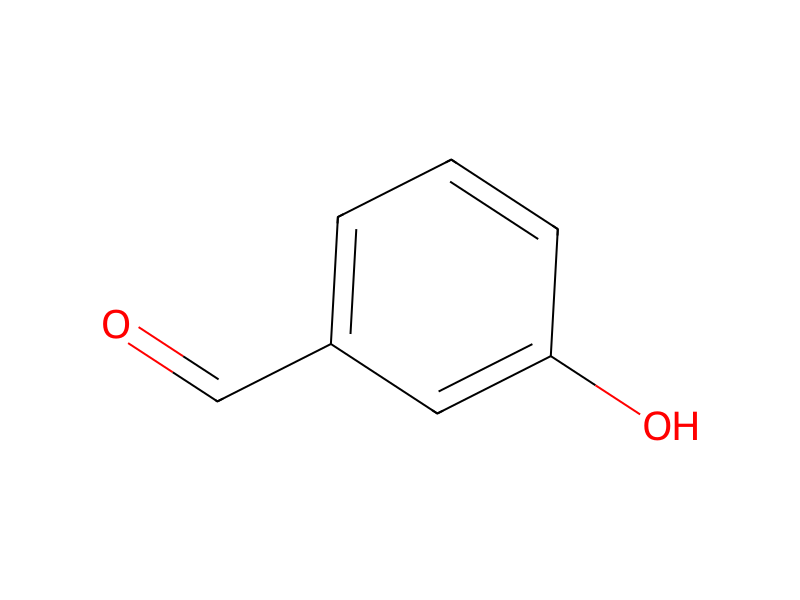



Product 1

Reagents, catalysts & solvents 2


Procedure
Sodium borohydride (1.52 g) was added to a stirred solution of 3-hydroxybenzaldehyde (4.9 g) and piperidine (6.8 g) in ethanol (25 ml) cooled in an ice-water bath. The mixture was stirred at ambient temperature for 16 hours and then poured into water (250 ml) and the resulting mixture acidified with 2N hydrochloric acid. The acidified mixture was extracted with ethyl acetate and the aqueous phase was made alkaline by the addition of aqueous ammonia solution (S.G. 0.880) to yield N-3-hydroxybenzylpiperidine (m.p. 135°-139° C.) as a colourless solid.
Workup
- temperaturecooled in an ice-water bath
- extractionThe acidified mixture was extracted with ethyl acetate
- additionby the addition of aqueous ammonia solution (S.G. 0.880)
Sources & evidence
- ORD record
- ord-89f7153ba59246a183e586c34cf69726
- Source dataset
- uspto-grants-1988_08
- Patent number
- US04767769
Reaction notes
Loading…