HomeMCPWorkbenchSkills
HomeWorkbenchNotificationsMe
llms.txt · MCP GuidePrivacy Policy · Terms of Service · Supportv1.8.3
  1. Home
  2. /Reaction

Diisopropylamine → 5-[2-(2,4-Difluorophenyl)ethenyl]-2,2-dimethyl-3(2H)-furanone

HRID 359358
Print

Reaction equation

HRID 359358 reaction equation
C(NC(C)C)(C)C.C([Li])CCC.[CH3:13][C:14]1([CH3:21])[C:18](=[O:19])[CH:17]=[C:16]([CH3:20])[O:15]1.[F:22][C:23]1[CH:30]=[C:29]([F:31])[CH:28]=[CH:27][C:24]=1[CH:25]=O.FC(F)(F)C(OC(=O)C(F)(F)F)=O>O1CCCC1.CCCCCC.C(N(CC)CC)C.CN(C)P(N(C)C)(N(C)C)=O>[F:22][C:23]1[CH:30]=[C:29]([F:31])[CH:28]=[CH:27][C:24]=1[CH:25]=[CH:20][C:16]1[O:15][C:14]([CH3:21])([CH3:13])[C:18](=[O:19])[CH:17]=1
ParticipantsProcedureWorkupSources & evidenceReaction notes

Participants

10

Reactant 5

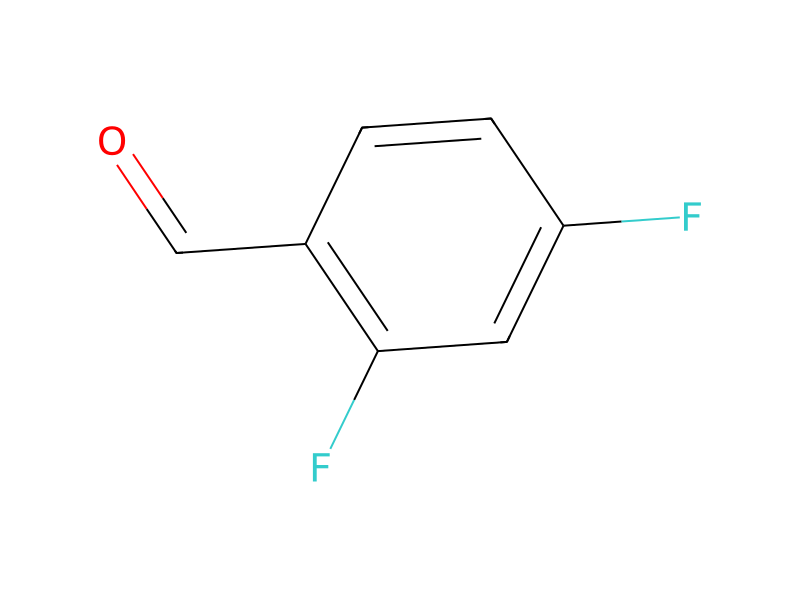
HCID 7912DiisopropylamineHCID 9845Trifluoroacetic anhydrideHCID 737702,4-DifluorobenzaldehydeHCID 1370803(2H)-Furanone, 2,2,5-trimethyl-HCID 178418339Butyllithium

Product 1

HCID 539726665-[2-(2,4-Difluorophenyl)ethenyl]-2,2-dimethyl-3(2H)-furanone
Yield 65%

Reagents, catalysts & solvents 4

HCID 8028TetrahydrofuranSolvent3×HCID 8058HexaneSolventHCID 8471TriethylamineSolventHCID 12679HexamethylphosphoramideSolvent

Procedure

To a solution of dry diisopropylamine (3.3 mL, 24 mM) in dry tetrahydrofuran (25 mL) at -78° C., was added dropwise 2.3N solution of n-butyllithium in hexane (10.4 mL,24mM). After the reaction solution was stirred 15 minutes, a solution of 2,2,5-trimethyl-3(2H)-furanone (2.0 g, 16 mm) in tetrahydrofuran (10 mL) was added dropwise. Hexamethylphosphoramide (4.4 mL, 24 mM) was then added dropwise after 30 minutes. Finally, 2,4-difluorobenzaldehyde (3.5 mL, 31.8 mM) in tetrahydrofuran (10 mL) was added in one portion. The reaction solution was stirred 10 minutes when trifluoroacetic anhydride (11.87 g, 55.7 mM) was added in one portion. Again, the reaction solution was stirred 15, minutes when triethylamine (5.6 g, 55.7 mM) was added and was allowed to warm to room temperature. The reaction solution was partitioned between saturated aqueous sodium chloride (50 mL) and diethyl ether (50 mL). The layers were separated. The organic layers were then washed with saturated aqueous sodium chloride (2×25 mL), dried over MgSO4, filtered and concentrated under reduced pressure to give an orange liquid. The crude product was purified by chromatography (silica gel, pet. ether-ethyl acetate) to afford a yellow crystalline solid (2.6 g, 65% yield), m.p. 98.5°-100° C.


Workup

  1. additionwas added in one portion
  2. additionwas added
  3. customThe reaction solution was partitioned between saturated aqueous sodium chloride (50 mL) and diethyl ether (50 mL)
  4. customThe layers were separated
  5. washThe organic layers were then washed with saturated aqueous sodium chloride (2×25 mL)
  6. dry with materialdried over MgSO4
  7. filtrationfiltered
  8. concentrationconcentrated under reduced pressure
  9. customto give an orange liquid
  10. customThe crude product was purified by chromatography (silica gel, pet. ether-ethyl acetate)

Sources & evidence

ORD record
ord-d7b5719dccfd49bca7dbd25ecdbb694c
Source dataset
uspto-grants-1991_03
DOI
10.6084/m9.figshare.5104873.v1
Patent number
US05001126

Reaction notes

On this pageParticipantsProcedureWorkupSources & evidenceReaction notes