HomeMCPWorkbenchSkills
HomeWorkbenchNotificationsMe
llms.txt · MCP GuidePrivacy Policy · Terms of Service · Supportv1.8.0
  1. Home
  2. /Reaction

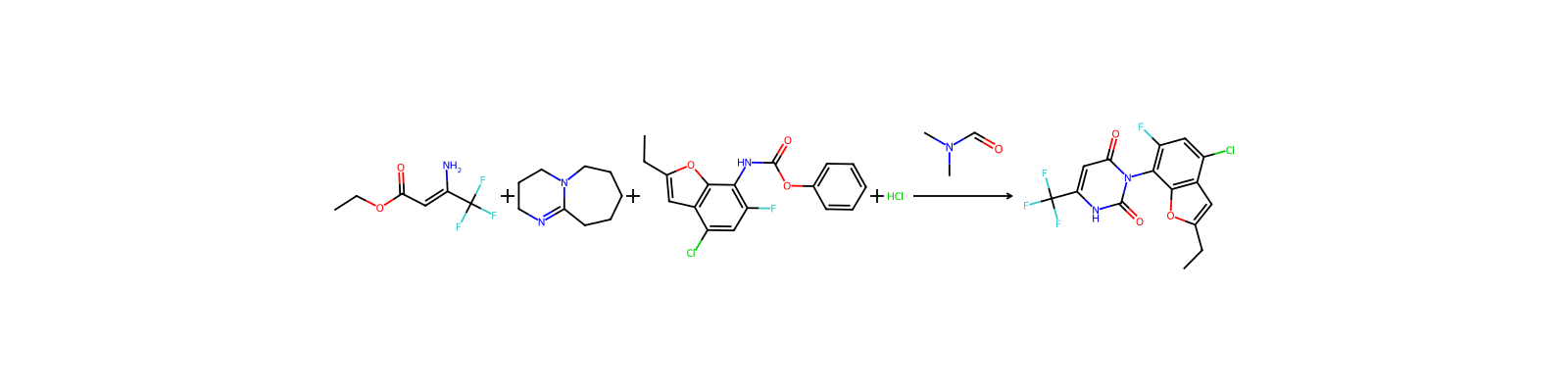
Hydrochloric Acid → 3-(4-Chloro-2-ethyl-6-fluorobenzofuran-7-yl)-6-trifluoromethyluracil

HRID 366314
Notes
Print preview

Reaction equation

HRID 366314 reaction equation
[NH2:1]/[C:2](/[C:9]([F:12])([F:11])[F:10])=[CH:3]\[C:4]([O:6]CC)=O.C1CCN2C(=NCCC2)CC1.[Cl:24][C:25]1[C:30]2[CH:31]=[C:32]([CH2:34][CH3:35])[O:33][C:29]=2[C:28]([NH:36][C:37](OC2C=CC=CC=2)=[O:38])=[C:27]([F:46])[CH:26]=1.Cl>CN(C)C=O>[Cl:24][C:25]1[C:30]2[CH:31]=[C:32]([CH2:34][CH3:35])[O:33][C:29]=2[C:28]([N:36]2[C:4](=[O:6])[CH:3]=[C:2]([C:9]([F:10])([F:11])[F:12])[NH:1][C:37]2=[O:38])=[C:27]([F:46])[CH:26]=1
ParticipantsConditionsProcedureWorkupSources & evidenceReaction notes

Participants

6

Reactant 4

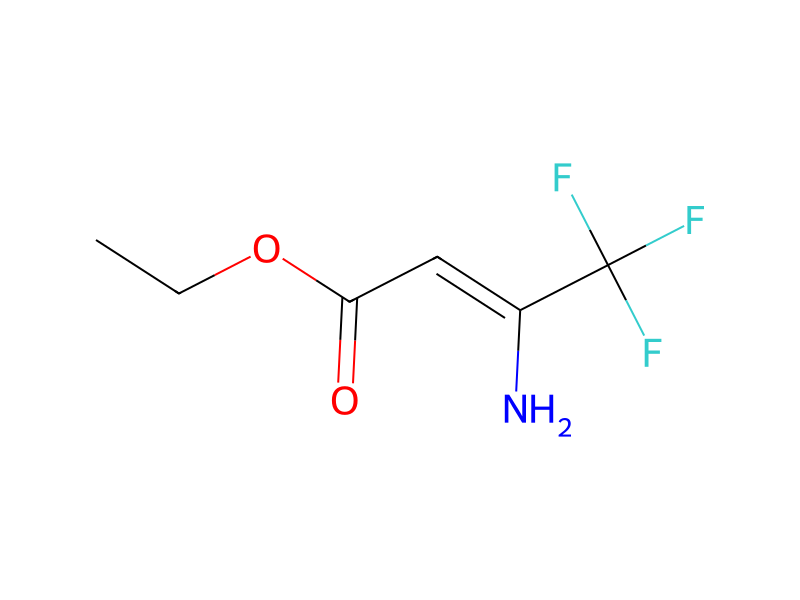
HCID 313Hydrochloric AcidHCID 811841,8-Diazabicyclo(5.4.0)undec-7-eneHCID 5702529Ethyl 3-amino-4,4,4-trifluorocrotonateHCID 232891804-Chloro-2-ethyl-6-fluoro-7-phenoxycarbonylaminobenzofuran

Product 1

HCID 232891763-(4-Chloro-2-ethyl-6-fluorobenzofuran-7-yl)-6-trifluoromethyluracilYield 44%

Reagents, catalysts & solvents

1
HCID 6228DimethylformamideSolvent

Conditions

Temperature
60 °C

Procedure

80 ml of N,N-dimethylformamide was added to 5.8 g (32 mmol) of ethyl 3-amino-4,4,4-trifluorocrotonate and 6.6 g (43 mmol) of 1,8-diazabicyclo[5.4.0]-7-undecene, and 9.6 g (29 mmol) of 4-chloro-2-ethyl-6-fluoro-7-phenoxycarbonylaminobenzofuran was gradually added thereto at room temperature. After stirring at 60° C. for 8 hours, the reaction solution was poured into a 10% hydrochloric acid aqueous solution and acidified, and then extracted with ethyl acetate. The organic layer was washed sequentially with water and a saturated sodium chloride aqueous solution and then dried over anhydrous magnesium sulfate. The solvent was distilled off under reduced pressure. Then, the obtained residue was purified by silica gel column chromatography to obtain 4.8 g (yield: 44%) of the desired product as white crystals. Melting point: 154-155° C.

Workup

  1. additionwas gradually added
  2. customat room temperature
  3. extractionextracted with ethyl acetate
  4. washThe organic layer was washed sequentially with water
  5. dry with materiala saturated sodium chloride aqueous solution and then dried over anhydrous magnesium sulfate
  6. distillationThe solvent was distilled off under reduced pressure
  7. customThen, the obtained residue was purified by silica gel column chromatography

Sources & evidence

ORD record
ord-8111caab964842e98b7fbc19b9ef2c26
Source dataset
uspto-grants-2000_10
DOI
10.6084/m9.figshare.5104873.v1
Patent number
US06130187

Reaction notes

Loading…

On this pageParticipantsConditionsProcedureWorkupSources & evidenceReaction notes