HomeMCPWorkbenchSkills
HomeWorkbenchNotificationsMe
llms.txt · MCP GuidePrivacy Policy · Terms of Service · Supportv1.8.3
  1. Home
  2. /Reaction

Triethylamine → N-[4-[4-(2,4-Diamino-6-methyl-5-pyrimidinyl)-1-piperazinyl]benzoyl]-L-glutamic acid diethyl ester

HRID 371456
Print

Reaction equation

HRID 371456 reaction equation
Cl.[NH2:2][C:3]1[N:8]=[C:7]([NH2:9])[C:6]([N:10]2[CH2:15][CH2:14][N:13]([C:16]3[CH:24]=[CH:23][C:19]([C:20](O)=[O:21])=[CH:18][CH:17]=3)[CH2:12][CH2:11]2)=[C:5]([CH3:25])[N:4]=1.P(C#N)(=O)(OCC)OCC.C(N(CC)CC)C.Cl.[CH2:44]([O:46][C:47](=[O:57])[C@H:48]([CH2:50][CH2:51][C:52]([O:54][CH2:55][CH3:56])=[O:53])[NH2:49])[CH3:45]>CN(C)C=O>[CH2:44]([O:46][C:47](=[O:57])[C@H:48]([CH2:50][CH2:51][C:52]([O:54][CH2:55][CH3:56])=[O:53])[NH:49][C:20](=[O:21])[C:19]1[CH:23]=[CH:24][C:16]([N:13]2[CH2:12][CH2:11][N:10]([C:6]3[C:7]([NH2:9])=[N:8][C:3]([NH2:2])=[N:4][C:5]=3[CH3:25])[CH2:15][CH2:14]2)=[CH:17][CH:18]=1)[CH3:45]
ParticipantsProcedureWorkupSources & evidenceReaction notes

Participants

6

Reactant 4

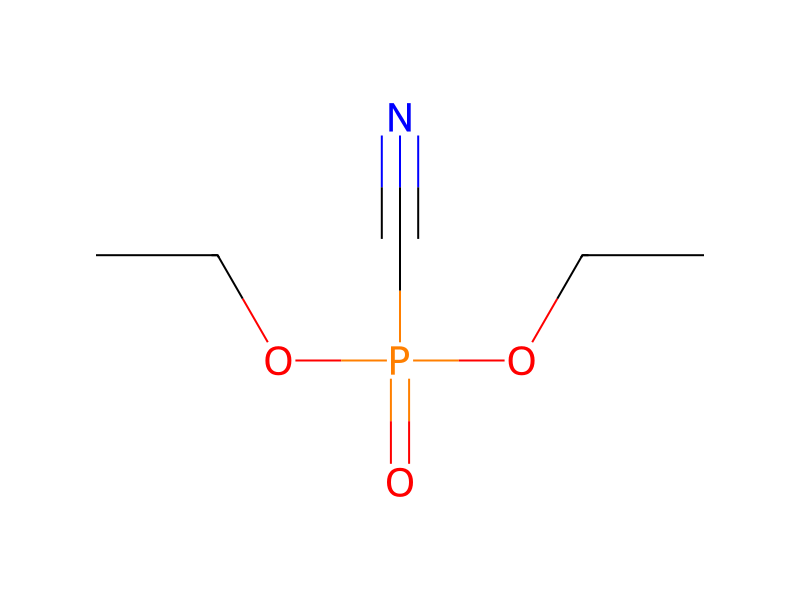
HCID 8471Triethylamine2×HCID 73960Glutamic acid diethyl ester hydrochlorideHCID 76257Diethyl cyanophosphonateHCID 704126134-[4-(2,4-Diamino-6-methyl-5-pyrimidinyl)-1-piperazinyl]benzoic acid hydrochloride

Product 1

HCID 13478337N-[4-[4-(2,4-Diamino-6-methyl-5-pyrimidinyl)-1-piperazinyl]benzoyl]-L-glutamic acid diethyl ester
Yield 66.8%

Reagents, catalysts & solvents 1

HCID 6228DimethylformamideSolvent

Procedure

A mixture of 4.27 g (0.01137 mole) of 4-[4-(2,4-diamino-6-methyl-5-pyrimidinyl)-1-piperazinyl]benzoic acid hydrochloride, 6.12 g (0.0375 mole) of diethyl phosphorocyanidate and 7.0 ml (0.050 mole) of triethylamine in 300 ml of previously dried dimethylformamide was stirred at room temperature for five hours and then at 80° C. for five minutes. The solution was cooled to room temperature, and a solution of 3.00 g (0.0125 mole) of L-glutamic acid diethyl ester hydrochloride and 1.74 ml (0.0125 mole) of triethylamine was added. The resulting mixture was stirred for two hours at room temperature. The solvent was removed under high vacuum at 40° C. and the gummy residue partitioned between 500 ml of dichloromethane and 500 ml of 5% sodium bicarbonate solution. The organic layer was separated, washed with water and then with saturated sodium chloride solution and dried over magnesium sulfate. The dried solution was concentrated in vacuo to give a yellow solid. Recrystallization from acetonitrile gave 3.9 g of the product as a tan solid, mp 224° C. (dec.).

Workup

  1. waitat 80° C. for five minutes
  2. temperatureThe solution was cooled to room temperature
  3. stirringThe resulting mixture was stirred for two hours at room temperature
  4. customThe solvent was removed under high vacuum at 40° C.
  5. customthe gummy residue partitioned between 500 ml of dichloromethane and 500 ml of 5% sodium bicarbonate solution
  6. customThe organic layer was separated
  7. washwashed with water
  8. dry with materialwith saturated sodium chloride solution and dried over magnesium sulfate
  9. concentrationThe dried solution was concentrated in vacuo
  10. customto give a yellow solid
  11. customRecrystallization from acetonitrile

Sources & evidence

ORD record
ord-6a744a14880343868338d153caee0a75
Source dataset
uspto-grants-1985_07
DOI
10.6084/m9.figshare.5104873.v1
Patent number
US04532240

Reaction notes

On this pageParticipantsProcedureWorkupSources & evidenceReaction notes