Reaction equation

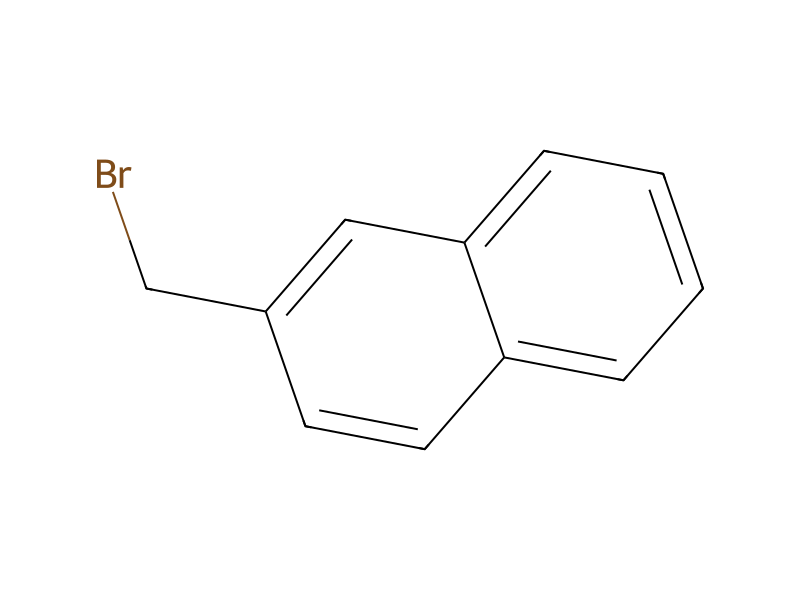
[C:1]1(=[O:10])[C:9]2[C:4](=[CH:5][CH:6]=[CH:7][CH:8]=2)[CH2:3][CH2:2]1.[C:11]([O-:14])([O-])=O.[K+].[K+].[CH2:17]1OCCOCCOCCOCCOCCOC1.BrC[C:37]1[CH:46]=[CH:45][C:44]2[C:39](=[CH:40][CH:41]=[CH:42][CH:43]=2)[CH:38]=1>C(#N)C>[CH:38]1[C:39]2[C:44](=[CH:43][CH:42]=[CH:41][CH:40]=2)[CH:45]=[CH:46][C:37]=1[CH2:11][O:14][C:7]1[CH:8]=[C:9]2[C:4]([CH2:3][CH:2]([CH3:17])[C:1]2=[O:10])=[CH:5][CH:6]=1Participants
6
Reactant 4



Product 1

Reagents, catalysts & solvents 1

Conditions
- Temperature
- 70 °C
Procedure
A mixture of the indanone (14 g, 86.4 mmole) prepared as described in Example 1, Step D, anhydrous K2CO3 (11.24 g, 81.4 mmole), 18-crown-6 (2.29 g, 6.4 mmole) and 2-bromomethylnaphthalene (11.6 g, 95 mmole) in acetonitrile (275 mL) is heated under nitrogen for 24 hours (in an oil bath set at 70° C.). The acetonitrile is evaporated and the residue is dissolved in water, extracted with ethyl acetate, dried (MgSO4) and evaporated to dryness. The crude product (tan solid) is flash chromatographed (on silica Merck-60, preabsorbed in CH2Cl2, eluted with 8:2 hexane-ethyl acetate) to provide the title compound as a white solid (13.49 g, 52% ).
Workup
- customprepared
- customThe acetonitrile is evaporated
- dissolutionthe residue is dissolved in water
- extractionextracted with ethyl acetate
- dry with materialdried (MgSO4)
- customevaporated to dryness
- customchromatographed
- custom(on silica Merck-60, preabsorbed in CH2Cl2, eluted with 8:2 hexane-ethyl acetate)
Sources & evidence
- ORD record
- ord-46a992045757439585144887b9465636
- Source dataset
- uspto-grants-1995_05
- Patent number
- US05420289
Linked notes
Loading…