HomeMCPWorkbenchSkills
HomeWorkbenchNotificationsMe
llms.txt · MCP GuidePrivacy Policy · Terms of Service · Supportv1.8.3
  1. Home
  2. /Reaction

Chlorosuccinimide → 4-Bromo-3-fluorobenzaldehyde

HRID 379048
Print

Reaction equation

HRID 379048 reaction equation
[Br:1][C:2]1[CH:9]=[CH:8][C:5]([CH2:6][OH:7])=[CH:4][C:3]=1[F:10].CC1(C)N([O])C(C)(C)CCC1.[F-].C([N+](CCCC)(CCCC)CCCC)CCC.C([O-])(O)=O.[Na+].ClN1C(=O)CCC1=O>C(Cl)Cl>[Br:1][C:2]1[CH:9]=[CH:8][C:5]([CH:6]=[O:7])=[CH:4][C:3]=1[F:10]
ParticipantsProcedureWorkupSources & evidenceReaction notes

Participants

7

Reactant 5

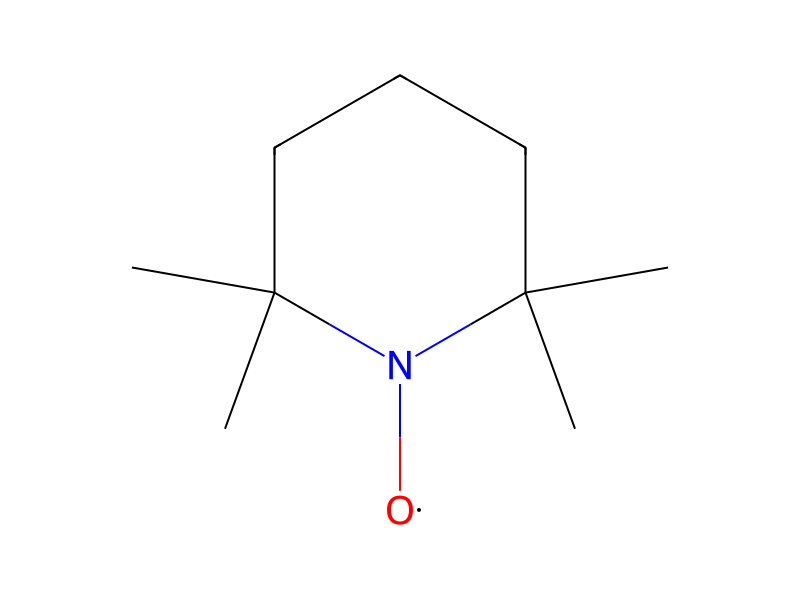
HCID 31398ChlorosuccinimideHCID 516892Sodium BicarbonateHCID 2724126TempoHCID 2724141Tetrabutylammonium FluorideHCID 20682297(4-Bromo-3-fluorophenyl)methanol

Product 1

HCID 27834114-Bromo-3-fluorobenzaldehyde

Reagents, catalysts & solvents

1
HCID 6344DichloromethaneSolvent

Procedure

To a well-stirred mixture of 4-bromo-3-fluorobenzyl alcohol (as described in Example 9, Step B) (10.25 g, 0.05 mol), TEMPO (0.781 g, 0.005 mol) and tetrabutylammonium fluoride (1.39 g, 0.005 mol) in CH2Cl2 (200 mL) and a solution of 0.5M NaHCO3/0.05M K2CO3 (200 mL) was added N-chlorosuccinimide (9.35 g, 0.07 mol). After 6 hrs, the layers were separated, the aqueous layer back-washed with CH2Cl2 (2×50 mL), the organics combined and dried (Na2SO4). The solution was filtered, concentrated to half its volume, then chromatographed (silica gel, CH2Cl2) to give the title compound.

Workup

  1. customthe layers were separated
  2. washthe aqueous layer back-washed with CH2Cl2 (2×50 mL)
  3. dry with materialdried (Na2SO4)
  4. filtrationThe solution was filtered
  5. concentrationconcentrated to half its volume
  6. customchromatographed (silica gel, CH2Cl2)

Sources & evidence

ORD record
ord-e5c4ffd670f2468886f8ddba1895786e
Source dataset
uspto-grants-2001_10
DOI
10.6084/m9.figshare.5104873.v1
Patent number
US06297239B1

Reaction notes

On this pageParticipantsProcedureWorkupSources & evidenceReaction notes