Reaction equation
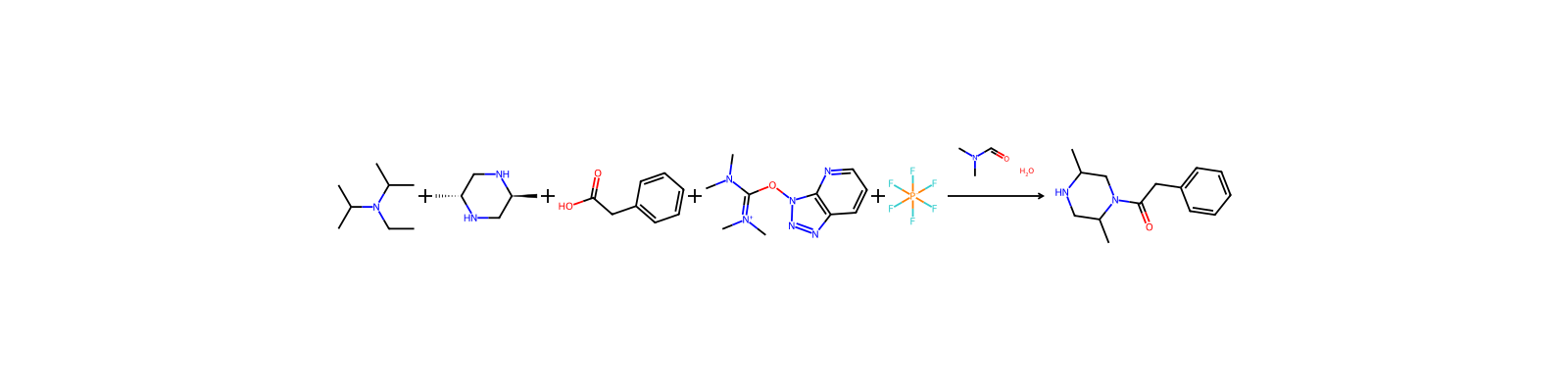
C(N(C(C)C)CC)(C)C.[CH3:10][C@H:11]1[CH2:16][NH:15][C@H:14]([CH3:17])[CH2:13][NH:12]1.[C:18]1([CH2:24][C:25](O)=[O:26])[CH:23]=[CH:22][CH:21]=[CH:20][CH:19]=1.CN(C(ON1N=NC2C=CC=NC1=2)=[N+](C)C)C.F[P-](F)(F)(F)(F)F>CN(C=O)C.O>[CH3:10][CH:11]1[CH2:16][NH:15][CH:14]([CH3:17])[CH2:13][N:12]1[C:25](=[O:26])[CH2:24][C:18]1[CH:23]=[CH:22][CH:21]=[CH:20][CH:19]=1Participants
7
Reactant 4


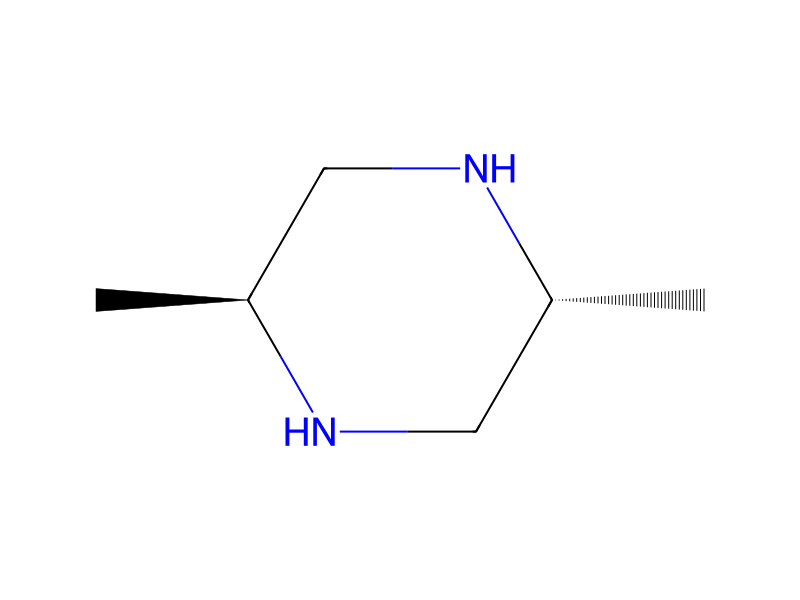

Product 1
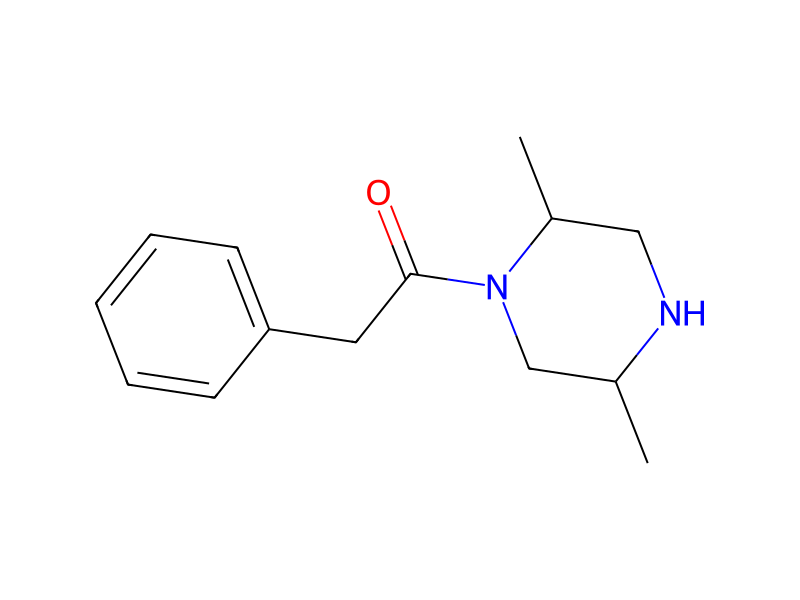
Reagents, catalysts & solvents 2


Procedure
Diisopropylethylamine (0.38 ml) was added to a solution of trans-2,5-dimethyl-piperazine (1.50 g), phenyl acetic acid (0.59 g) and HATU (1.55 g) in DMF (10 ml). The reaction mixture was stirred overnight at ambient temperature. The solution was diluted with water, then extracted with ethyl acetate. The organic extracts were dried (MgSO4) then concentrated in vacuo to give the sub-title compound (1.8 g).
Workup
- extractionextracted with ethyl acetate
- dry with materialThe organic extracts were dried (MgSO4)
- concentrationthen concentrated in vacuo
Sources & evidence
- ORD record
- ord-715e1f13ccc9473e8841e52835088166
- Source dataset
- uspto-grants-2013_09
- Patent number
- US08524715B2
Linked notes
Loading…