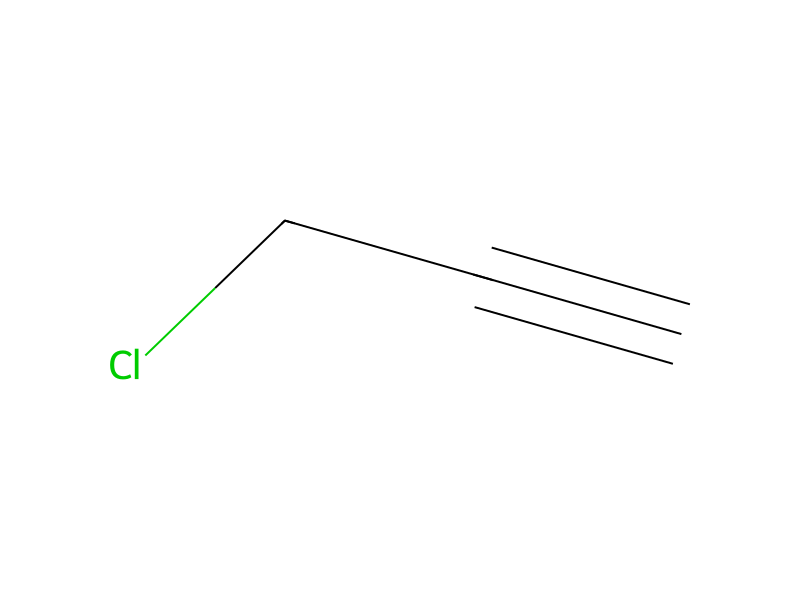
[NH2:1][C:2]1[N:7]=[C:6]([NH2:8])[C:5]([O:9][C:10]2[C:15]([CH:16]([CH3:18])[CH3:17])=[CH:14][C:13]([OH:19])=[C:12]([I:20])[CH:11]=2)=[CH:4][N:3]=1.C(=O)([O-])[O-].[K+].[K+].[CH2:27](Cl)[C:28]#[CH:29]>CN(C)C=O>[I:20][C:12]1[C:13]([O:19][CH2:29][C:28]#[CH:27])=[CH:14][C:15]([CH:16]([CH3:18])[CH3:17])=[C:10]([CH:11]=1)[O:9][C:5]1[C:6]([NH2:8])=[N:7][C:2]([NH2:1])=[N:3][CH:4]=1To 4-(2,4-Diamino-pyrimidin-5-yloxy)-2-iodo-5-isopropyl-phenol (200 mg, 0.43 mmol) dissolved in anhydrous N,N-dimethylformamide (2 mL) was added anhydrous potassium carbonate (414 mg, 3.00 mmol) and propargyl chloride (0.03 mL, 0.43 mmol). After stirring at room temperature overnight, the reaction was extracted with dichloromethane, water and brine. The dichloromethane layer was dried using anhydrous magnesium sulfate, concentrated, and purified via silica gel column chromatography (95/5/0.1 dichloromethane/methanol/ammonium hydroxide) to yield 5-(5-iodo-2-isopropyl-4-prop-2-ynyloxy-phenoxy)-pyrimidine-2,4-diamine as white solid (131 mg, 71%), MS (M+H)=425.
Loading…