Reaction equation
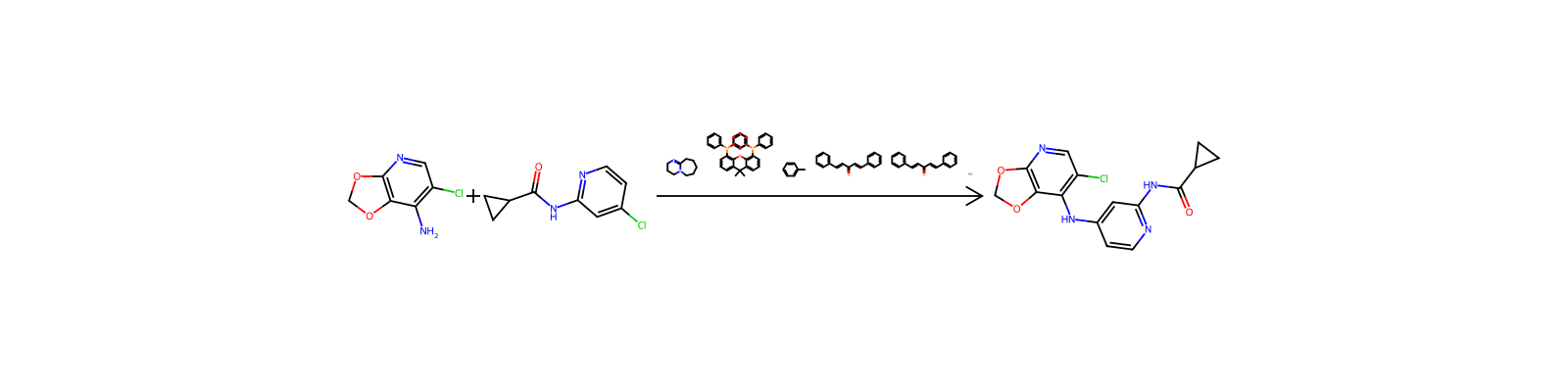
Nc1c(Cl)cnc2c1OCO2.O=C(Nc1cc(Cl)ccn1)C1CC1>C1CCC2=NCCCN2CC1.CC1(C)c2cccc(P(c3ccccc3)c3ccccc3)c2Oc2c(P(c3ccccc3)c3ccccc3)cccc21.Cc1ccccc1.O=C(/C=C/c1ccccc1)/C=C/c1ccccc1.O=C(/C=C/c1ccccc1)/C=C/c1ccccc1.[Pd]>O=C(Nc1cc(Nc2c(Cl)cnc3c2OCO3)ccn1)C1CC1Participants
Reactant 2
Product 1

Reagents, catalysts & solvents 4



Conditions
- Temperature
- 130 °C
Procedure
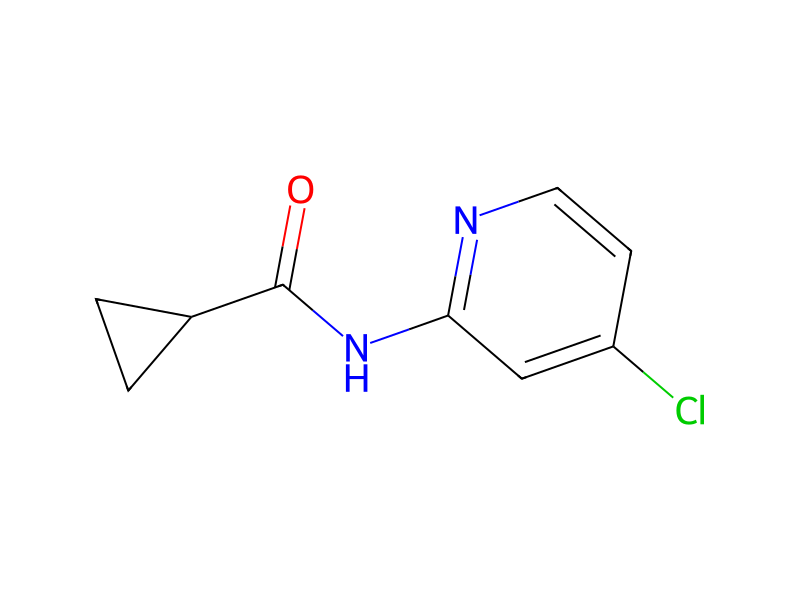
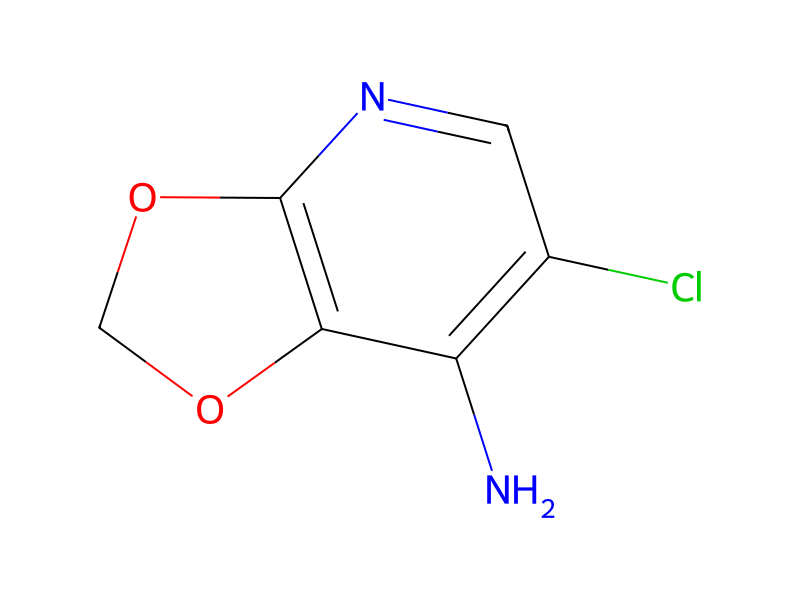
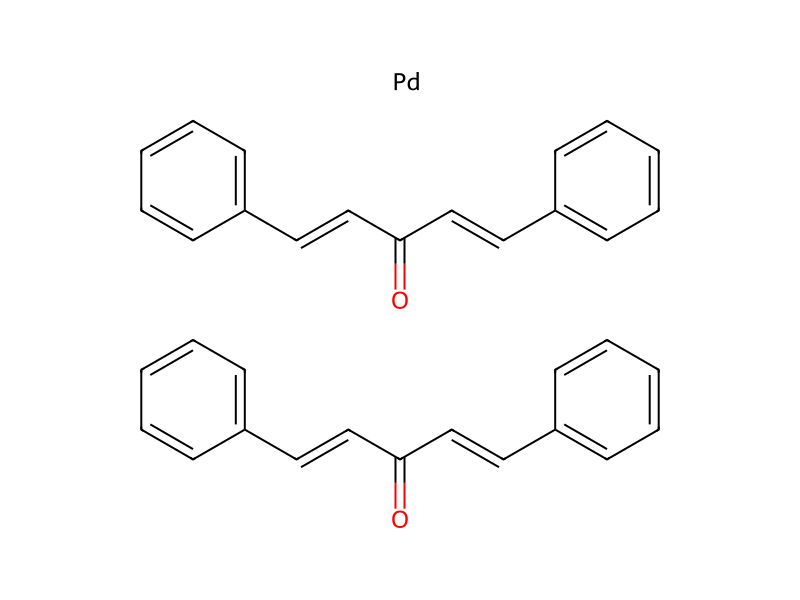
2,3,4,6,7,8,9,10-octahydropyrimido[1,2-a]azepine (0.190 mL, 1.27 mmol) was added to a mixture of N-(4-chloropyridin-2-yl)cyclopropanecarboxamide (100 mg, 0.51 mmol), 6-chloro-[1,3]dioxolo[4,5-b]pyridin-7-amine (105 mg, 0.61 mmol) and BIS(DIBENZYLIDENEACETONE)PALLADIUM(0) (26.3 mg, 0.05 mmol) and (9,9-dimethyl-9H-xanthene-4,5-diyl)bis(diphenylphosphine) (29.4 mg, 0.05 mmol) in toluene (1 mL) in a microwave tube. The reaction was degased, purged with argon and heated to 130 °C over a period of 7 hours in an oil bath. The mixture was diluted with dichloromethane, washed with water (emulsion), with brine, dried over MgSO4 and concentrated. The crude product was purified by flash chromatography on silica gel eluting with 0 to 3% methanol in dichloromethane. The solvent was evaporated to dryness to afford N-(4-(6-chloro-[1,3]dioxolo[4,5-b]pyridin-7-ylamino)pyridin-2-yl)cyclopropanecarboxamide (55.0 mg, 32.5 %) as a yellow solid.
Sources & evidence
- ORD record
- ord-1aa2de1a9b014f58b717c720b31e4a66
- Source dataset
- 750 AstraZeneca ELN dataset
- Original link
- View source
Linked notes
Loading…