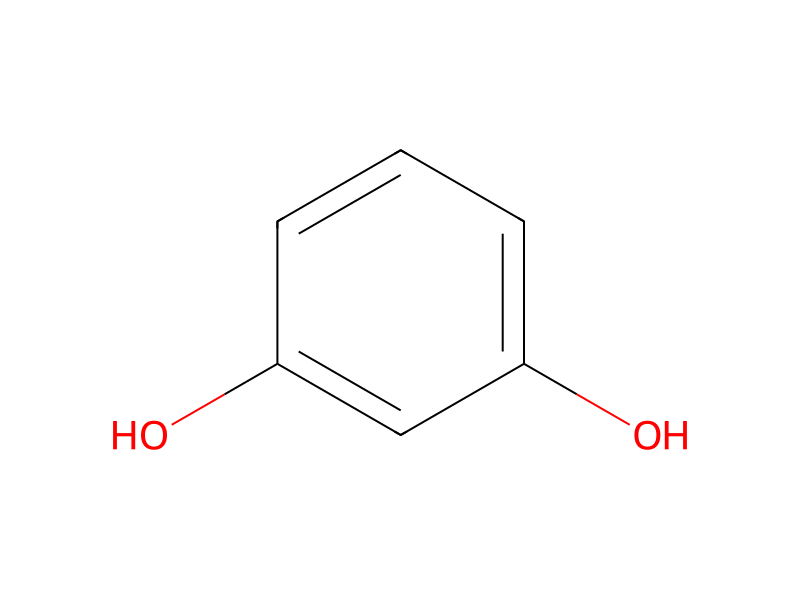
[OH:1][C:2]1[CH:7]=[CH:6][CH:5]=[C:4]([OH:8])[CH:3]=1.[H-].[Na+].Cl.Cl[C:13]1[C:22]2[C:17](=[CH:18][C:19]([O:25][CH2:26][CH2:27][O:28][CH3:29])=[C:20]([C:23]#[N:24])[CH:21]=2)[N:16]=[CH:15][CH:14]=1>CN(C=O)C>[C:23]([C:20]1[CH:21]=[C:22]2[C:17](=[CH:18][C:19]=1[O:25][CH2:26][CH2:27][O:28][CH3:29])[N:16]=[CH:15][CH:14]=[C:13]2[O:1][C:2]1[CH:7]=[CH:6][CH:5]=[C:4]([OH:8])[CH:3]=1)#[N:24]1,3-Dihydroxybenzene (110 mg, 1 mmol) was added to a stirred suspension of sodium hydride (60 mg, 2 mmol) in DMF (10 ml) and the mixture was stirred for 30 minutes. 4-Chloro-6-cyano-7-(2-methoxyethoxy)quinoline hydrochloride (300 mg 1 mmol), (prepared as described for the starting material in Example 1), was added and the mixture was heated at 100° C. for 4 hours. The mixture was allowed to cool, was quenched with water and extracted with ethyl acetate (2×75 ml). The extracts were combined, washed with water (×2) and then brine and dried (MgSO4). The solvent was removed by evaporation and the residue was triturated with ethyl acetate/hexane, collected by filtration and dried to give 6-cyano-4-(3-hydroxyphenoxy)-7-(2-methoxyethoxy)quinoline (115 mg, 34%).