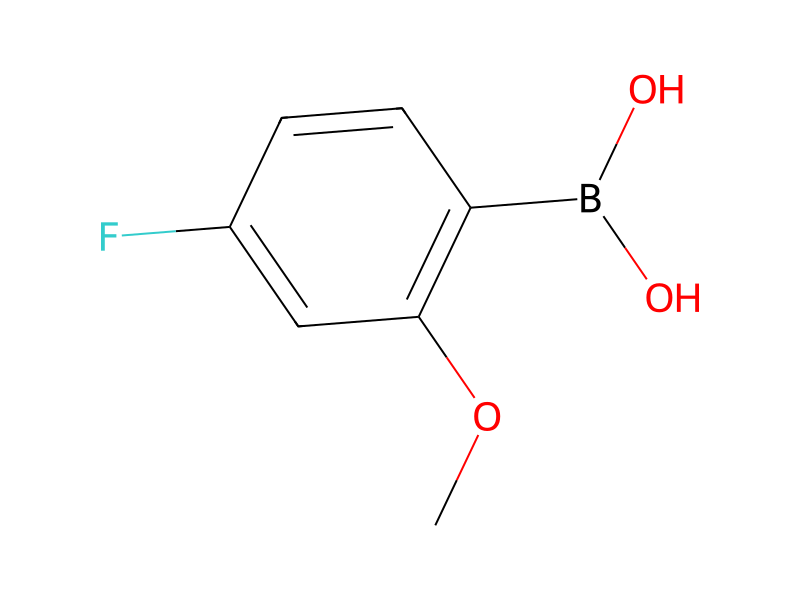
To a solution of 4-bromo-6-chloropyridazin-3-amine (2.5 g, 12.0 mmol, CAS RN 446273-59-2) in 1,2-dimethoxyethane (30 mL) was added 4-fluoro-2-methoxyphenylboronic acid (2.45 g, 14.4 mmol, CAS RN 179899-07-1) and 2M aqueous sodium carbonate solution (10 mL). The reaction mixture was stirred under argon atmosphere for 15 minutes. Pd(II)acetate (135 mg, 600 μmol) and triphenylphosphine (315 mg, 1.2 mmol) was added. The dark red reaction mixture was stirred at 90° C. for 8 hours and then poured on 10% aqueous sodium bicarbonate solution (200 mL) and ethyl acetate (200 mL), filtered over dicalite and the layers were separated. The aqueous layer was extracted a second time with ethyl acetate (200 mL). The organic layers were washed with 200 mL brine, dried over magnesium sulfate, filtered and concentrated under vacuum. The residue was purified by silica gel chromatography on a 120 g column using a MPLC system (CombiFlash Companion, Isco Inc.) eluting with a gradient of n-heptane:ethyl acetate (100:0 to 0:100). Light red solid (1.71 g, 56.2%). MS (ESI+): m/z=254.050 ([M+H]+).