HomeMCPSkillsWorkbenchOpenChem
HomeWorkbenchNotificationsMe
llms.txt · skill.md · MCP GuidePrivacy Policy · Terms of Service · Supportv1.8.4
  1. Home
  2. /Reaction

Sulfuric Acid → 6-chloro-4-(2-methoxypyridin-3-yl)-N-methylpyridazin-3-amine

HRID 403386
Print

Reaction equation

[Cl:1][C:2]1[N:7]=[N:6][C:5]([NH2:8])=[C:4]([C:9]2[C:10]([O:15][CH3:16])=[N:11][CH:12]=[CH:13][CH:14]=2)[CH:3]=1.[BH4-].[Na+].S(=O)(=O)(O)O.[C:24](=O)(O)[O-].[Na+]>C(OCC)(OCC)OCC.FC(F)(F)C(O)=O.C(OCC)(=O)C>[Cl:1][C:2]1[N:7]=[N:6][C:5]([NH:8][CH3:24])=[C:4]([C:9]2[C:10]([O:15][CH3:16])=[N:11][CH:12]=[CH:13][CH:14]=2)[CH:3]=1
ParticipantsConditionsProcedureWorkupSources & evidenceReaction notes

Participants

8

Reactant 4

HCID 1118Sulfuric AcidHCID 516892Sodium BicarbonateHCID 4311764Sodium borohydrideHCID 866984806-Chloro-4-(2-methoxypyridin-3-yl)pyridazin-3-ylamine

Product 1

HCID 866984796-chloro-4-(2-methoxypyridin-3-yl)-N-methylpyridazin-3-amine

Reagents, catalysts & solvents 3

HCID 6422
Trifluoroacetic acid
Catalyst
HCID 8857Ethyl AcetateSolvent
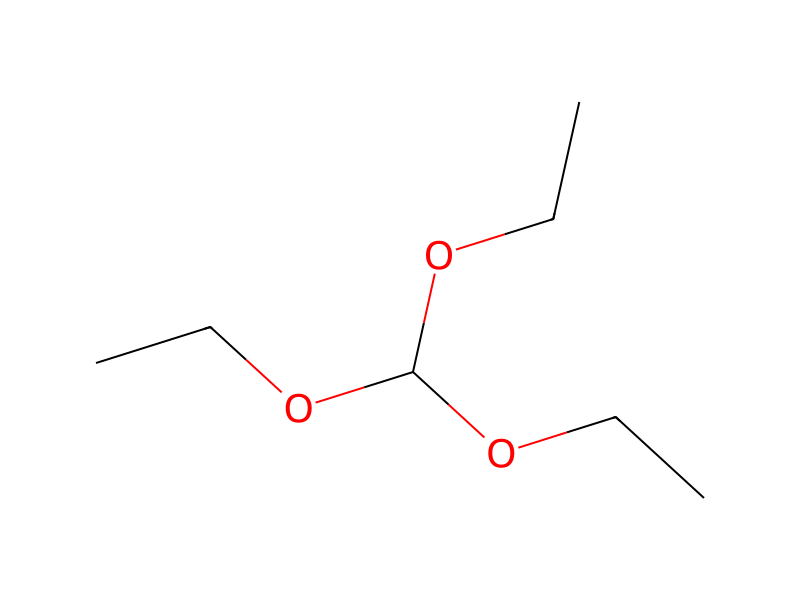
HCID 31214Ethyl orthoformateSolvent

Conditions

Temperature
100 °C

Procedure

To a solution of 6-chloro-4-(2-methoxy-pyridin-3-yl)-pyridazin-3-ylamine (270 mg, 1.14 mmol) in triethyl orthoformate (6 mL) was added 1 drop of trifluoroacetic acid. The reaction mixture was stirred at 100° C. for 3 hours and then concentrated under vacuum (60° C./20 mbar). The residue was dissolved in 5 mL toluene and concentrated again. This was repeated for 3 times to completely remove all volatiles. The residue was dissolved in ethanol (6 mL) and sodium borohydride (86.3 mg, 2.28 mmol) was added in portions at 0° C. The reaction mixture was heated to 90° C. and stirred at this temperature for 2 hours. The reaction was cooled down to 0° C. and the pH was adjusted to 1 by addition of 0.25M aqueous sulfuric acid (5 mL). The yellow reaction mixture was stirred at room temperature for 3 hours, poured on 10% aqueous sodium bicarbonate solution (50 mL) and ethyl acetate (50 mL) (pH ca. 8) and the layers were separated. The aqueous layer was extracted a second time with ethyl acetate (50 mL). The organic layers were washed with brine (50 mL), dried over magnesium sulfate, filtered and concentrated under vacuum. The compound was purified by silica gel chromatography on a 20 g column using an MPLC (Flashmaster) system eluting with a gradient of n-heptane:ethyl acetate (100:0 to 0:100). Light yellow solid (100 mg, 35%). MS (ESI+): m/z=251.069 ([M+H]+).


Workup

  1. concentrationconcentrated under vacuum (60° C./20 mbar)
  2. dissolutionThe residue was dissolved in 5 mL toluene
  3. concentrationconcentrated again
  4. customto completely remove all volatiles
  5. dissolutionThe residue was dissolved in ethanol (6 mL)
  6. temperatureThe reaction mixture was heated to 90° C.
  7. stirringstirred at this temperature for 2 hours
  8. temperatureThe reaction was cooled down to 0° C.
  9. stirringThe yellow reaction mixture was stirred at room temperature for 3 hours
  10. customthe layers were separated
  11. extractionThe aqueous layer was extracted a second time with ethyl acetate (50 mL)
  12. washThe organic layers were washed with brine (50 mL)
  13. dry with materialdried over magnesium sulfate
  14. filtrationfiltered
  15. concentrationconcentrated under vacuum
  16. customThe compound was purified by silica gel chromatography on a 20 g column
  17. washeluting with a gradient of n-heptane:ethyl acetate (100:0 to 0:100)

Sources & evidence

ORD record
ord-e0de8fa829a740d7b7fb645652a3a408
Source dataset
uspto-grants-2014_06
DOI
10.6084/m9.figshare.5104873.v1
Patent number
US08748434B2

Reaction notes

On this pageParticipantsConditionsProcedureWorkupSources & evidenceReaction notes