Reaction equation

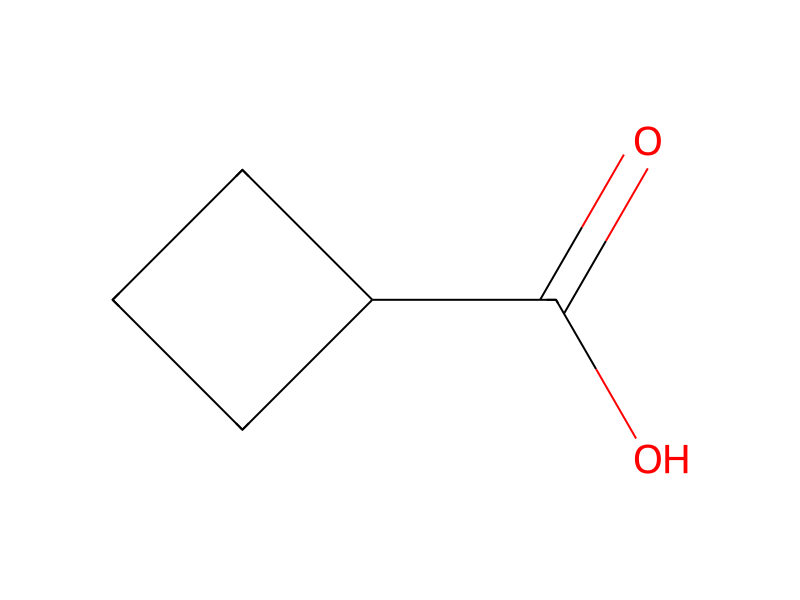
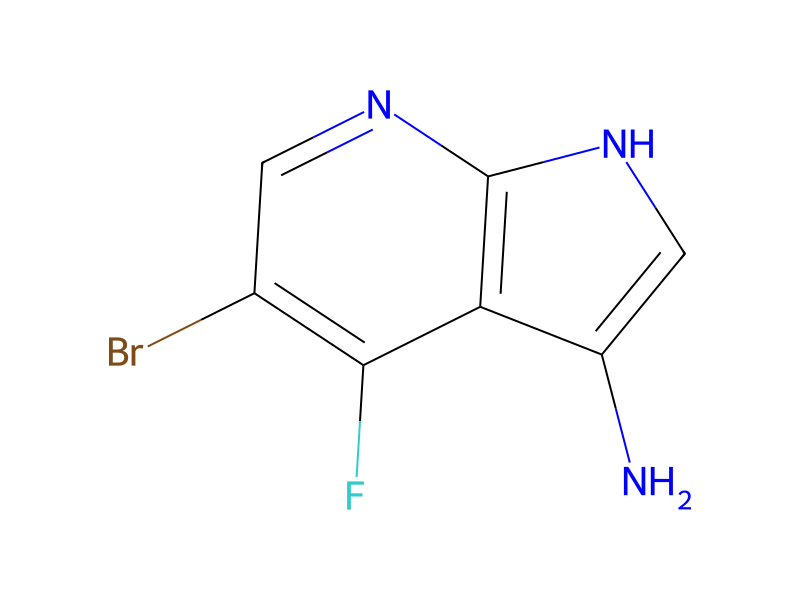
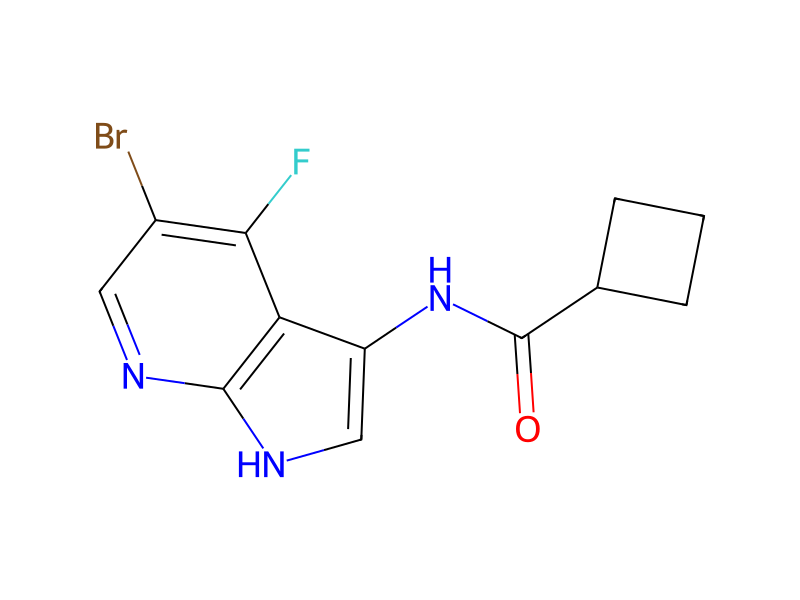
[Br:1][C:2]1[C:3]([F:12])=[C:4]2[C:10]([NH2:11])=[CH:9][NH:8][C:5]2=[N:6][CH:7]=1.[CH:13]1([C:17](O)=[O:18])[CH2:16][CH2:15][CH2:14]1.C(N(CC)CC)C.C1N(P(Cl)(N2C(=O)OCC2)=O)C(=O)OC1.O[Li].O>C(Cl)Cl.O>[Br:1][C:2]1[C:3]([F:12])=[C:4]2[C:10]([NH:11][C:17]([CH:13]3[CH2:16][CH2:15][CH2:14]3)=[O:18])=[CH:9][NH:8][C:5]2=[N:6][CH:7]=1Participants
Reactant 5



Product 1
Reagents, catalysts & solvents 2


Procedure
A mixture of 5-bromo-4-fluoro-1H-pyrrolo[2,3-b]pyridin-3-amine (200 mg, 0.869 mmol, Example 1, Step H), cyclobutanecarboxylic acid (218 mg, 2.17 mmol) and triethylamine (606 μL, 4.35 mmol) in CH2Cl2 (10 mL) at room temperature was treated with BOP-Cl (203 mg, 2.17 mmol). The reaction was stirred at room temperature for 42 hours. The reaction mixture was then treated with 2M LiOH.H2O (2 mL) and stirred at room temperature for 18 hours. Water (10 mL) was added to the reaction mixture, and the solid formed was filtered, washed with additional water, and dried to provide N-(5-bromo-4-fluoro-1H-pyrrolo[2,3-b]pyridin-3-yl)cyclobutanecarboxamide (193 mg, 71% yield) as a solid. 1H NMR (400 MHz, (CD3)2SO) δ 12.04 (br s, 1H), 9.33 (s, 1H), 8.33 (d, 1H), 7.57 (s, 1H), 3.29-3.24 (m, 1H), 2.25-2.18 (m, 2H), 2.15-2.08 (m, 2H), 1.98-1.88 (m, 1H), 1.86-1.78 (m, 1H); LCMS (APCI+) m/z 311.9, 314.0 (M+H)+, Retention time=2.96 minutes (Method 2).
Workup
- stirringstirred at room temperature for 18 hours
- customthe solid formed
- filtrationwas filtered
- washwashed with additional water
- customdried
Sources & evidence
- ORD record
- ord-c1b1a01d0b41409bbe2e4caa912d8b44
- Source dataset
- uspto-grants-2014_06
- Patent number
- US08758830B2
Linked notes
Loading…