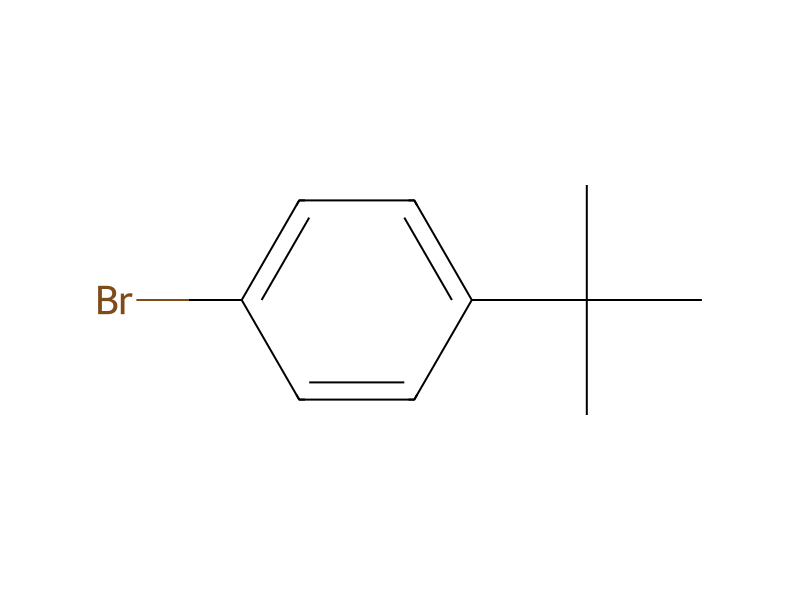
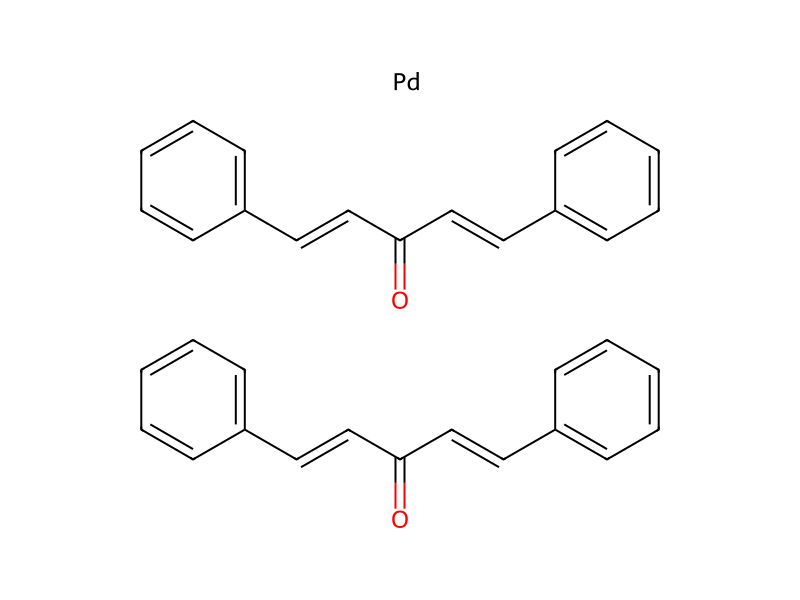
[C:1]([C:5]1[CH:10]=[CH:9][C:8](Br)=[CH:7][CH:6]=1)([CH3:4])([CH3:3])[CH3:2].[F-].[K+].[CH2:14](B(O)O)[CH2:15][CH2:16][CH3:17]>C1C=CC(/C=C/C(/C=C/C2C=CC=CC=2)=O)=CC=1.C1C=CC(/C=C/C(/C=C/C2C=CC=CC=2)=O)=CC=1.[Pd].C1COCC1>[C:1]([C:5]1[CH:10]=[CH:9][C:8]([CH2:14][CH2:15][CH2:16][CH3:17])=[CH:7][CH:6]=1)([CH3:4])([CH3:3])[CH3:2]A 4 ml vial was charged with 4-tert-butylbromobenzene (1.00 mmol), Pd(dba)2 (0.01 mmol, 1 mol %), Ph5FcP(t-Bu)2 (0.02 mmol, 2 mol %), KF (2.02 mmol, powdered) and n-butylboronic acid (1.21 mmol). Anhydrous THF (2 ml) and a stirring bar were added, and the vial was sealed with a cap containing a PTFE septum and removed from the drybox. The reaction mixture was stirred at room temperature for 18 h. After a starting aryl halide was consumed as determined by GC, the reaction solution was cooled to room temperature. Then the reaction solution was adsorbed onto silica gel directly, and the product was isolated by eluting with ethyl acetate/hexanes to give 220 mg (98%) of 4-tert-butyl-1-n-butylbenzene as a colorless oil. Kugelrohl distillation was used for further purification.
Loading…