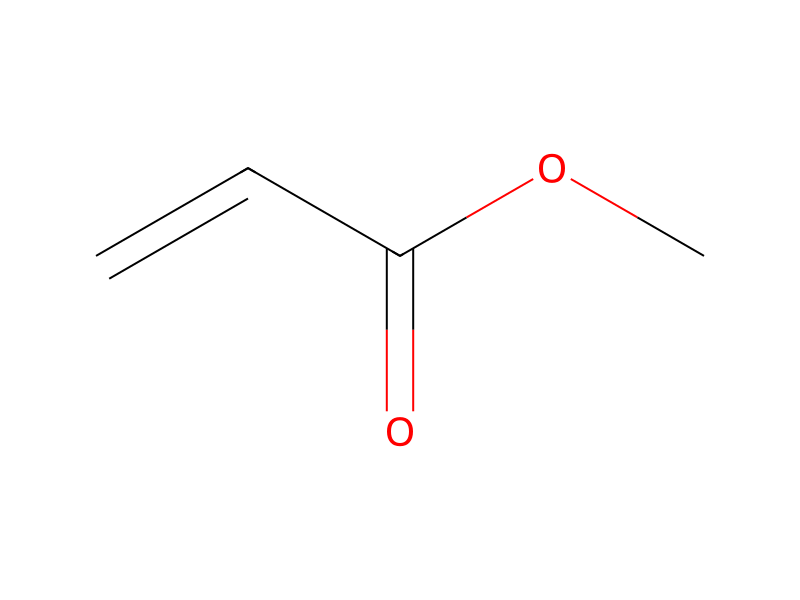
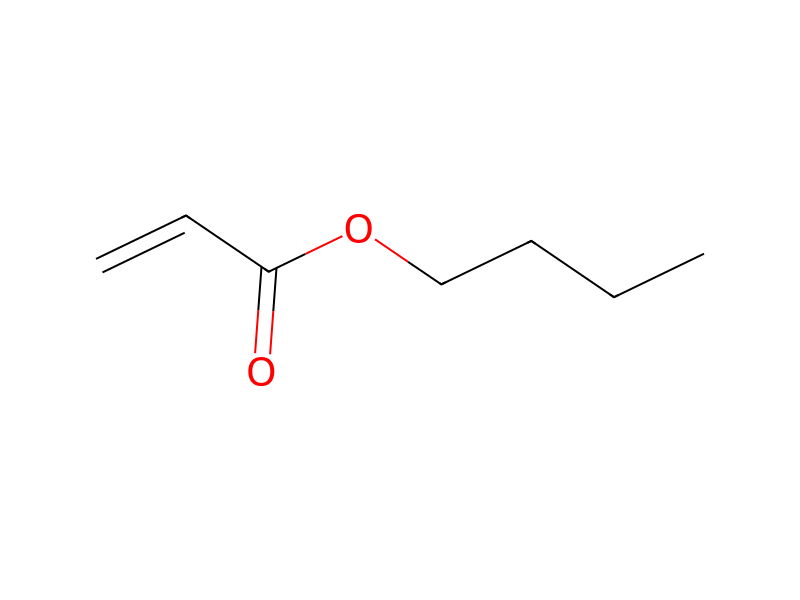
Methyl Acrylate → Butyl Acrylate
HRID 433343
Reaction equation

[C:1]([O:5][CH3:6])(=[O:4])[CH:2]=[CH2:3].[CH3:7][C:8](Br)(C)[C:9](OCC=C)=O.C(OCC)(=O)C>[Cu]Br.C(#N)C>[CH3:7][CH2:8][CH2:9][CH2:6][O:5][C:1]([CH:2]=[CH2:3])=[O:4]Participants
6
[C:1]([O:5][CH3:6])(=[O:4])[CH:2]=[CH2:3].[CH3:7][C:8](Br)(C)[C:9](OCC=C)=O.C(OCC)(=O)C>[Cu]Br.C(#N)C>[CH3:7][CH2:8][CH2:9][CH2:6][O:5][C:1]([CH:2]=[CH2:3])=[O:4]To a 30 mL pyrex tube were added methyl acrylate (5 mL, 4.78 g, 55.5 mmole), allyl 2-methyl-2-bromopropionate(0.354 mL, 460 mg, 2.2 mmole), copper (I) bromide (318 mg, 2.22 mmole), 2,21-bipyridyl (1.04 g, 6.66 mmole), ethyl acetate (4 mL) and acetonitrile (1 mL). The mixture was degassed by three freeze-pump-thaw cycles and then sealed. The mixture was heated to 80° C. for 3 hours and then after cooling to ambient temperature, the mixture was diluted with ethyl acetate (20 mL). An insoluble precipitate was filtered off and the filtrate was washed twice with dil. HCl and once with NaCl solution. The organic layer was dried over Na2SO4 and concentrated under reduced pressure to yield a poly(butyl acrylate) having an alkenyl group at one end and a bromine atom at the other end (3.93 g, 75%). The molecular weight and the molecular weight distribution of the polymer were found to be 2700 and 1.48, respectively, by GPC analysis (based on polystyrene standard). The number of alkenyl groups introduced into the polymer was 0.81 based on 1H NMR analysis.