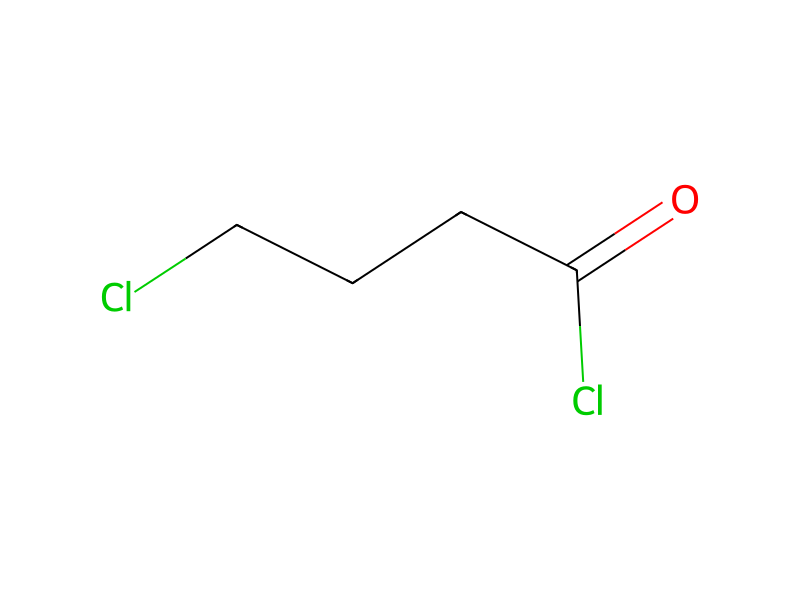
[CH:1]1[C:13]2[CH2:12][C:11]3[C:6](=[CH:7][CH:8]=[CH:9][CH:10]=3)[C:5]=2[CH:4]=[CH:3][CH:2]=1.[Cl:14][CH2:15][CH2:16][CH2:17][C:18](Cl)=[O:19].[Cl-:21].[Al+3].[Cl-].[Cl-].Cl>C(Cl)Cl>[Cl:14][CH2:15][CH2:16][CH2:17][C:18]([C:9]1[CH:8]=[CH:7][C:6]2[C:5]3[C:13](=[CH:1][C:2]([C:18](=[O:19])[CH2:17][CH2:16][CH2:15][Cl:21])=[CH:3][CH:4]=3)[CH2:12][C:11]=2[CH:10]=1)=[O:19]To a solution of 23.6 g (0.142 mole) of fluorene and 50.0 g (0.35 mole) of 4-chlorobutyryl chloride in 1500 ml of methylene chloride chilled to -20° C. is added 39.8 g (0.298 mole) of aluminum chloride with rapid stirring. The reaction mixture is refluxed four hours, stirred at room temperature for 16 hours, then poured onto ice/conc. HCl. The organic layer is separated, washed with saturated sodium bicarbonate solution and dried over magnesium sulfate. After filtration, the methylene chloride solution is evaporated to dryness and the solid residue recrystallized from acetone to yield 2,7-bis(4-chlorobutyryl)fluorene, M.P. 172°-175° C.