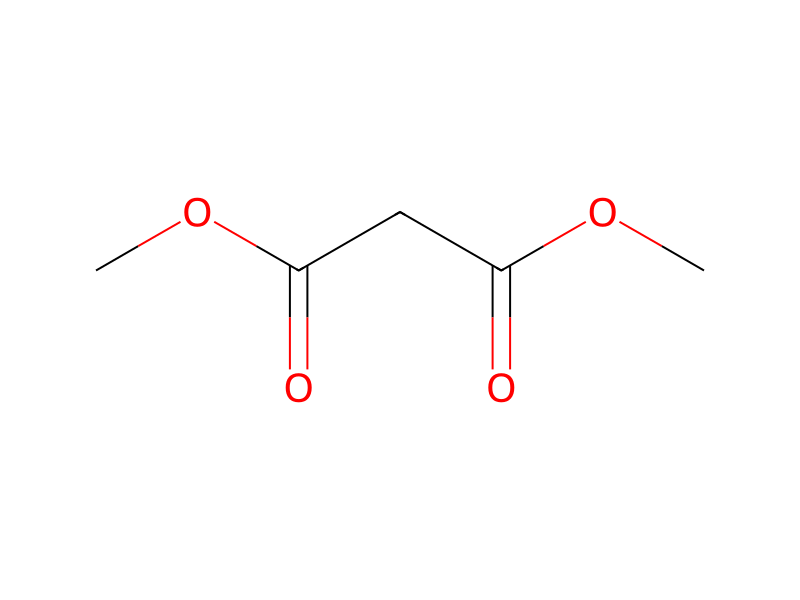
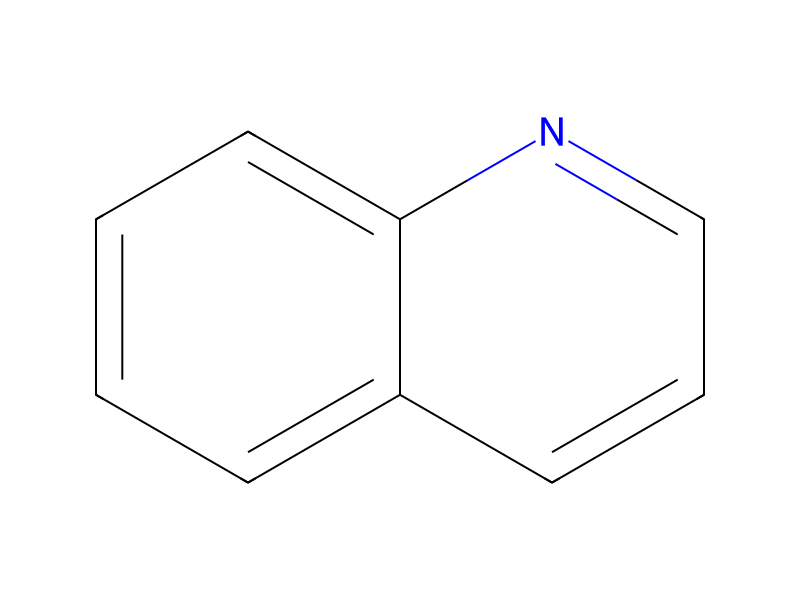
In the way described before 5.3 g (=0.040 mole) dimethyl malonate were mono-deprotonated with 0.040 mole NaH in 75 ml quinoline. Then 6.7 g (=0.032 mole) 3-iodothiophene and 4.6 g (=0.032 mole) copper (I) bromide were added. The resulting mixture was stirred under N2 atmosphere during a period of 4.5 hours at a temperature of 80° C. and then poured out into a mixture of 75 ml water and 75 ml concentrated HCl. The precipitated copper salts were collected on a Buchner funnel and washed with chloroform. Extraction of the filtrate occured likewise with chloroform. Both chloroform layers were joined and dried over magnesium sulphate. After removal of the solvent 11.0 g of an oily product remained in which by GLC analysis the presence was demonstrated of 1.93 g 3-iodothiophene and 1.32 g di-methyl 3-thienylmalonate (=0.006 mole or 19% calculated to the 3-iodothiophene started from). The product was identified in the same way as described in Example 5.